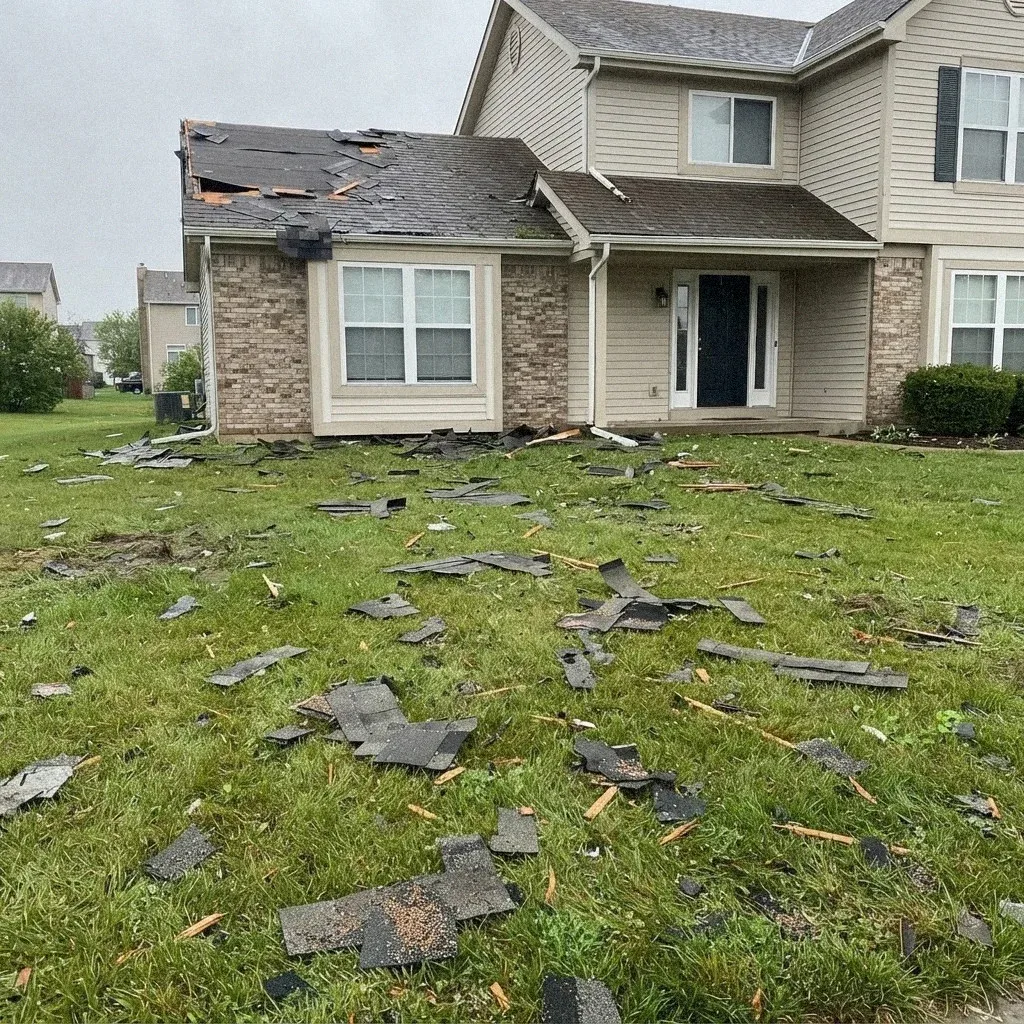
Storm & Wind Damage Roof Repair
Hail and wind damage found, photographed and repaired across Omaha by licensed local pros.
Learn about Storm & Wind Damage Roof RepairThe furthest town covered here, out where the Platte bottom is open in every direction.
Valley is a small city at the western edge of Douglas County, about twenty-two miles from downtown Omaha, sitting between Omaha and Fremont on the Platte River. Lake developments such as Ginger Cove lie between the town and the river. It is the most exposed place this site covers, with open bottomland and farm ground on all sides.
Hail impact, freeze-thaw cycling, and heavy downpours wear a roof through separate mechanisms, so one repair rarely addresses what the others caused.
Roof leaks rarely start where the shingles are. They start where two materials meet — a vent pipe, a valley, a wall junction — and the failure often shows up on a ceiling far from that spot, which is why a plain inspection matters before anyone opens a claim.
Out here there is nothing between a roof and the weather. Wind crosses open Platte bottomland and arrives at full strength, so shingle edges and ridge caps are the first things to go, and hail comes through unbroken as well. The lake-side houses face open water too, which adds to what their windward slopes carry. Ice dams form when heat escaping through poor attic insulation melts snow that then refreezes at the eaves, and that backup can push water under shingles rather than off them. It's an insulation problem showing up as a roof problem.
Ranges rather than a single number, because the honest figure depends on what the inspection finds. There is no charge for that inspection.
| Service | Estimated cost |
|---|---|
| Storm & Wind Damage Roof Repair | an estimated $900–$7500 |
| Roof Decking & Sheathing Repair | an estimated $600–$4500 |
| Roof Replacement | an estimated $11000–$30000 |
Ginger Cove is a private lake community between Valley and the Platte River, an eighty-six acre spring-fed sand-bottom lake laid out in 1966 with about 160 lots. Many of the houses date from the 1960s through the 1980s, and their lakeward slopes take wind straight off open water.
The Platte runs along the south side of Valley and the bottomland beside it is flat and open for miles. That is the corridor most weather here arrives through, and it is why a roof in Valley works harder than the same roof would on a sheltered street inside Omaha.
Two Rivers lies between Valley and Waterloo where the Platte and Elkhorn come together, a stretch of sandpit lakes and open ground. It shows plainly what this end of Douglas County is made of, and why exposure rather than age is usually what decides a roof out here.
Hail and wind damage found, photographed and repaired across Omaha by licensed local pros.
Learn about Storm & Wind Damage Roof Repair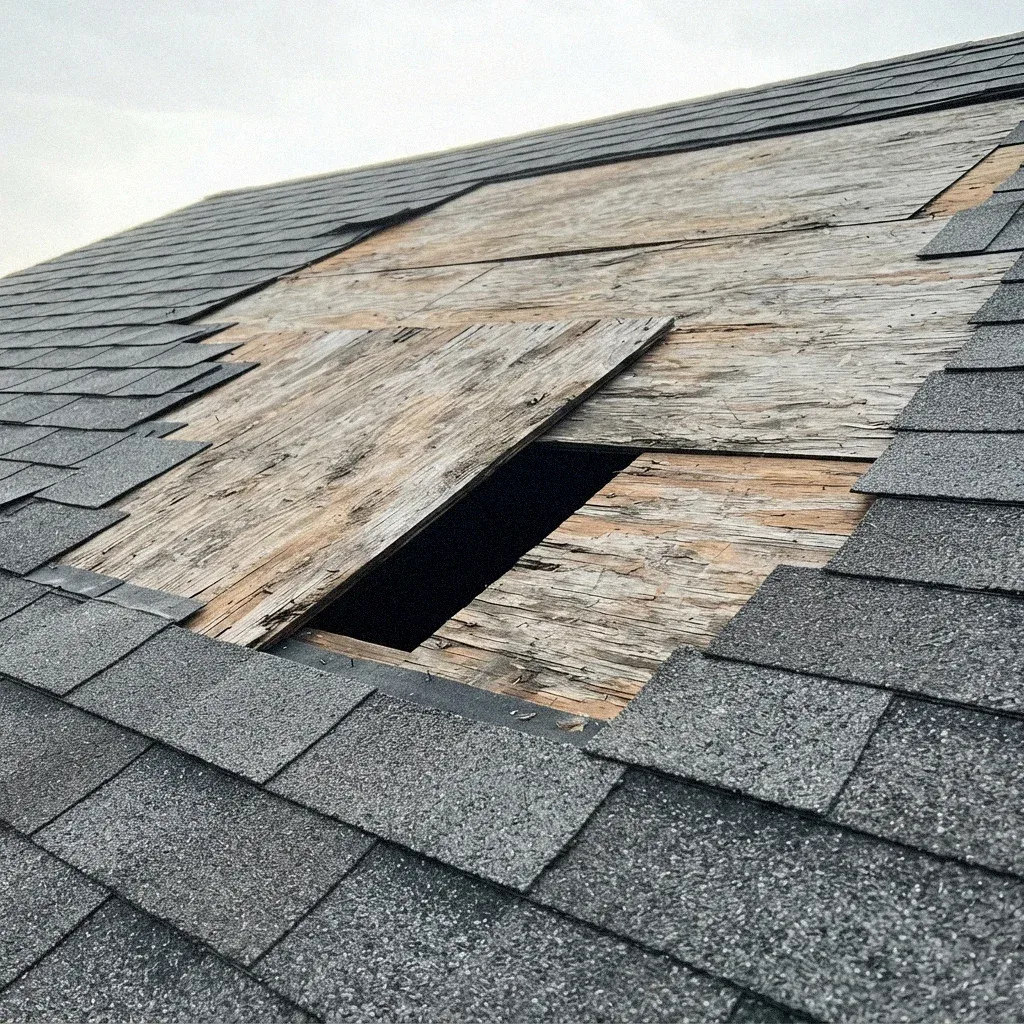
Rotted or soft decking is replaced sheet by sheet before the new roof goes down.
Learn about Roof Decking & Sheathing Repair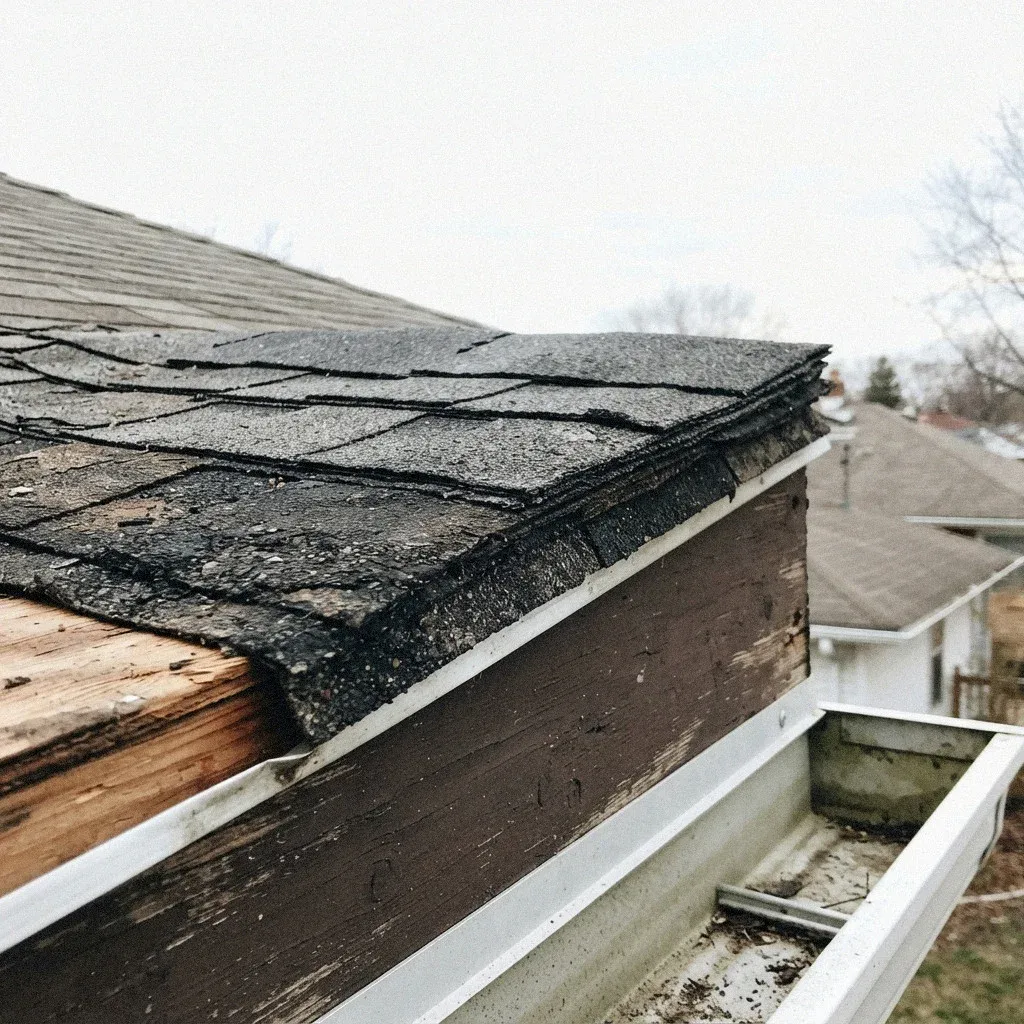
Every layer comes off to the deck, and the new roof goes on in the right order.
Learn about Roof Replacement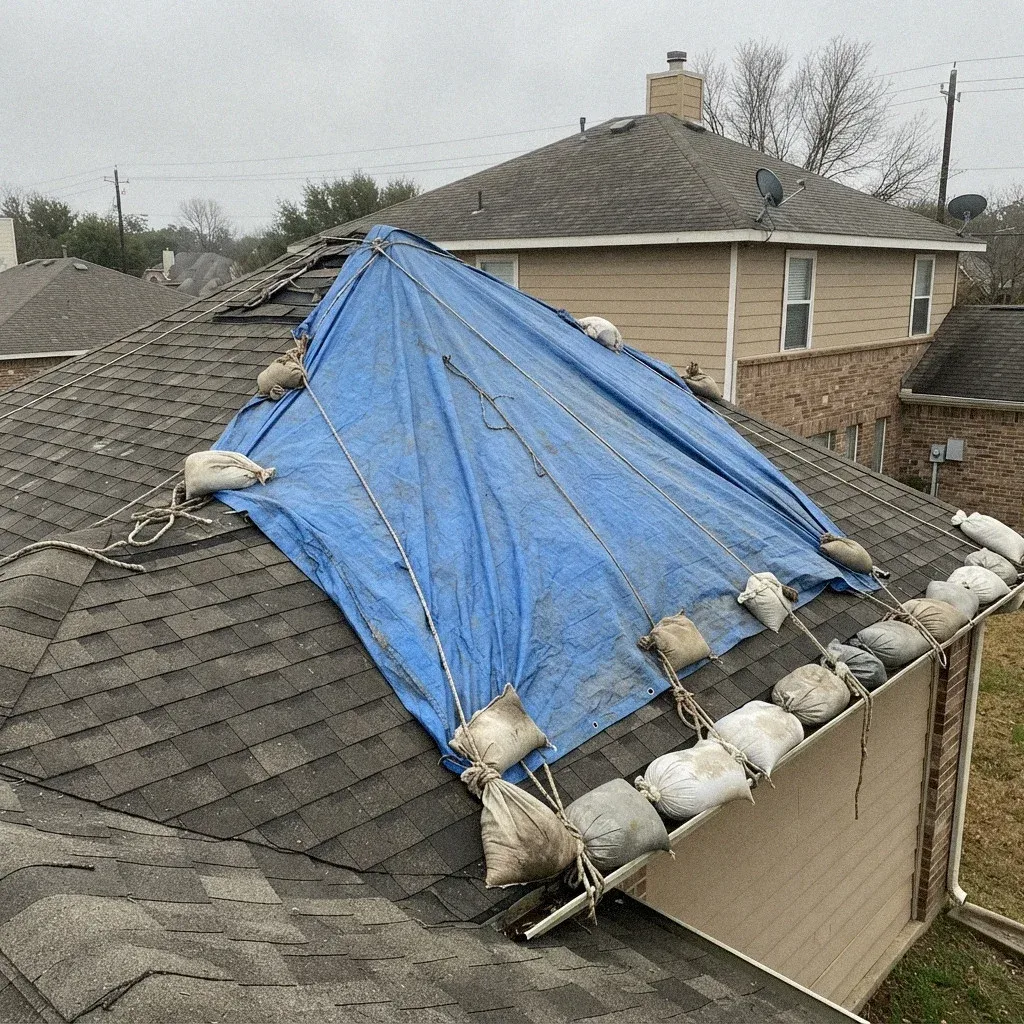
Same-day covering when your roof is open and the next rain is on its way.
Learn about Emergency Roof TarpingYes, though it is the furthest point covered here, roughly twenty-two miles from downtown at the western edge of Douglas County. A booked visit is straightforward. After a metro-wide hail event the outlying towns can wait a little longer than the city, so it is worth calling as early in the day as you can manage.
Not different materials, but a harder duty. A slope facing open water gets wind with nothing taken out of it, so fasteners and sealant strips on that side work harder than on the sheltered side of the same house. Many of these houses date from the 1960s to the 1980s, so several are already on a second or third roof.
Edges and peaks, almost always. Wind gets under the shingles at the rakes and along the ridge, and cap shingles lift before anything in the middle of a slope moves. Because none of that leaks immediately, it tends to be found at the next heavy rain rather than on the day the wind actually blew.
No, and the two often get confused. Flooding is a ground-level risk in this part of the county and a real one, but it does not reach a roof. What the river valley does to a roof is take away its shelter, so damage here comes from wind and hail crossing open bottomland rather than from water rising.
It can be on an exposed site. A standing seam roof has concealed fasteners and no tabs to lift, so it handles sustained wind better than shingles and it sheds snow rather than holding drifts. It costs considerably more, and hail will dent panels without necessarily harming them, which some owners mind and others do not.
Usually the same day, yes. Urgent jobs jump the queue here: water coming through a ceiling, a slope torn open by wind, or a limb down on the roof. Those are taken around the clock. Anything that can safely wait is booked at the standard rate instead.
Every part of Omaha answers to the same hail season and the same winter freeze-thaw, but not in the same way. An older home near Hanscom Park with decades of roofing history wears differently than a newer build out toward Elkhorn on its original shingles. Proximity to Papillion Creek or the Missouri River floodplain changes the drainage story too. The licensed pros we connect you with know how these local differences show up on an actual roof, not just a map.
Call (833) 566-1459