Where Insurance Adjusters Look First
Granule wash into the downspouts shows up on roofs across Omaha, from older Field Club and Hanscom Park homes to newer construction in Elkhorn and Gretna, wherever shingles have aged or taken a hail hit.
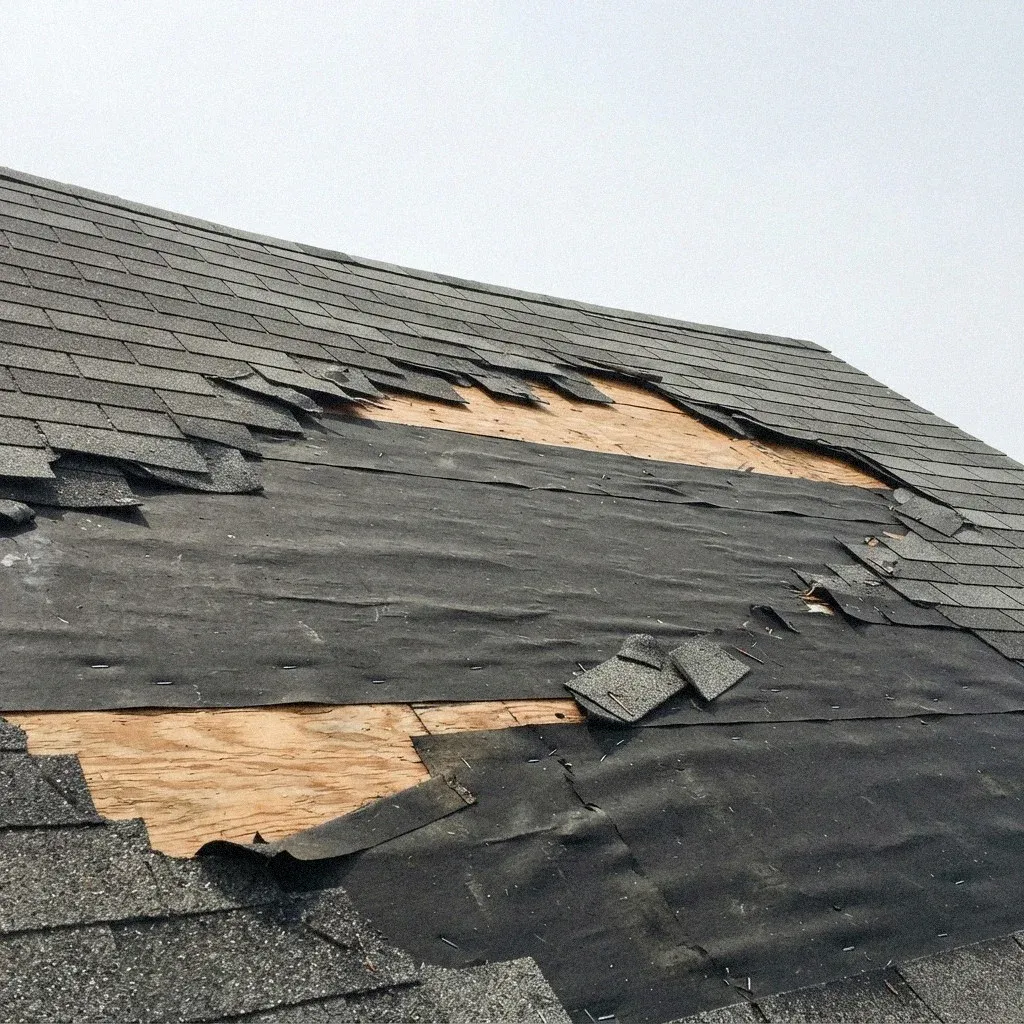
Spring hail is the local accelerant. A shingle bruised by hail near the Elkhorn River or anywhere else in the metro sheds granules faster than one just wearing down from sun and temperature swings alone.
Steep-slope roofs and low-slope roofs fail differently and get repaired differently. A homeowner comparing two quotes should check that both bids are actually pricing the same roof type, not applying a steep-slope fix to a flat section or the reverse.
Insurance Claims Made Simple
- Location
- In gutter troughs and downspout outlets below the eave, most visible after a rain event.
- Appearance
- Coarse black or gray grit in the gutter, with bald or blotchy patches on the shingle surface itself.
- Cause
- Shingle aging, hail bruising, or foot traffic breaking the asphalt mat's bond to the granule coating.
- Progression
- Worsens gradually over years unless hail accelerates it, then a single storm can strip a section fast.
- Damage
- Left unaddressed, exposed mat degrades faster under UV and hail impact, shortening shingle life and raising the odds of decking leaks.
- Time of year
- Spring hail season, April through June, is when new granule loss usually starts. Late summer or fall, after leaves clear out, is the easiest time to spot grit sitting in the gutters without confusing it with debris.
- Guide price
- an estimated $150–$500
Questions Worth Asking Before Any Repair
Gets mixed up with plain shingle aging. Aging fades color evenly across the roof with no debris below; granule wash leaves loose grit collecting in gutters and downspouts after rain, often near valleys or the eave. A ladder check on the gutter contents tells the two apart in Dundee or Benson homes alike. The test is where the grit sits. Wash shows loose granules pooling in the gutter and downspout after rain; plain aging shows color fade on the shingle itself with no matching buildup below. A pro checks both together.
What a Legitimate Repair Actually Covers
There is no repair for granules already gone; the fix is confirming how much bare mat remains before it becomes a leak. The licensed pros we connect you with check exposure at the eave, valley, and around each pipe boot and vent penetration, then price a granule loss inspection against a full Omaha, NE roof-inspection replacement estimate.
Clearing the gutters and downspouts only removes the grit that's already there. It does nothing for the bare patches on the shingle itself, and the mat keeps losing ground until the roof is repaired or replaced.
Spring hail is the event that actually gets a roof replaced. A short, hard storm can bruise a shingle in ways an eye can't catch from the driveway, and the damage still counts toward an insurance claim. The licensed pros we connect you with document it the way an adjuster expects to see it.
ATTIC VENTILATION TYPES AND WHAT EACH ONE PREVENTS
| Roof Condition Now |
Costs More Later |
|---|
| Omaha roofs deal with hail more than wind-driven rain, and that changes what actually fails first. Granule loss from an April hailstorm weakens a shingle without opening it up right away, so the damage sits unnoticed until a freeze-thaw winter finds the weak spot and turns it into a leak. | Insurance adjusters here see enough hail claims each spring that they know the difference between wind-lift and hail bruising on sight. A homeowner walking into that conversation without their own read on the roof is negotiating a repair bill blind, against someone who does this every week. |
| A roof claim gets complicated fast when the homeowner, the adjuster, and the contractor all read the same shingles differently. Getting a second, licensed opinion before signing anything keeps the estimate grounded in what the roof actually needs, not what any one party wants it to need. | Freeze-thaw is the quiet damage here, not the dramatic kind. Water works into small gaps, freezes, expands, and widens them, then thaws and does it again the next week. A shingle edge or flashing seam that could handle one hard freeze rarely holds up through a whole winter of them. |
| Hail doesn't always leave a hole you can see from the driveway. It can bruise a shingle's mat without breaking the surface, and that bruise keeps losing granules long after the storm passes. An insurance adjuster or a roofer trained to spot bruising can tell the difference between cosmetic marks and real functional damage. | Gutters matter more here than in drier places, because so many older homes have a finished basement below grade. A roof that sheds water poorly doesn't just risk the attic — it can push water toward a foundation that was never built to take it. Drainage is part of the roof's job. |
When A Licensed Pro Has To Take Over
A homeowner can check the gutters and downspout outlets after a rain for gritty buildup and glance at the shingle field with binoculars for bald spots. Confirming hail bruising versus plain wear on the shingle mat itself needs the licensed pros we connect you with, up on the roof.
Why a Fast Look Beats a Slow One
Granule wash itself doesn't threaten indoor air or health. The concern is what it leads to: a thinning mat that eventually lets water through the decking, at which point moisture and mold become the real issue inside the attic.
Not Sure If Your Claim Holds Up?
Expect an estimated $150 to $500 for granule wash into the downspouts here, with the pitch, the access and how much decking is sound doing most of the moving. Omaha's freeze-thaw cycling, not insect activity, drives most hidden roof damage found around Dundee and Benson. The eastern subterranean termite is the local species, entering through soil contact, but it rarely factors into a reroof estimate here. The licensed pros we connect you with usually flag ice-dam and flashing wear before pest damage. pricing guide, and the service that handles this is Roof Inspection.