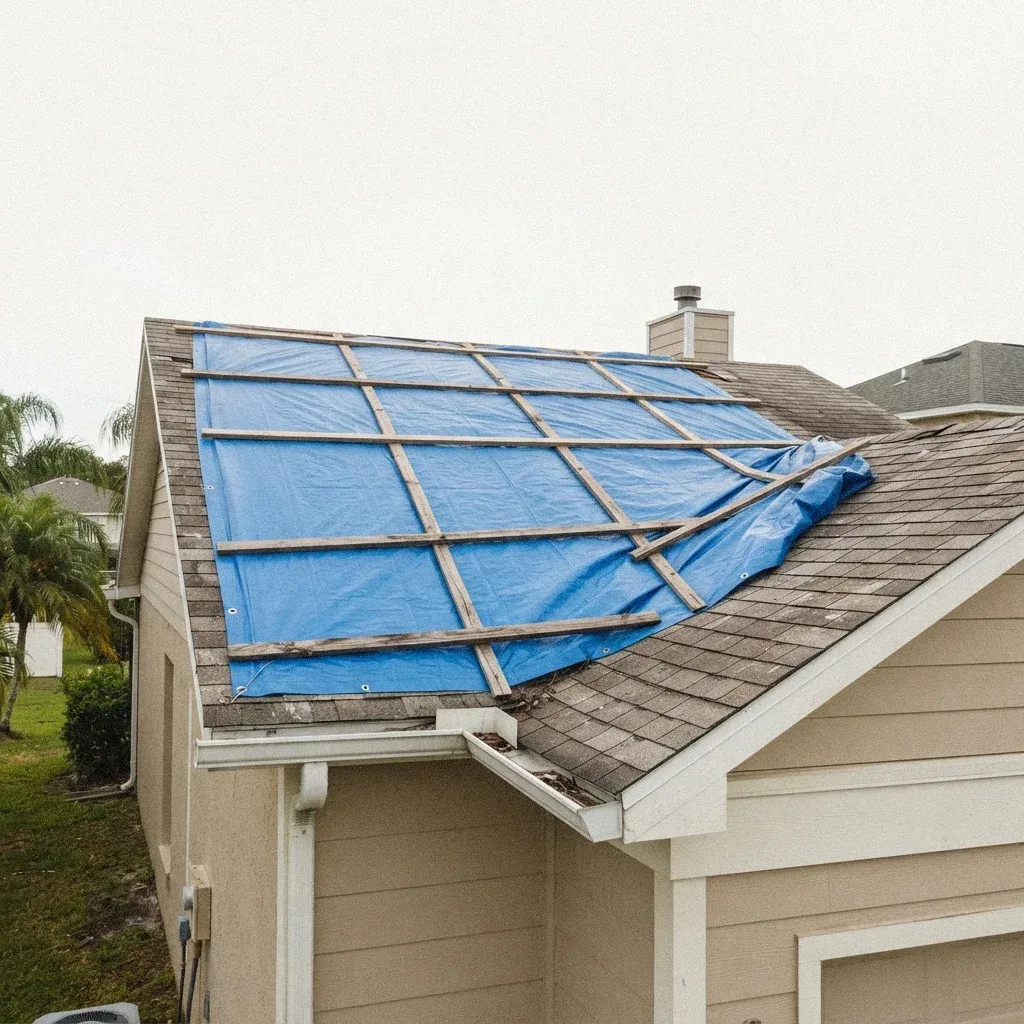
Two Systems Working Against The Roof
Omaha's older housing stock, common in Dundee and Benson, was often framed before modern ridge-support requirements, so thinner ridge boards and rafters were standard for decades of construction.
Repeated snow load and Nebraska's freeze-thaw winters put steady stress on aging ridge framing, and added layers from past reroofing over the years push weight the original substrate was not built to hold.
Omaha roofs age on a schedule set by temperature swings, not calendar years. A shingle that flexes fine in June can crack in January after enough freeze-thaw cycles. Hail adds its own timeline, often invisible until a slope is checked closely. Regular attention catches wear before a ceiling stain forces the issue.
Weather Patterns That Wear Roofs Down
- Location
- Along the topmost horizontal line of the roof, most visible sighting down the ridge from either gable end.
- Appearance
- A shallow dip or wave in an otherwise straight ridge line, sometimes paired with uneven hip lines nearby.
- Cause
- Undersized or aging ridge framing combined with years of snow load and added weight from prior reroofing.
- Speed
- Slowly, over years, though a hard winter with heavy snow load can accelerate a marginal ridge noticeably.
- Damage
- Ignored, the sagging deck spreads: fasteners pull loose, shingles crack along the dip, and water finds a path to the attic below.
- When
- Nebraska winters add snow load right when frozen ground and freeze-thaw cycling are already stressing old framing, so a marginal ridge often sags further by the time spring hail season arrives.
- Estimated cost
- an estimated $600–$4500
Reading an Insurance Adjuster's Report
A dipping ridge line gets mistaken for a sagging roof deck between rafters, which shows up as a wavy dip in the middle of a slope rather than along the very top. Sight down the ridge from the ground at each gable end. If only the ridge itself bows, the problem is at the ridge board or nearby decking; if the field of the roof also waves, the sagging decking between rafters is the separate issue.
Early Warning Signs Worth Checking Twice a Year
The licensed pros we connect you with open the ridge area, check the rafters and ridge board for rot or undersized lumber, and replace weakened decking and framing before installing new underlayment and ridge cap shingles.
Where the dip is caused by fastener pull-out or a delaminated section of decking rather than framing failure, replacing that section of substrate and resealing the ridge often resolves it without touching the rafters.
Roof damage in this climate builds quietly between seasons. Freeze-thaw cycling works at shingle edges and flashing seams until a small gap becomes a leak path, often showing up long after the weather event that caused it. Spring hail adds sudden, visible damage on top of that slow wear, which is why timing and cause both matter once you're filing a claim.
STORM DAMAGE VS. NORMAL AGING: HOW AN INSPECTION TELLS THEM APART
| Next Step |
Works Best When |
|---|
| Small openings do more damage than big ones over time. Nail heads, vent boots, and the seams around anything mounted on the roof loosen gradually under repeated freezing and thawing, letting moisture work its way in long before anyone notices a problem indoors. | Spring hail is the claim most Omaha roofs file, but wind gets less credit than it deserves. A gust that lifts one shingle tab lets the next storm's rain track sideways under the row above it, and that damage sits invisible in the attic for months before a ceiling stain shows it. |
| Hail season here runs concentrated and fast, not spread out over months. A single spring storm can bruise or crack shingles across an entire roof in minutes, and the damage is often invisible from the ground until someone gets up close. | A roof and an insurance claim don't always agree on what happened. Wind can lift shingles without a single one going missing, and hail can bruise a mat without cracking it visibly. Getting a straight answer on which is which matters more than getting a fast one. |
| Roof wear here rarely announces itself. Temperature swings through the seasons flex shingles and flashing, loosening seals a little more each cycle. By the time a ceiling stain or a soft spot shows up, the underlying damage has usually been building for a while. A yearly look from the ground catches problems before they turn into a bigger repair bill. | A roof carries snow load, wind uplift, and hail impact in the same year, sometimes the same week. Each stresses the roof differently, and damage from one often hides the damage from another until an inspection separates them out. That's why a walk-through after any rough season matters. |
Reading An Insurance Adjuster's Report Yourself
From the ground in Midtown Omaha or Benson, sight down the ridge — a straight line should stay straight. From a ladder, check for soft spots near the ridge. In the attic, look for sagging rafters, water stains, or soft decking near the ridge board. Confirming decking rot needs a licensed pro on the roof.
How Hail Damage Actually Shows Up
A dipping ridge left alone can let water work past the ridge cap and underlayment, leading to attic moisture, insulation damage, and mold growth that affects indoor air quality over time.
What Would A New Roof Actually Cost?
Most a dipping ridge line on an older roof jobs in Omaha land between an estimated $600 and $4500, and the roof decides where inside that. Omaha's freeze-thaw cycling, not insect activity, drives most hidden roof damage found around Dundee and Benson. The eastern subterranean termite is the local species, entering through soil contact, but it rarely factors into a reroof estimate here. The licensed pros we connect you with usually flag ice-dam and flashing wear before pest damage. pricing guide, and the service that handles this is Roof Decking & Sheathing Repair.