The Spring Pattern Behind Most Calls
Porch roofs off houses in Midtown Omaha and Benson are often built nearly flat, added onto a steeper main roof as an afterthought. Without at least a slight slope toward a drain or edge, rain from spring downpours has nowhere to go and just sits.
Ponding shows up on porch roofs and other low-slope sections around Omaha where the deck lost its slight pitch or drains poorly. Freeze-thaw swings push standing water into seams, and it sits until a membrane, flashing, or fastener gives way underneath, letting water reach the decking.
An honest Omaha reroof estimate breaks out removal, deck repair, underlayment and haul-away as their own costs, so nothing gets folded into a vague total later. Ask how the price would change if rotten decking turns up once the old shingles come off, since that is a common surprise, not a rare one.
What Drives Replacement Timing
- Location
- Flat or nearly flat porch roofs and additions, most common on older homes in Midtown Omaha and Benson.
- Appearance
- Visible standing water or a discolored, algae-tinged low spot on the membrane after rain has stopped.
- Cause
- Insufficient slope toward a drain or eave, often from an added-on porch roof built too flat.
- Progression
- Weakens gradually over repeated rains and winters; a season or two of standing water can start seam failure.
- Damage
- Ignored ponding saturates substrate, delaminates membrane layers, and rots decking under the porch roof, eventually leaking into rooms below.
- When
- Ponding shows up worst in Omaha's April-through-June hail season, when heavy rain follows storms faster than a flat porch roof can shed it. Winter adds freeze-thaw stress to the same low spots, widening any seam the standing water has already weakened.
- Guide price
- an estimated $450–$2800
How Freeze-Thaw Wears a Roof Down
Ponding gets confused with a sagging deck from waterlogged substrate. Ponding is standing water on an otherwise sound low-slope roof from poor drainage; sagging decking means the wood underneath is already failing. The test: press the ceiling below after rain — give means decking damage, not just ponding. Check timing. Ponding water on a porch roof in Dundee or Benson clears within 48 hours on a working membrane. If water sits longer, or the roof surface visibly dips where water collects, the decking has likely lost its crown and is holding a permanent low spot.
How to Read and Compare Two Estimates
Real correction means adding tapered insulation or crickets under the membrane so water actually moves toward a drain or the eave, then replacing the membrane and flashing at penetrations. A licensed roofer measures the low spot and rebuilds the slope, not just the surface.
Patching the ponding spot with sealant or roof cement covers the symptom for a season but doesn't change the slope, so water returns to the same low point next rain. Eventually the sealant fails and the porch roof leaks at the same spot, often worse.
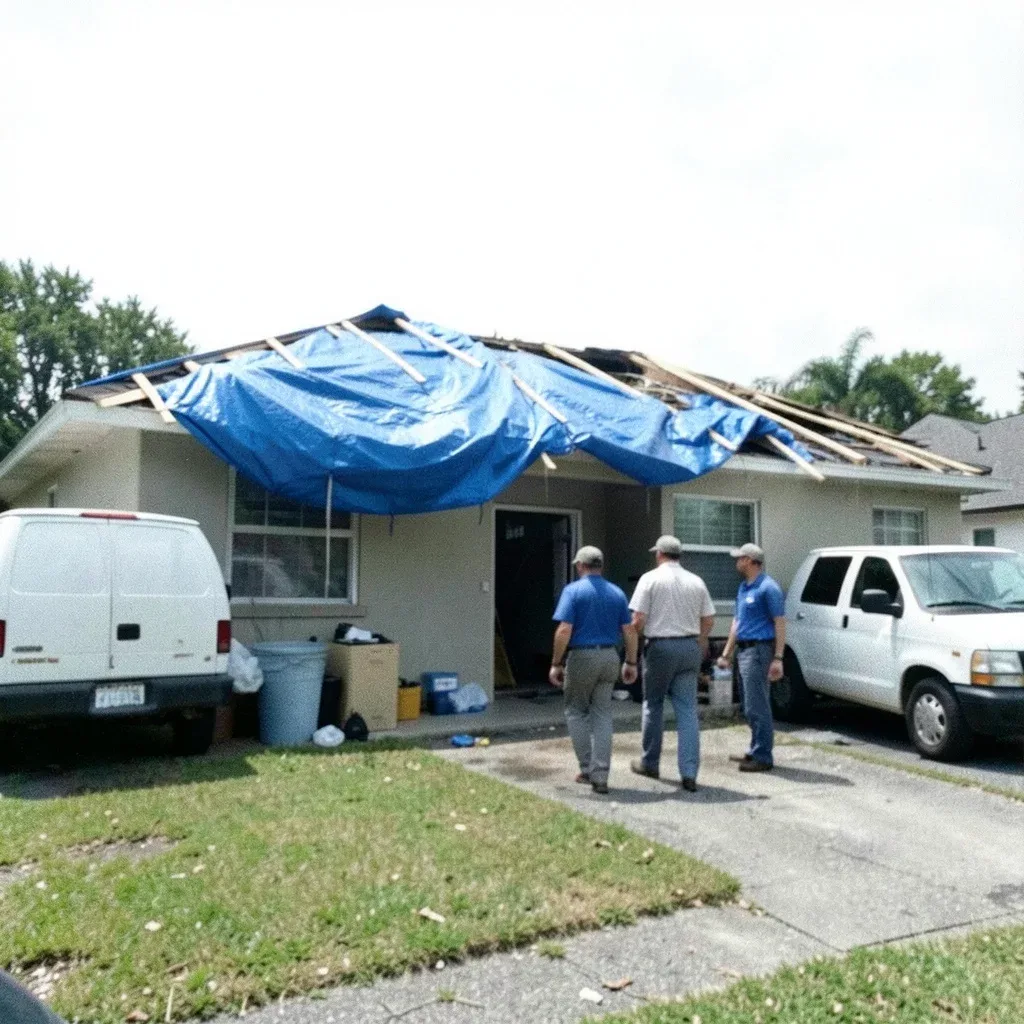
Spring hail is the event that actually gets a roof replaced. A short, hard storm can bruise a shingle in ways an eye can't catch from the driveway, and the damage still counts toward an insurance claim. The licensed pros we connect you with document it the way an adjuster expects to see it.
MATERIAL LIFESPAN COMPARED ACROSS COMMON ROOFING CHOICES
| What It Means |
Years Before Replacement |
|---|
| Two homes built the same year can age at different speeds once wind and hail get involved. One side of a roof takes the brunt of spring storms while the other stays sheltered, so wear rarely spreads evenly. Judging a whole roof by one section, or one photo, misses what a full walk-through would catch. | A reroof estimate that only lists shingles and labor is missing the part that actually floods a basement: tear-off disposal, new flashing, and drip edge. Ask what's excluded before signing, because the addition after demo starts is where a fair bid turns into an argument. |
| Freeze-thaw cycling does more damage in Omaha than most homeowners realize. Shingles that flex through repeated hard freezes and spring thaws lose granules and seal strength years before their rated lifespan, and the wear rarely shows up until a leak forces the issue. | Gutters get judged on the wrong storms. It's not the steady rain that overflows them, it's the short, intense downpour that dumps most of its water in a few minutes. A gutter sized for average weather can still send water straight at a foundation during the one storm that matters. |
| A roofing bid should spell out what happens to the old material, who pulls the permit, and whether flashing and ventilation are part of the price or an add-on later. Two bids that look close on the bottom line can cover very different amounts of actual work once you read past the total. | Shingles don't fail on a mild day. Sharp temperature swings make roofing materials contract and stretch, and flashing loosens a little each time. Granules wear thin, seals crack, and a roof that looked fine in fall can leak by spring. Regular checks catch that wear before it turns into a ceiling stain. |
Tarps, Buckets, And Other Short-Term Fixes
From the ground in Old Market or South Omaha, a homeowner can watch a porch roof after a hard rain and note whether water is still standing a day or two later. Getting on the roof to check membrane condition and slope belongs to the licensed pros we connect you with.
What Gets Checked During a Real Inspection
Standing water that sits for days breeds mosquitoes and lets algae and moss take hold on the membrane, which holds moisture against the substrate longer. Inside, a slow leak through ponded water can bring damp, musty air into the porch ceiling and beyond.
What Would A New Roof Actually Cost?
Most ponding on low-slope porch roofs jobs in Omaha land between an estimated $450 and $2800, and the roof decides where inside that. Omaha's freeze-thaw cycling, not insect activity, drives most hidden roof damage found around Dundee and Benson. The eastern subterranean termite is the local species, entering through soil contact, but it rarely factors into a reroof estimate here. The licensed pros we connect you with usually flag ice-dam and flashing wear before pest damage. pricing guide, and the service that handles this is Flat & Low-Slope Roofing.