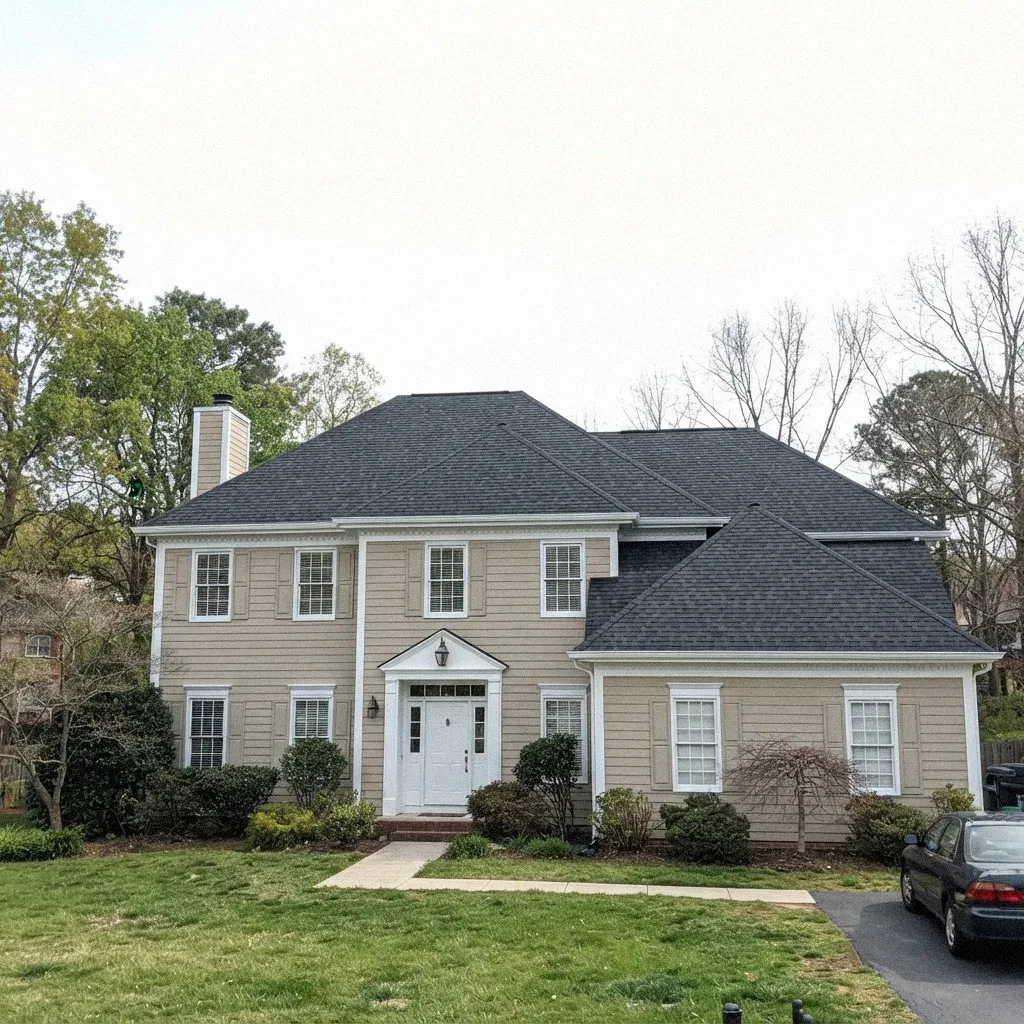
Reading The Fine Print On Omaha Roof Warranties
Manufacturer coverage, workmanship coverage, and the registration deadlines that decide what an Omaha roof warranty pays.
A manufacturer material warranty covers only defective shingles or membrane, a workmanship warranty covers only the installer's mistakes, and a system warranty bundles both when a certified installer registers matched components on time.
Two Separate Promises, Two Payers
Ask an Omaha roofer for 'the warranty' and you'll usually get two different documents. One is a manufacturer material warranty covering the shingles or membrane themselves. The other is a workmanship warranty from the licensed pro who installed them, covering flashing, nailing, and how the roof was actually put together over a house in Dundee, Benson, or Millard. Confusing the two is where most disputes start.
The material warranty only addresses the product failing on its own terms — granules shedding prematurely, a panel cracking, a membrane splitting without outside cause. It says nothing about how the roof was flashed around a chimney, nailed at Dundee bungalow eave lines, or vented in a Millard attic. Installation mistakes fall to the workmanship warranty, which is a separate promise from whoever did the labor, not the factory that made the material.
An extended warranty pushes coverage well past the standard manufacturer term, but only when a certified installer registers the job correctly. A system warranty goes further still, backing the shingles, underlayment, and ventilation together as one unit rather than judging each part on its own. Omaha homeowners chasing hail damage often assume they already have this tier and find out at claim time that they don't.
Registration Deadlines And Prorated Payouts
A non-prorated period pays the full cost of a covered defect no matter when it shows up within that window. Once that period ends, prorated coverage takes over, and the payout for the same failure keeps shrinking every year afterward. A shingle that cracks from freeze-thaw cycling in year twenty of a longer term is worth far less to the manufacturer than one that fails in year three.
That proration schedule sits inside the actual warranty booklet, not the sales sheet a contractor leaves on the kitchen table. It shifts by product line, and it shifts again depending on whether the installer met the certified installer requirement at the time of the job. Two identical roofs in Elkhorn and South Omaha can carry different payout curves simply because one contractor registered properly and the other didn't.
- Material warranty applies to production flaws in the shingle or metal panel itself, not to hail bruising, wind-driven debris, or poor attic ventilation.
- Workmanship coverage comes from the roofing crew and answers for flashing errors, nailing mistakes, and valleys that leak after installation.
- System-level coverage needs every layer, underlayment through vents, to carry the same brand name and be registered as one job.
- Extended warranties lengthen the standard term, usually by requiring a higher shingle tier or a manufacturer-certified installer on the job.
- Tear-off and disposal cost often fall outside a basic material term, so ask which tier of coverage actually pays a crew to remove the old roof.
- A shop trained and certified by the manufacturer can unlock the longer system term; an uncertified installer usually leaves you with the shorter base coverage only.
Selling The House Before Coverage Ends
Warranty registration is the paperwork step that ties a generic manufacturer promise to one specific Omaha address and one specific contractor. Manufacturers set a deadline, often measured in weeks from the completion date, and missing it can quietly downgrade a homeowner from an extended tier to whatever base coverage came standard. Nobody notices until a claim gets filed and the coverage on paper doesn't match what was promised.
Transferability lets a new owner inherit whatever term is left on the roof when a house in Aksarben Village or Elmwood Park changes hands. It's rarely automatic. Most manufacturers require the seller or their contractor to notify them within a set window after closing, and many charge a transfer fee to process the change. Skip that step and the new owner may be left with no manufacturer backing at all.
- Most manufacturers give homeowners a narrow window, often measured in weeks, to submit paperwork after a Douglas County reroof finishes.
- A sale doesn't cancel coverage automatically, but the new owner generally has to apply and may owe a one-time charge to keep it active.
- Common exclusions include hail impact below the manufacturer's damage threshold, ice-dam backup, and attic ventilation changed after the original install.
- Adding solar brackets, satellite mounts, or letting another crew patch the roof later can cancel protection the original installer set up.
What Actually Cancels Coverage
Labor and disposal coverage is the line item that trips people up most. A base manufacturer warranty typically pays to replace defective material but leaves the homeowner to cover the cost of pulling old shingles off a roof over a Florence or Benson house and hauling them to disposal. Only the higher warranty tiers fold that labor cost into the manufacturer's side of a covered claim.
Complete system components are the second requirement behind that same higher tier. A manufacturer generally won't honor system-level coverage unless the underlayment, starter strip, ridge caps, and vents installed on the roof all carry that manufacturer's name. Mix in a competitor's ridge vent to save money on a Papillion or La Vista job and the whole system warranty can drop back down to a plain material warranty.
| Warranty Type | Coverage Basis | Who Pays |
|---|---|---|
| Manufacturer material warranty | Shingle or membrane defects only | No labor unless separately added |
| Contractor workmanship warranty | Leaks caused by install error | Gone if the contractor closes |
| Enhanced system warranty | Materials, labor, and tear-off | Certified installer, matched components |
| Prorated years | Reduced payout tied to roof age | Kicks in after non-prorated years |
| Non-prorated period | Full material value, sometimes labor | Set number of years right after install |
Filing A Claim With Documentation
Exclusions keep coverage tied to normal aging rather than outside damage or neglect. Tree limb strikes, improper attic ventilation, standing water, foot traffic from satellite or solar crews, and work performed by anyone other than the original certified installer are common grounds for a denied claim. Given how often spring hail moves through the Omaha area, homeowners should understand that impact damage is typically an insurance matter, not a manufacturer warranty matter, since it isn't a material defect.
Some actions cancel coverage outright rather than just deny a single claim. Improper foot traffic, pressure washing granulated shingles, unpermitted rooftop alterations, and solar mounts installed without the manufacturer's approved flashing kit fall into this category for most manufacturers. An Omaha homeowner planning solar or a rooftop deck should ask the installer what the manufacturer's paperwork actually requires, since the warranty rarely says so on its own.
Certified Installers And System Requirements
Claim submission depends on paper more than persuasion. A homeowner needs the original installation invoice, the warranty certificate, proof the registration went through, and clear photos of the failure itself, taken close enough to show the actual defect. Someone in Gifford Park or Bemis Park who saved these from the day the job finished has a far shorter path to a paid claim than someone hunting for them after a leak shows up.
Documentation of installation is what the manufacturer weighs against the homeowner's account of what went wrong. That review sometimes includes a site visit from a manufacturer representative or an independent inspector, checking whether the failure matches a covered material defect or lines up instead with an installation error, storm damage, or one of the listed exclusions. A thin paper trail slows this down regardless of how real the defect is.
Warranty Terms To Ask About
- A material warranty and a workmanship warranty come from two separate parties, and most Omaha leak disputes fall in the gap between them.
- Filing the registration paperwork is what turns on the longer coverage term; homeowners who skip it are often stuck with a shorter default.
- Full payout usually holds for a set number of years, then drops on a sliding scale tied to how old the roof is at claim time.
- Swapping in a cheaper underlayment or an unmatched vent brand can drop a system warranty back down to bare material coverage.
- Selling a Benson or Elkhorn home doesn't end coverage by itself, but the buyer usually has a deadline to apply for it to continue.
- A claim moves faster when the homeowner can hand over the invoice, the exact product line, and the date the crew finished the job.
Frequently Asked Questions
Does my roof warranty transfer when I sell my house?
Usually yes, but check the paperwork. Most manufacturer material warranties transfer to a new owner in Omaha, often with a transfer fee and a deadline, sometimes 30 days after closing. Workmanship warranties from the installer are separate and don't always transfer automatically. Pull the original registration and any transfer clause before you list a Dundee or Millard home for sale.
What actions will void a manufacturer roof warranty?
In Omaha, spring hail and freeze-thaw cycling drive most claims, but a manufacturer warranty only covers a defective shingle, not hail bruising, ice-dam backup, or a valley a previous crew flashed wrong. Unapproved repairs, added rooftop mounts, and pressure washing that strips granules are common voiding actions here too.
Does someone register the warranty, or do I?
Usually yes. Ask the contractor working on your Benson or Elkhorn home for written confirmation the registration was filed, not just a verbal promise. Manufacturers set their own registration windows after installation, and a homeowner who assumes the paperwork happened automatically can find out otherwise only when filing a claim.
Will the warranty pay for tear-off and labor costs?
Manufacturer terms usually move to a new Omaha owner if the paperwork gets filed within the stated window after closing, often with a fee attached. Contractor workmanship terms are less predictable since some companies won't extend them past the original buyer. Ask for the transfer procedure in writing before closing on a Dundee or Millard home.
How is a workmanship warranty different from material coverage?
A workmanship warranty comes from the contractor and covers their installation mistakes, like a poorly sealed flashing around a chimney in an older Field Club or Gifford Park home. A material warranty comes from the manufacturer and only covers a defect in the shingle or membrane itself, regardless of who installed it.
Confused About Your Warranty Paperwork?
Ask for warranty paperwork in writing before a Douglas County crew starts, including what triggers the longer coverage term.
Call (833) 566-1459