Omaha Roofing Permits and Code Basics
When Omaha permits apply, who files them, and the code items inspectors check no matter what.
An Omaha reroof generally needs a permit from the Planning Department before work starts, with inspections at set stages and code items like ventilation and flashing checked regardless of layer count or permit status.
When a Reroof Needs a Permit First
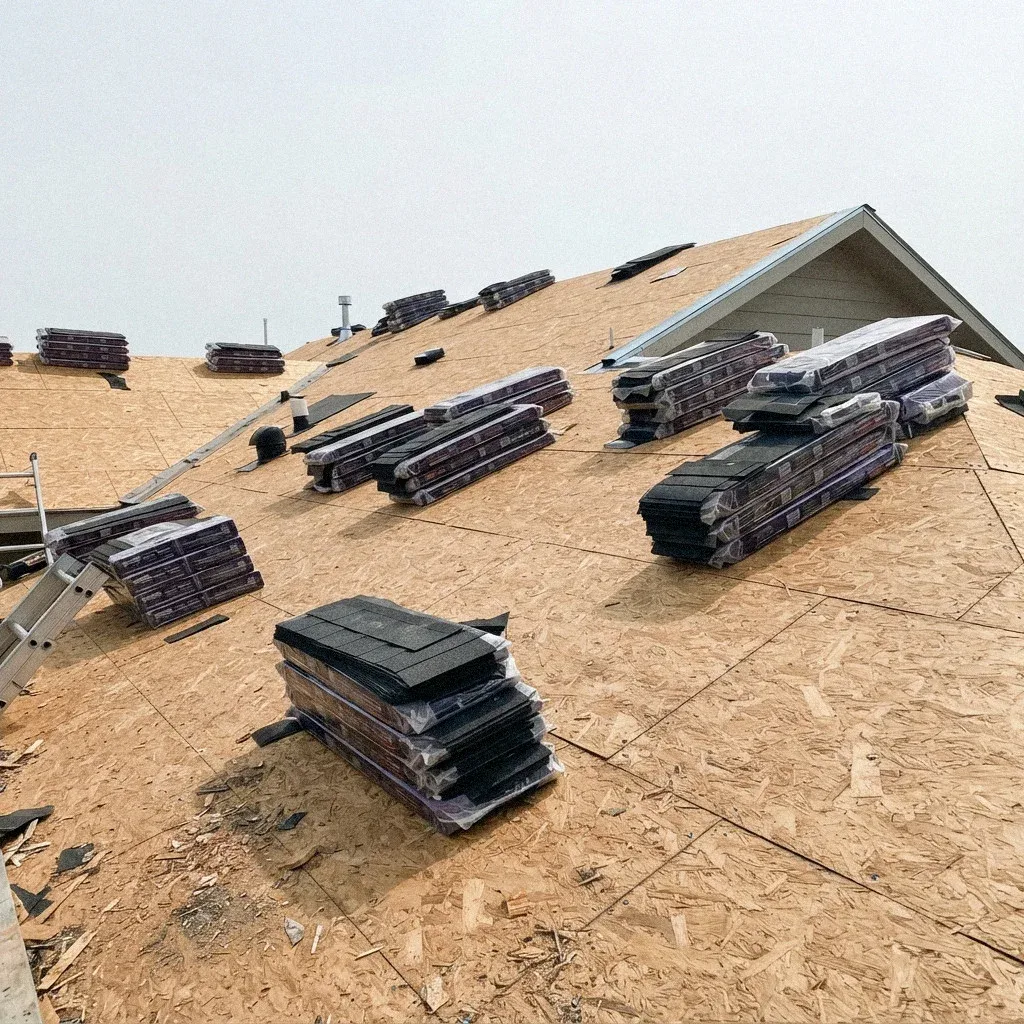
Whether a roof job in Omaha needs a permit comes down to what's being done to the roof, not what it costs. Stripping shingles down to bare decking and putting on new covering is treated as full replacement work. Laying new shingles over what's already there, without removing the old layer, is recover work, and the two get sorted differently once an application reaches the Planning Department's review desk downtown.
Minor patch jobs, like swapping a handful of damaged shingles after a spring hailstorm or resealing a boot around a vent pipe, sit closer to routine maintenance than construction. A full tear-off, a recover over an existing layer, or any change to the roof's structural framing crosses into work the city expects to see on file before a crew starts, since those change how the roof performs and how long it holds up under Omaha's freeze-thaw winters.
None of that changes what the work has to meet once it's underway. Fastening, underlayment, flashing, and attic ventilation are governed by the same code provisions whether or not paperwork was ever filed for the job. A homeowner in Benson or Dundee who skips the permit step hasn't skipped the requirement that the roof actually be built to code — they've just removed the inspection that would have confirmed it.
Who Reviews Plans, Who Signs Off
The contractor doing the physical work is usually the one who submits the application, since Omaha's permitting system is built around a registered business taking responsibility for the job rather than the property owner filing on their own behalf. A homeowner can sometimes pull an owner permit for work on their own house, but most reroofs in West Omaha or Elkhorn move through a contractor's account with the city rather than the resident's.
A residential reroof rarely needs the kind of plan review a new build goes through, since the scope is a covering swap rather than a redesign of the structure underneath. Where review gets more involved is when the job adds framing, changes the roof's slope, or affects a load path — a garage conversion or a room built into an attic, for instance — and reviewers want to see how the new work ties into what's already standing.
- A full tear-off replacement on most Omaha houses triggers a permit through the Planning Department before any decking comes up.
- Structural repairs to decking after a leak, not just shingle patching, generally need their own permit filed first.
- Recover jobs over existing layers cap out fast: most codes cap roofs at two total layers before a full tear-off is mandatory.
- Multi-family buildings in areas like Old Market or Midtown Omaha follow the same permit trigger as a single-family reroof.
- Skipping a required permit does not excuse a house near Walnut Hill from meeting the adopted residential code anyway.
- OmahaPermits.com lists the contractor as the applicant on record, with the city's local contractor license required first.
Rough, Final, and the Inspection Card
A permitted reroof in Omaha typically brings an inspector out before the new covering goes down, so the decking, underlayment, and flashing details around chimneys and valleys can be checked while they're still visible. Once shingles or panels are installed, those details are covered for good, so this stage is the point where a hidden problem — soft decking, a missing drip edge — actually gets caught instead of surfacing years later as a leak.
Closing out the permit means a final inspection, and that gets logged on the inspection card kept for the address. That record is what lets the city sign off on the job and is the paper trail a future buyer's inspector, or the homeowner themselves, can point to later as proof the roof was done under a permit rather than off the books.
- Nebraska's adopted residential code sets a practical ceiling on stacked layers before a full tear-off becomes the only option.
- A South Omaha bungalow carrying two prior layers already is usually headed for full removal on the next reroof.
- Soaked or rotted sheathing under old shingles forces removal no matter what the layer count on paper says.
- Ventilation and flashing get checked on the roof deck itself, independent of whether one or two layers came off first.
Layers, Fasteners, Ventilation, and Flashing
Nebraska's residential code limits how many layers of roof covering can stack up before a tear-off becomes mandatory. Adding a new layer over one that's already there is allowed only up to a point; past that, the old material has to come off completely before anything new goes on, regardless of how sound the existing shingles look from the ground.
This limit exists because too many stacked layers add weight the original framing wasn't sized for and trap moisture between courses that can't dry out, which matters in a climate where Omaha winters put roofs through repeated freezing and thawing. A contractor who opens up a roof in Millard or South Omaha and finds more layers than the permit history shows on record may have to strip the whole thing rather than add on top.
| Code Item | What It Governs | Separate Permit? |
|---|---|---|
| Layer limit | How many old layers can stay before tear-off | Extra layers add weight the deck and framing weren't sized for |
| Fastener schedule | Nail count and placement pattern per shingle | Spring wind events and hail make a loose fastener pattern fail early |
| Underlayment requirement | Water-resistant layer installed beneath the shingles | Backs up the roof during heavy short-duration downpours before they reach the deck |
| Ventilation requirement | Balanced intake and exhaust airflow through the attic | Poor airflow lets heat build in summer and moisture collect in a freeze-thaw winter |
| Flashing requirement | Metal or membrane detail at valleys, walls, chimneys, and vents | Freeze-thaw cycling works flashing loose faster than the shingles around it |
HOA Approval Is a Separate Step
Fastener patterns, underlayment, and flashing details are code requirements on their own, separate from whether a permit was ever pulled for the job. How a shingle or panel is nailed down affects wind resistance directly, which matters given how often Omaha sees severe wind alongside the hail that shows up most years between April and June. Flashing at valleys, chimneys, and wall intersections is where most leaks start when it's installed wrong, permit or no permit.
Attic ventilation requirements matter here for a different reason than wind: they govern how warm, moist air escapes an attic before it condenses against cold roof decking. In a city where full basements are the standard foundation and winter lows regularly sit near 17 degrees, a poorly vented attic over a warm living space is a setup for ice damming along the eaves, which pushes water back up under the shingles instead of off the roof.
Why Unpermitted Work Follows You to Resale
An HOA architectural approval process, where a subdivision has one, runs completely apart from the city's permit system. A homeowner in a newer western-suburb development can get a City of Omaha permit approved and still be out of compliance with an association's rules on shingle color or material, since the two reviews check different things and neither one waives the other. Some older sections of the city also carry historic district review, which adds its own separate sign-off before certain roofing changes.
Unpermitted roofing work most often comes to light at resale, when a home inspector or a title search notices a roof that was clearly replaced recently with no corresponding permit on file with the city. That gap can slow a closing or push a buyer to ask for records that don't exist, and it can also complicate an insurance claim later if the carrier wants proof the roof was installed to code rather than just installed.
What Omaha Homeowners Should Know First
- Inspection stages come from whatever the issued permit specifies, sometimes walked through at a preconstruction meeting first.
- A nailing check often happens once old shingles are stripped and the deck sits exposed before new material goes on.
- A separate look at flashing around chimneys and valleys usually comes before the new covering seals those areas shut.
- A signed inspection card and closing document, once issued, are what a Douglas County title search or buyer eventually finds.
- HOA architectural approval and any historic district review in older Omaha neighborhoods sit entirely apart from city permitting.
- A roof job done without the permit it needed can surface years later during an Omaha home sale or claim.
Frequently Asked Questions
When does a roof job actually require a city permit?
It depends on the scope. A full tear-off and replacement, or a recover laid over the existing layer, are the kinds of jobs Omaha's Planning Department expects a permit on file for before work starts. Small repairs, like fixing a handful of storm-damaged shingles, generally fall outside that requirement. If the scope is unclear, the Permits and Inspections Division is the place to ask before a crew starts tearing anything off.
Who is supposed to file the roofing permit?
The Omaha contractor performing the job submits it through OmahaPermits.com and holds the record once issued. Nebraska registers roofing contractors through the Department of Labor rather than licensing them, but the city still requires its own local contractor license before that submission clears review. A homeowner in Dundee or Millard should not be the one filing.
How many shingle layers is a roof allowed?
The Omaha Planning Department reviews reroofs against the adopted residential code, and stacking shingle layers indefinitely is not something plan review allows. Once decking underneath shows rot or repeated leak damage from freeze-thaw cycling, a full tear-off becomes the only path forward regardless of how many layers sit on a Benson or Florence roof already.
What does the inspector look at on a reroof?
An inspector confirms the fastener schedule, checks flashing at valleys and chimneys, and verifies underlayment coverage before shingles go down. On a low-slope section common in older Elmwood Park or Field Club homes, that underlayment gets its own look. Attic ventilation gets checked too, since poor airflow drives ice-dam formation after winter storms.
Does my HOA sign-off cover the city permit too?
No. An HOA covenant in a newer Elkhorn or Aksarben Village subdivision governs shingle color or material choice, separate from anything the Planning Department reviews. Historic district review works the same way in older sections near Kountze Place. Clearing both is normal; skipping either one over the other leaves a gap the other doesn't fill.
Not sure your reroof needs paperwork filed?
Wondering if your Omaha reroof needs a permit filed first? Talk to the licensed pros we connect you with.
Call (833) 566-1459