Where Insurance Adjusters Look First
Omaha sits in a corridor where severe thunderstorms bring straight-line wind gusts strong enough to fold a shingle tab against its own fastener line. The crease weakens the mat first; a later gust finishes the tear along that same fold.
Older reroofs in neighborhoods like Benson or Dundee carry sealant that has lost flexibility after years of freeze-thaw cycling, so tabs lift slightly before a storm and crease easier once wind gets under the edge along a rake or hip.
An honest Omaha reroof estimate breaks out removal, deck repair, underlayment and haul-away as their own costs, so nothing gets folded into a vague total later. Ask how the price would change if rotten decking turns up once the old shingles come off, since that is a common surprise, not a rare one.
What Drives Replacement Timing
- Location
- Exposed slopes, rake edges, and hips facing open wind, where gusts get under a tab first before working across the field.
- Appearance
- A sharp fold line across one or more shingles, sometimes with a torn corner or fragments already gone from the crease.
- Cause
- Gusts catch a shingle edge weakened by sun exposure or a poorly set nail, tearing the tab loose or cracking it along the crease.
- Progression
- Fast once creased; the fold is a permanent weak point, and the next windy front usually finishes the tear.
- If Ignored
- Ignored, the exposed spot lets water reach decking and underlayment, and Omaha's freeze-thaw winters widen that gap into sheathing rot below.
- Time of year
- Most creasing happens April through June, when Omaha's severe thunderstorm activity peaks alongside hail season. A creased shingle found in early summer is easier to isolate before winter freeze-thaw cycling works the tear wider along the fold.
- Guide price
- an estimated $900–$7500
How Freeze-Thaw Wears a Roof Down
Curled or lifted shingles, since both leave a shingle that no longer lies flat and can look torn from a distance on a slope over Midtown Omaha or West Omaha homes. Run a hand over the shingle. A wind crease is a sharp fold line across the mat, often with a visible tear starting at the fold; curling is a slow upward bow across the whole tab with no fold or tear line at all.
How to Read and Compare Two Estimates
The licensed pros we connect you with remove each creased or torn shingle back to sound decking, check for soft spots from prior water intrusion, and confirm the fastener pattern before setting new shingles with proper nailing.
Where creasing runs near a valley, chimney, or other penetration, they check the flashing and counterflashing underneath too, since a torn shingle at that seam often means the flashing shifted as well and needs resetting before new shingles go down.
Spring hail is the event that actually gets a roof replaced. A short, hard storm can bruise a shingle in ways an eye can't catch from the driveway, and the damage still counts toward an insurance claim. The licensed pros we connect you with document it the way an adjuster expects to see it.
MATERIAL LIFESPAN COMPARED ACROSS COMMON ROOFING CHOICES
| Roof Condition Now |
Costs More Later |
|---|
| Two homes built the same year can age at different speeds once wind and hail get involved. One side of a roof takes the brunt of spring storms while the other stays sheltered, so wear rarely spreads evenly. Judging a whole roof by one section, or one photo, misses what a full walk-through would catch. | A reroof estimate that only lists shingles and labor is missing the part that actually floods a basement: tear-off disposal, new flashing, and drip edge. Ask what's excluded before signing, because the addition after demo starts is where a fair bid turns into an argument. |
| Freeze-thaw cycling does more damage in Omaha than most homeowners realize. Shingles that flex through repeated hard freezes and spring thaws lose granules and seal strength years before their rated lifespan, and the wear rarely shows up until a leak forces the issue. | Gutters get judged on the wrong storms. It's not the steady rain that overflows them, it's the short, intense downpour that dumps most of its water in a few minutes. A gutter sized for average weather can still send water straight at a foundation during the one storm that matters. |
| A roofing bid should spell out what happens to the old material, who pulls the permit, and whether flashing and ventilation are part of the price or an add-on later. Two bids that look close on the bottom line can cover very different amounts of actual work once you read past the total. | Shingles don't fail on a mild day. Sharp temperature swings make roofing materials contract and stretch, and flashing loosens a little each time. Granules wear thin, seals crack, and a roof that looked fine in fall can leak by spring. Regular checks catch that wear before it turns into a ceiling stain. |
When A Licensed Pro Has To Take Over
A homeowner can look up at each slope with binoculars for a fold line or a corner sticking up, and check the gutter for torn fragments after a windy night. Confirming decking condition or resetting fasteners belongs to someone on the roof.
What Gets Checked During a Real Inspection
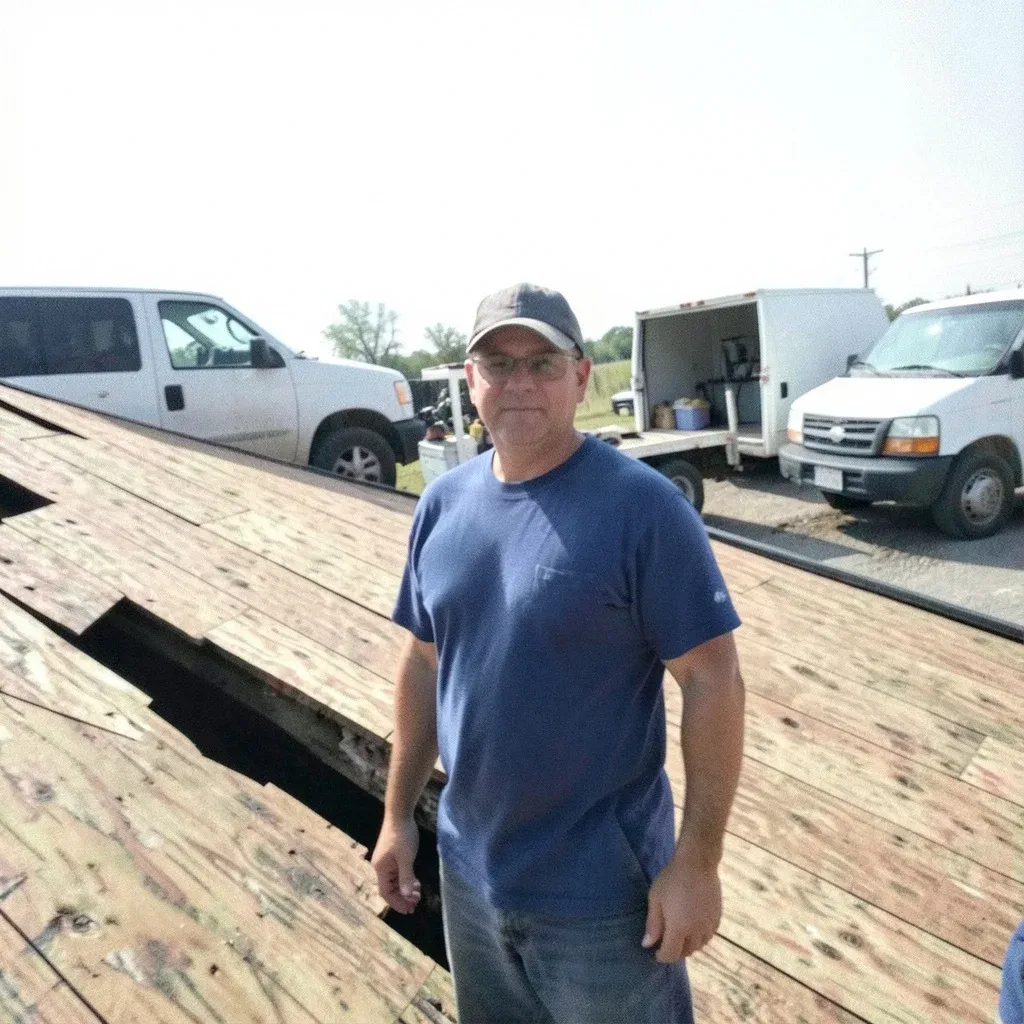
Water riding under a torn shingle reaches the decking directly, and repeated wetting between Omaha's spring storms leads to delamination of the plywood layers before a stain ever shows on the ceiling below. Left alone, the soft substrate spreads past the original crease.
Not Sure If Your Claim Holds Up?
Expect an estimated $900 to $7500 for wind-creased and torn shingles here, with the pitch, the access and how much decking is sound doing most of the moving. Omaha's freeze-thaw cycling, not insect activity, drives most hidden roof damage found around Dundee and Benson. The eastern subterranean termite is the local species, entering through soil contact, but it rarely factors into a reroof estimate here. The licensed pros we connect you with usually flag ice-dam and flashing wear before pest damage. pricing guide, and the service that handles this is Storm & Wind Damage Roof Repair.