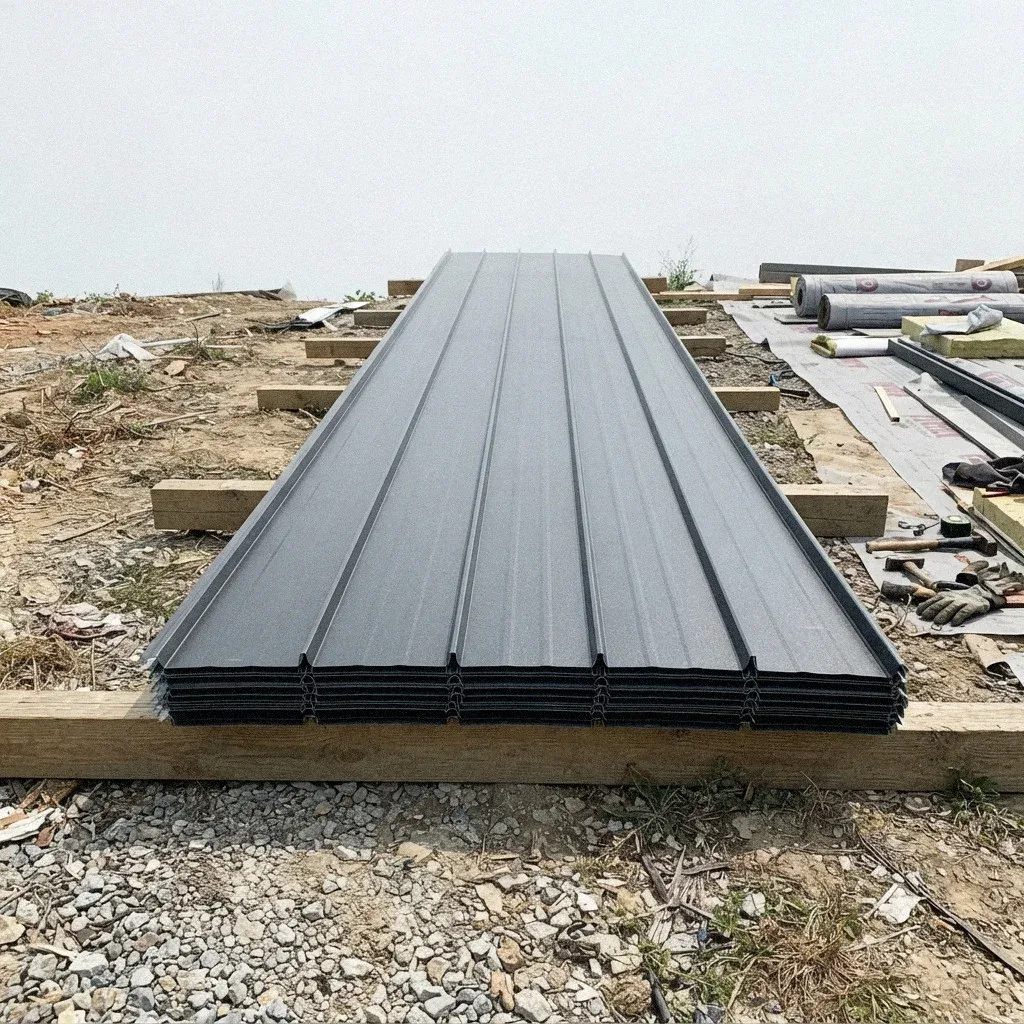
Standing Seam Metal Against Composition Shingles in Omaha
How standing seam metal and composition shingles compare for area homes, from dead load to resale value.
Composition shingle costs less upfront and works on most Omaha roof pitches; standing seam metal weighs less, resists hail denting better, and lasts several times longer before replacement.
How Long Before Either One Needs Replacing
Omaha homeowners weighing a reroof usually land between two materials: asphalt composition shingle and metal, either standing seam or exposed fastener panel. Both show up across Douglas County, from Dundee bungalows to newer Elkhorn construction, and both can handle the freeze-thaw swings this region puts on a roof. The real differences show up in how each one ages, what it weighs, and how it behaves during a spring hail season.
Composition shingle remains the roof on most Omaha houses, in Benson, Millard, and the older blocks near Hanscom Park alike. Supply is steady, installers are plentiful, and the licensed pros we connect you with can source matching shingle for a repair without special order lead time. Metal is less common on older housing stock but shows up more often on newer builds and additions where the owner wants a longer-lived, low-maintenance surface.
Longevity numbers favor metal, but the gap plays out differently across Omaha. A composition roof on a Dundee bungalow or a Benson four-square gets pushed hard by freeze-thaw cycling and spring hail, so 20 years is a realistic ceiling before granule loss and cracked seals force a decision. A properly installed steel panel roof on the same house can outlast several shingle replacements, which changes the math for anyone planning to stay put through multiple Omaha winters.
Dead Load on Omaha Roof Framing
Structural load becomes a real question on Omaha's older housing stock. Homes in Gifford Park, Bemis Park, or Kountze Place were framed decades before metal roofing was common here, and their rafters were sized for a single layer of asphalt composition shingle, not a second course stacked on top. Metal panels add far less dead load than shingles do, which is one reason a licensed pro will check the attic framing before recommending either material on an older build.
Panel gauge changes the weight math on the metal side. A heavier-gauge standing seam panel still tends to weigh less per square than shingle, but the difference narrows with thicker gauges chosen for wind resistance. On a Field Club or Bemis Park home with an unaltered original roof deck, that lighter load is rarely a problem. On a home with additions or a finished attic, it is worth confirming before committing to either material.
- Composition shingle on an Omaha roof typically wears out within a couple decades, sooner after repeated hail seasons and poor attic ventilation.
- Dead load runs opposite to the usual guess: standing seam weighs less per square than shingle, easing strain on older Kountze Place framing.
- Exposed fastener panels loosen at the screw line as Omaha's freeze-thaw swings work the metal; concealed clip systems let panels move without strain.
- Composition shingle adds more dead load per square than most metal panel systems, a real factor on older Dundee or Benson framing not built for it.
- Impact rating matters more here than fire classification; hail causes far more Omaha roof damage than heat or flame ever does.
- Snow retention isn't a major Omaha concern most winters, but ice buildup along eaves after a freeze-thaw cycle affects both materials at the drip edge.
Matching Profile or Grade to Pitch
Composition shingles come in a narrow range of grades, mostly separated by thickness and wind rating, so the choice is simpler than it looks. Metal is the opposite: exposed fastener panels are screwed straight through the face into the deck, while standing seam panels lock together over hidden clips, hiding every fastener from weather and sun. That difference in attachment is what separates a roof that shows wear at the seams from one that stays tight through an Omaha hailstorm.
Shingle grade works the same way. A basic three-tab product offers less wind and impact resistance than a laminated architectural shingle, and Class 4 impact-resistant shingles are built specifically to hold up against the hail that hits Omaha roofs most springs. Fire classification is comparable across most modern shingle and metal products sold locally, so that distinction rarely decides the choice between them for an Omaha reroof.
- Steeper pitches common on Field Club and Hanscom Park homes suit standing seam's water-shedding profile better than low-slope sections do.
- A dented standing seam panel usually needs replacing end to end, since interlocking seams along the run make a clean partial patch difficult.
- Oil canning, a rippled look across a flat panel, shows up more on cheaper metal gauges and doesn't affect performance, only appearance up close.
- Panel gauge needs matching to the pitch and span; a gauge too thin on a long run near Zorinsky Lake can oil-can under sun load.
Cost Tier, Resale, and Recycling
Appearance often settles the decision before the technical points get weighed. Composition shingle reads as expected on nearly every Omaha street, including the historic homes around Prospect Hill and the ranch-style blocks of Old Millard, where a metal roof would stand out. Newer construction in Elkhorn or Aksarben Village tolerates either material more easily, and HOA rules in some newer developments restrict panel color or profile even where metal itself is allowed.
Noise and walkability come up more in expectation than in the actual experience of living under either roof. Metal does carry sound differently during a hard downpour, but a solid deck and proper underlayment quiet most of that difference. Walkability favors shingle, since a standing seam panel can dent or oil-can under foot traffic, which matters for anyone planning to mount snow retention or work near a chimney later on.
| Factor | Metal | Composition |
|---|---|---|
| Relative cost tier | Higher material and install tier | Lower material and install tier |
| Dead load on rafters | Light, panels add little extra weight | Heavier per square, especially double-layered |
| What happens to old material | Panels scrap for real recycling value | Tear-off usually ends up in a landfill |
| Installing over the existing roof | Rarely done over old shingles here | Common where deck condition allows it |
| Walking the roof for repairs | Slick underfoot, needs care and soft soles | Grips boots better, easier for a quick patch |
Noise, Foot Traffic, and Fixing Damage
Getting a damaged roof fixed quickly after an Omaha hailstorm often hinges on what material the roof already has. Shingle is easier to patch fast since matching stock is common and most licensed pros keep it on hand. A damaged metal panel usually needs a full panel replaced rather than a spot patch, and finding an exact color and profile match can take longer, especially on an older standing seam system installed years ago.
Whether one material can go directly over another depends on the deck and the existing layer. A lightweight standing seam system with concealed clips can sometimes be installed over sound composition shingle, avoiding a full tear-off. Shingle itself is rarely installed over an existing shingle layer on Omaha homes today, since most reroofs here follow a full tear-off to inspect the deck underneath for hail or moisture damage first.
Picking Between the Two in Omaha
Cost tier, without naming figures, runs in a fairly steady order across the metro: composition shingle sits lowest for upfront price, exposed fastener panel sits above it, and standing seam sits highest. That order tends to flip when spread across the roof's full service life, since a metal roof's longer run reduces how many times an Omaha homeowner replaces it before selling the house or paying it off outright.
Recyclability and resale value both lean toward metal, though neither is absolute. Steel and aluminum panels are broadly recyclable at removal, while shingle tear-off usually goes to landfill unless a specific hauler offers shingle recycling locally. For resale, a newer metal roof can be a selling point on an Omaha listing, though buyers in older neighborhoods like Dundee or Benson often expect shingle and don't discount a well-maintained one.
Metal and Composition Compared Fast
- Composition shingle remains the common covering across most Douglas County subdivisions, largely on upfront cost and crew familiarity with the material.
- Standing seam shows up more on newer builds near Aksarben Village and on remodels where owners plan to stay put for decades.
- Metal sheds standing moisture better through freeze-thaw cycling, while shingle granule loss accelerates as temperature swings repeat each winter.
- Recovering over old shingles avoids tear-off debris, but Omaha's Planning Department still expects a permit application before work starts.
- Metal scrap holds real resale value at a salvage yard; composition shingle waste only gets diverted if your hauler separates asphalt from regular debris.
- Composition still shows up on more Omaha listings simply from being the common covering, though a long-held standing seam roof needs no near-term replacement line item.
Frequently Asked Questions
Is a metal roof worth the extra upfront cost?
Sometimes. Omaha code allows a metal recover over an existing composition shingle layer in many cases, since steel panels weigh less than a second course of shingles would. The deck still has to be checked for rot or sagging first, particularly on older homes in Florence or Walnut Hill where the original roof may have been patched more than once. A licensed pro can confirm whether your deck qualifies before tearing off anything.
Does a metal roof hold up better against hail?
Neither material is immune to Omaha's spring hail, but heavier gauge panels and Class 4 impact-resistant shingles both perform better than base-grade options. Metal can dent without losing its seal, while shingles can bruise and lose granules. Ask an adjuster or roofer to inspect after any April through June hailstorm before deciding which showed damage.
How much more does metal cost than shingle?
Metal costs more upfront in Omaha, often close to double a composition job on the same house. The gap shrinks over a longer hold since composition needs full replacement after storm cycles wear it down, while standing seam can outlast several of those cycles without a tear-off.
Is metal or shingle easier to walk on for repairs?
Both surfaces are safe to walk when dry. On composition shingle, step near the eave line where the deck is fully supported, avoiding the softer field on a hot afternoon. On standing seam, keep your boots on the flat pan between ribs and never step directly on a seam or clip, since that's where a panel can dent or the clip underneath can shift.
Will my Omaha HOA allow a metal roof?
Most Omaha-area HOAs accept both, though standing seam draws more questions in older subdivisions built when composition shingle was the only covering on the block. Newer developments around Elkhorn or Gretna tend to have architectural guidelines that already name acceptable metal colors and profiles, so check the covenant before ordering panels.
Deciding between metal and composition for your Omaha roof?
Torn between metal and composition for your Omaha home? Get quotes from the licensed pros we connect you with on both.
Call (833) 566-1459