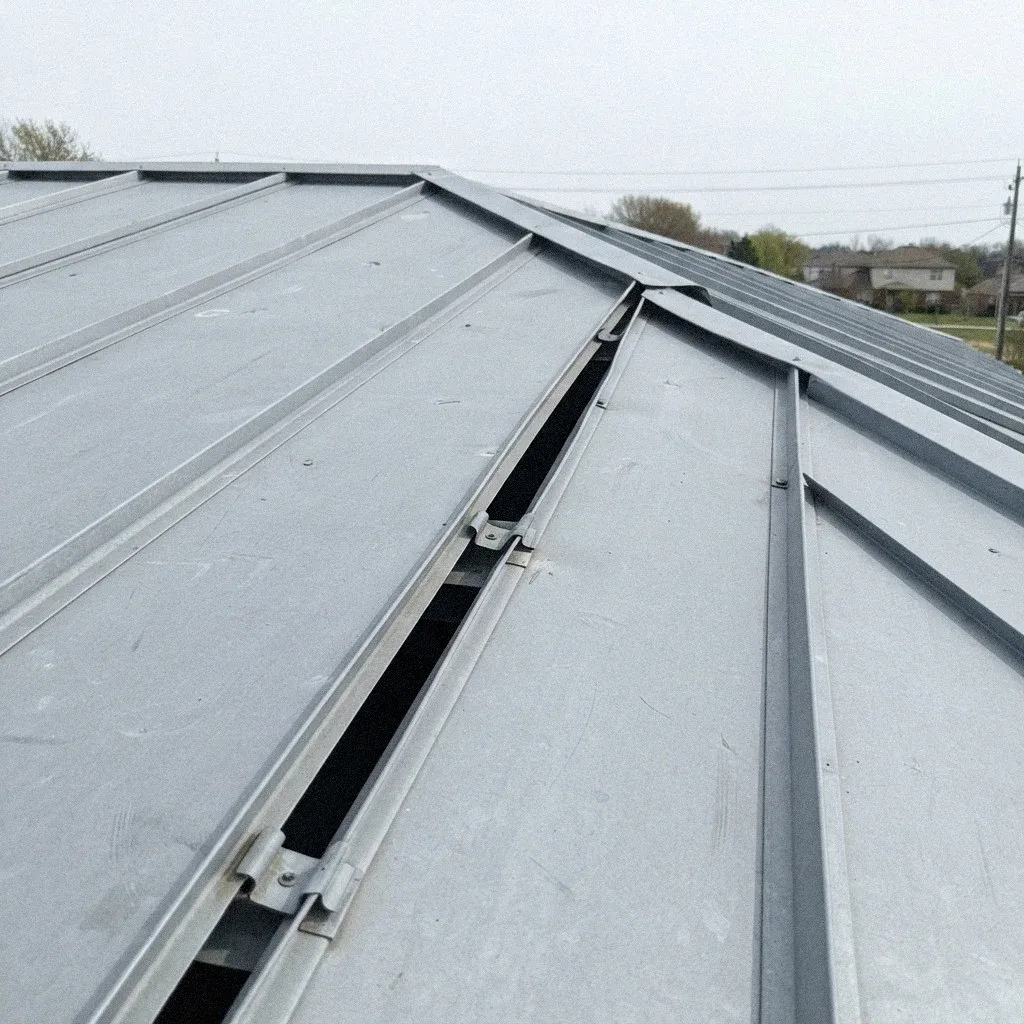
Where Insurance Adjusters Look First
Many Omaha attics get extra blown-in insulation for winter without anyone checking the soffit baffles first, so the added material buries the intake vents. The attic still needs that airflow gap in July, even though the insulation was added to help with January cold.
Older homes around Dundee, Benson, and Florence often have narrow soffit overhangs with small factory vent slots that get painted over during routine exterior maintenance. Once sealed, the eave stops feeding air to the ridge, and summer heat has nowhere to go but up against the decking.
Steep-slope roofs and low-slope roofs fail differently and get repaired differently. A homeowner comparing two quotes should check that both bids are actually pricing the same roof type, not applying a steep-slope fix to a flat section or the reverse.
Insurance Claims Made Simple
- Location
- At the soffit along the eave, where outside air is meant to enter the attic before rising toward the ridge.
- Appearance
- A noticeably hot attic in summer, frost or staining on winter decking, and vent slots visibly painted or packed shut.
- Cause
- Vent openings sealed by paint or debris, or insulation pushed against the soffit baffles during a later retrofit.
- Pace
- Slow at first as heat and moisture build, then faster once condensation starts affecting the decking and rafters each winter.
- Left Alone
- Left blocked, sustained attic heat shortens shingle life over the ridge and winter condensation soaks decking near the eave, inviting rot and mold before anyone sees a ceiling stain.
- Time of year
- Blocked intake shows up worst in two opposite ways: peak summer heat baking the attic through July, and winter condensation building on the decking during Omaha's sub-freezing stretches. Both point to the same missing airflow, just triggered by different weather.
- Estimated cost
- an estimated $450–$2600
Questions Worth Asking Before Any Repair
Blocked soffit intake gets mistaken for simple attic under-insulation. Both leave an attic that feels hot on a summer afternoon, but under-insulation is a heat-transfer problem through the ceiling, while blocked intake is an airflow problem at the eave that keeps hot, moist air trapped against the decking regardless of insulation depth. From the ground both just look like a hot house. The separating test is at the soffit: check whether the vent openings are visibly clear of paint, insulation, or debris, then feel for air movement at the ridge. No draw at the ridge with clear intake points elsewhere.
How to Read and Compare Two Estimates
The licensed pros we connect you with clear the soffit vent openings from outside, then check inside the attic for insulation or baffle material blocking the same path, restoring a continuous air channel from the eave up toward the ridge or gable vents.
Where the soffit runs along a rake edge or ties into a valley, the fix also checks that nearby flashing and the drip edge weren't sealed over during the same work that blocked the vents, since one fix shouldn't undo another.
Roof damage in this climate builds quietly between seasons. Freeze-thaw cycling works at shingle edges and flashing seams until a small gap becomes a leak path, often showing up long after the weather event that caused it. Spring hail adds sudden, visible damage on top of that slow wear, which is why timing and cause both matter once you're filing a claim.
MATERIAL LIFESPAN COMPARED ACROSS COMMON ROOFING CHOICES
| Roof Condition Now |
Costs More Later |
|---|
| Two homes built the same year can age at different speeds once wind and hail get involved. One side of a roof takes the brunt of spring storms while the other stays sheltered, so wear rarely spreads evenly. Judging a whole roof by one section, or one photo, misses what a full walk-through would catch. | A reroof estimate that only lists shingles and labor is missing the part that actually floods a basement: tear-off disposal, new flashing, and drip edge. Ask what's excluded before signing, because the addition after demo starts is where a fair bid turns into an argument. |
| Freeze-thaw cycling does more damage in Omaha than most homeowners realize. Shingles that flex through repeated hard freezes and spring thaws lose granules and seal strength years before their rated lifespan, and the wear rarely shows up until a leak forces the issue. | Gutters get judged on the wrong storms. It's not the steady rain that overflows them, it's the short, intense downpour that dumps most of its water in a few minutes. A gutter sized for average weather can still send water straight at a foundation during the one storm that matters. |
| A roofing bid should spell out what happens to the old material, who pulls the permit, and whether flashing and ventilation are part of the price or an add-on later. Two bids that look close on the bottom line can cover very different amounts of actual work once you read past the total. | Shingles don't fail on a mild day. Sharp temperature swings make roofing materials contract and stretch, and flashing loosens a little each time. Granules wear thin, seals crack, and a roof that looked fine in fall can leak by spring. Regular checks catch that wear before it turns into a ceiling stain. |
Checking Your Own Roof From The Ground
A homeowner can walk the eave line around the house and check whether soffit panels are solid, painted shut, or have vents at all. Inside the attic, look for insulation piled against the eave, blocking the path air needs to reach the ridge or roof vents above.
Why a Fast Look Beats a Slow One
Left blocked, soffit intake starves the attic of fresh air, so summer heat and winter moisture both build against the decking and rafters with nowhere to go. Trapped moisture invites rot and mold, while trapped heat shortens shingle life across the whole roof plane.
Not Sure If Your Claim Holds Up?
Expect an estimated $450 to $2600 for blocked soffit intake and a hot attic here, with the pitch, the access and how much decking is sound doing most of the moving. Omaha's freeze-thaw cycling, not insect activity, drives most hidden roof damage found around Dundee and Benson. The eastern subterranean termite is the local species, entering through soil contact, but it rarely factors into a reroof estimate here. The licensed pros we connect you with usually flag ice-dam and flashing wear before pest damage. pricing guide, and the service that handles this is Roof Ventilation & Attic Airflow.