Should You Patch That Omaha Roof Or Tear It Off
A practical framework for Omaha homeowners sizing up damage extent, deck soundness, and remaining shingle life.
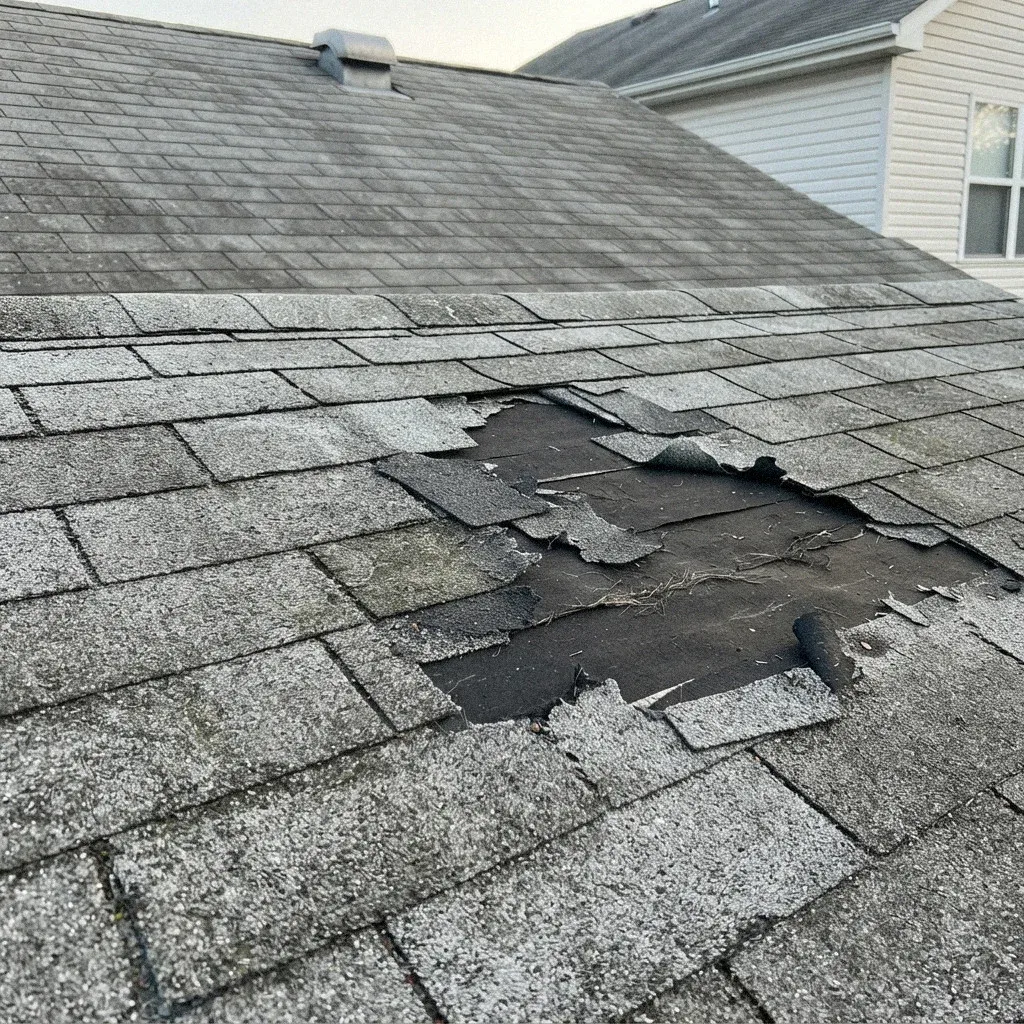
Repair when the deck is sound, damage sits on one slope, and shingles still have several years of remaining service life. Replace when damage spans multiple slopes, the deck has soft spots, or the roof already carries a second layer.
Figuring Out What's Left In The Roof
Start with the number nobody wants to work out: how many years the roof has left. Take the rated life on the shingle, subtract the age, then subtract again for how the roof has actually lived. A south or west slope in Omaha has taken more sun than the same shingles on the north side, and a slope that has been hailed on has aged faster still. What you are left with is the real figure to make a decision against.
Then count the layers. Two layers already on a house limits the options, because a third is rarely permitted and a tear-off of two costs more than a tear-off of one. A roof with two layers and eight years left is a different problem from a roof with one layer and eight years left, even though the shingles look identical from the street.
Deck condition decides more than shingle age does. Pull back the damaged section and check the plywood or OSB underneath. Sheathing that is dry, flat, and holds a nail firmly supports a straightforward reroof or a patch. Sheathing that is soft, spongy, or delaminated from long-term moisture means the deck itself needs replacing, and that scope question usually settles whether a homeowner is really choosing between repair and replacement or already past that choice.
What The Damage Pattern Is Telling You
Damage has a shape, and the shape tells you which decision you are making. Damage at one detail, such as a length of step flashing or a split pipe boot, is a repair whatever the roof age. Damage spread across several slopes is nearly always a replacement, because it means the cause was weather rather than a fault, and weather does not stop at one plane.
Permits through the City of Omaha Planning Department apply to roofing work within city limits, and a full replacement generally needs one. Spot repairs on an existing roof are commonly treated differently than a full tear-off or reroof, though the exact scope that separates a permitted job from an exempt one is not something a homeowner should guess at. Confirming that distinction with the Planning Department before work starts avoids a problem discovered after the shingles are already down.
- Compare the roof's age to its shingle line's rated years to see how much remaining service life is realistically left.
- Damage limited to one slope or one flashing detail usually means a spot repair; damage across several slopes points toward a full reroof.
- Deck condition sets the real limit: soft or spongy sheathing under damaged shingles means a patch has no way to hold, so that section needs new decking regardless of budget.
- Existing layer count caps your options — a roof already built up with one prior layer usually can't take another, forcing a full tear-off instead of a cheaper layover.
- An older Omaha reroof with a discontinued shingle line often forces a visible patch, since matching color and profile gets harder over time.
- Listing a house soon can favor replacement even with years of shingle life left, since it clears a roof-age question off the resale disclosure.
Why The Deck And The Layers Matter So Much
Patch matching ends more repair plans in Omaha than the actual damage does. A shingle color and granule blend that looked identical when installed can shift after a decade of sun and freeze-thaw cycling, so a new bundle bought to match an old roof in Millard or Elkhorn often stands out instead of blending in. Discontinued shingle lines make this worse, since a manufacturer that changed a profile five years ago leaves no exact match to buy at any price.
Layers matter for the same reason the deck does: they are what the new roof has to sit on, and neither is visible until the old covering is off. A quote that names a per-sheet decking rate and a per-layer tear-off rate has told you where the price can move. One that names neither will move anyway, just without warning.
- Divide the repair estimate by the years of service life it buys back, then compare that figure against the cost of a full reroof.
- A clogged gutter near Dundee or Benson can hold water against the deck through a spring thaw, shortening remaining service life faster than age alone.
- Insurance-driven replacement in Omaha usually follows a spring hailstorm, not slow wear, so a claim adjuster's report often decides the repair-or-replace call before cost does.
- A tear-off strips the deck bare and resets the clock on the whole roof; an overlay costs less now but keeps whatever problems already sit underneath.
Where Repair Wins, Where Replacement Wins
Repair wins where the roof is young, the damage is at one detail, and the deck is sound. It also wins where the damage is confined to a slope with plenty of remaining life, and where a matching shingle is still available. Those three conditions together are the case for spending a few hundred rather than several thousand, and they are more common than the sales conversation suggests.
Replacement wins where the arithmetic stops working. A roof past twenty years, damage on more than one elevation, soft decking, or a second repair inside two years all point the same way. So does a roof where the shingle line has been discontinued, because every future repair will be visible. The test that settles it is cost per remaining year, not the size of the repair bill.
| Situation | Repair Territory | Replacement Territory |
|---|---|---|
| Roof age | Well inside rated shingle life | At or beyond rated shingle life |
| Damage extent | One slope, a few shingles | Several slopes or the ridge line |
| Deck condition | Firm, no give underfoot | Soft, spongy, or stained plywood |
| Shingle match | Style still in production | Run has been dropped for years |
| Layer count | One layer, deck exposed if pulled | Second layer already covering the deck |
If You're Listing The House Soon
A roof is one of the first things an Omaha buyer asks about and one of the few things an inspector will always look at. An unrepaired roof with visible hail bruising comes off the price by more than the repair would have cost, because a buyer prices in uncertainty and a lender may ask questions. If the roof is genuinely near its end, a new one is usually recoverable in the sale price.
What is not worth doing is a cosmetic patch to get through a showing. An inspector finds it, and a repair that looks like a cover-up damages trust in everything else about the house. The better move is a written inspection report handed over with the disclosure, so the condition is a known quantity rather than a discovery.
When A Repair Covers You Through A Sale
A repair covers you through a sale when it is documented. That means an invoice, a written scope of what was done, photographs before and after, and a workmanship warranty with a length on it. Handed to a buyer as a folder, that turns a question mark into a settled item. Handed over as a verbal assurance, it turns into a negotiation.
It stops covering you when the roof is old enough that a buyer will need a new one within a few years of moving in. At that point a repair reads as deferral rather than maintenance, and the price reflects it. The honest question to ask a roofer is not whether the roof can be repaired but whether they would buy the house with that repair on it.
What Omaha's Permit Process Looks Like
- A deck that already carries a second layer of shingles usually forces full tear-off, since a third layer isn't a realistic option in Omaha.
- The City of Omaha Planning Department handles roofing permits, and most sources agree a full replacement needs one while small patch jobs often do not.
- Older shingles lose pliability with age, so a roof over Midtown Omaha or Florence bungalows may crack under a patch rather than lift cleanly for matching.
- Hail season runs roughly April through June here, and a storm strong enough to dent gutters is usually strong enough to force the replacement question.
- Freeze-thaw cycling through an Omaha winter works on flashing and nail lines year after year, wearing down a roof already close to its remaining service life.
- A second layer already down in older Benson or Dundee housing stock often forces a full tear-off instead of another overlay.
Frequently Asked Questions
Is my roof damage bad enough to replace it?
It comes down to three things: how many slopes are affected, what the deck is like underneath, and how many years the shingles had left before the damage. One slope, a sound deck and plenty of life left is a repair. Several slopes, or soft decking, or a roof already past twenty years, is a replacement. Anything in between is decided by cost per remaining year.
Can I add a second layer over my roof?
Nebraska's residential code allows one overlay over an existing layer on many Omaha homes, but not a third once two layers already exist. If your roof already has two layers down, an overlay isn't an option and the next job is a full tear-off, whatever the damage looks like from the ground.
Why doesn't my roof patch match the rest?
Does soft decking mean I need a new roof?
Not always, but it's a strong signal. Soft decking under a damaged section on an Omaha house usually means moisture sat there through more than one freeze-thaw season rather than from a single storm. Whether it calls for a full replacement depends on how much of the deck is affected, not just that some of it is soft.
Can I just replace one section of my roof?
Yes, when the roofline separates cleanly by slope, such as a garage wing or an addition distinct from the main house. It's harder to justify on a plain gable roof, where a partial reroof in a neighborhood like Elkhorn or Millard would leave a visible mismatch between old and new shingles on the same plane.
Want A Second Set Of Eyes On The Deck?
Not sure if a patch will hold or a tear-off makes more sense? Talk to a licensed pro who can check the deck first.
Call (833) 566-1459