Water beading under cap shingles during windy rain
This is the clearest sign the ridge vent itself is letting rain past its baffle, not a random leak; it tells you the whole ridge run should be checked, not just one spot.
This tends to show up in spring, when Omaha's windier storm systems roll through ahead of the hail season and push rain into a ridge vent that handled calmer winter precipitation just fine.
Wind-driven rain at ridge vents shows up as staining or damp insulation just under the ridge board in the attic, appearing on the ceiling below only after wind-heavy storms, not calm rain — caused by baffled vent covers letting horizontal gusts push water past the opening.
Freeze-thaw cycling is the quiet damage driver here. Shingles and flashing expand and contract through Omaha's swings between warm afternoons and hard freezes, and that repeated movement loosens seams long before any single storm gets the blame.
This is the clearest sign the ridge vent itself is letting rain past its baffle, not a random leak; it tells you the whole ridge run should be checked, not just one spot.
Damp confined to a narrow band under the peak points at the ridge vent rather than anywhere else on the roof. A leak from a slope spreads sideways as it runs down a rafter; this one stays in a line because that is the shape of the opening letting it in. Check the vent baffle before assuming a shingle problem.
A smell strongest at the peak and fading as you move down means moisture has been coming in at the ridge for a while. Warm air collects up there, so anything damp dries slowly and starts to smell before it ever stains. It is much easier to trace while it is still a smell rather than a mark.
Staining that follows the cut slot along the peak is water blown in through the vent, not water that came through the shingles. The slot is deliberately open, and a vent with a failed or missing external baffle lets wind push rain straight through it. The fix is the vent itself, not the roof around it.
A leak that shows up only in driven rain and never in a steady one is almost always an opening gravity cannot use but wind can. Ridge vents, gable vents and the top of a sidewall flashing all behave this way. Note the wind direction when it happens, because that points at which side to check first.
Omaha's spring windstorms often arrive from the west, pushing rain almost sideways across roofs from Elkhorn to Millard, and a ridge vent built for straight-down rain lets that angled water past its baffle.
Freeze-thaw cycling through winter works ridge cap fasteners loose year over year, so by the time spring's wind-driven storms hit neighborhoods like Dundee and Benson, the cap no longer seals as tightly as it did.
Half of what shortens an Omaha roof happens under it. Warm air rising from a full basement and a heated house collects in the attic, and if the soffit intake is blocked it has nowhere to go, so it bakes the deck in July and condenses on it in January. Two roofs on the same street, one venting properly and one not, will not reach the same age together.
This gets mistaken for a plain roof leak from a shingle or flashing failure elsewhere, since both show up as ceiling staining below the attic. Check the attic during or right after a windy rain. Water tracking straight down from the ridge board itself, not from a valley or penetration, points to the vent.
The fix is removing the ridge cap, checking the vent's internal baffle and external wind rating, and installing a ridge vent designed to block wind-driven rain before it reaches the slot cut into the decking.
Running a bead of sealant along the cap edges or laying extra shingles over the ridge only masks it for a season; the vent slot underneath still lets rain in in the next windy storm.
Spring hail is the event that actually gets a roof replaced. A short, hard storm can bruise a shingle in ways an eye can't catch from the driveway, and the damage still counts toward an insurance claim. The licensed pros we connect you with document it the way an adjuster expects to see it.
| Roof Condition Now | Costs More Later |
|---|---|
| Omaha roofs deal with hail more than wind-driven rain, and that changes what actually fails first. Granule loss from an April hailstorm weakens a shingle without opening it up right away, so the damage sits unnoticed until a freeze-thaw winter finds the weak spot and turns it into a leak. | Insurance adjusters here see enough hail claims each spring that they know the difference between wind-lift and hail bruising on sight. A homeowner walking into that conversation without their own read on the roof is negotiating a repair bill blind, against someone who does this every week. |
| A roof claim gets complicated fast when the homeowner, the adjuster, and the contractor all read the same shingles differently. Getting a second, licensed opinion before signing anything keeps the estimate grounded in what the roof actually needs, not what any one party wants it to need. | Freeze-thaw is the quiet damage here, not the dramatic kind. Water works into small gaps, freezes, expands, and widens them, then thaws and does it again the next week. A shingle edge or flashing seam that could handle one hard freeze rarely holds up through a whole winter of them. |
| Hail doesn't always leave a hole you can see from the driveway. It can bruise a shingle's mat without breaking the surface, and that bruise keeps losing granules long after the storm passes. An insurance adjuster or a roofer trained to spot bruising can tell the difference between cosmetic marks and real functional damage. | Gutters matter more here than in drier places, because so many older homes have a finished basement below grade. A roof that sheds water poorly doesn't just risk the attic — it can push water toward a foundation that was never built to take it. Drainage is part of the roof's job. |
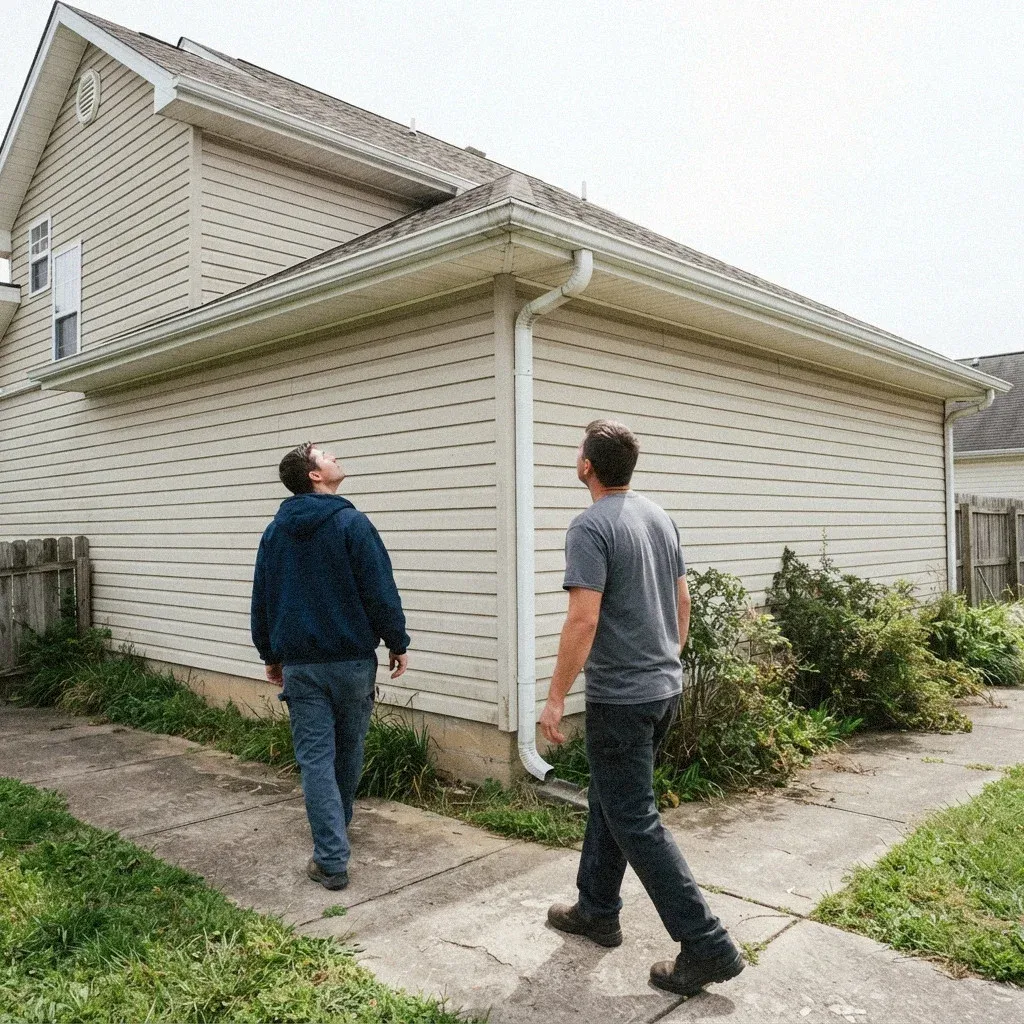
From the ground, a homeowner can watch the ridge line during a windy rain for water pushing up under the cap shingles. Checking the attic for wet insulation near the ridge is fine, but resetting the ridge cap and vent belongs to somebody on the roof.
Insulation soaked repeatedly near the ridge loses its R-value and can grow mold across the top of the attic, which is often what finally sends a homeowner looking for the source rather than just the smell.
Most wind-driven rain at ridge vents jobs in Omaha land between an estimated $450 and $2600, and the roof decides where inside that. Omaha's freeze-thaw cycling, not insect activity, drives most hidden roof damage found around Dundee and Benson. The eastern subterranean termite is the local species, entering through soil contact, but it rarely factors into a reroof estimate here. The licensed pros we connect you with usually flag ice-dam and flashing wear before pest damage. pricing guide, and the service that handles this is Roof Ventilation & Attic Airflow.
Roof Defects. Chimney crown and counterflashing leaks are cracks in the concrete cap or gaps where flashing meets brick, letting water into the chimney chase.
Shingle Wear. Granule wash into the downspouts is asphalt shingle granules stripping off and collecting in gutters and downspout openings, showing as coarse dark grit rather than leaves.
Attic Airflow. Blocked soffit intake is when eave vents are sealed by paint, debris, or insulation, starving the attic of fresh air.
It's a specific kind of leak. Instead of water working through a worn shingle or a bad seal at a penetration, it's rain that wind pushes sideways into the ridge vent slot itself. The result on the ceiling looks similar, but the fix is different: it targets the vent and cap along the ridge, not the general roof surface.
Sealing it shut stops the rain but also stops the attic airflow the vent was installed for, which can trap heat in summer and moisture in winter. In Omaha's freeze-thaw climate, that trapped moisture can cause its own problems, so the better fix is a wind-rated vent, not a sealed one.
It depends on the policy and whether the damage traces to a specific wind event versus gradual wear from years of an undersized vent. An adjuster will usually want to see storm dates and attic damage documented, and Nebraska's post-loss assignment statute affects how any repair work gets paid out.
Homes with older ridge vent styles, common on houses built before wind-rated vent designs became standard, see this more. Exposed rooflines in western suburbs like Elkhorn with fewer windbreaks nearby also take more direct wind, while older neighborhoods near Dundee often just have older vent hardware overdue for replacement.
Spring hail is the event homeowners actually notice, but wind does comparable damage without leaving a mark you can see from the ground. A roof can lose granules or crack a mat and still look fine from the driveway. That gap between what happened and what shows is exactly why an inspection after a bad storm matters more than a glance from below.
Call (833) 566-1459