How Age And Weather Combine
Laminated architectural shingle covers most pitched roofs across Omaha, from Benson to Millard, because it handles the region's freeze-thaw cycling and spring hail without the structural changes tile or standing seam would call for on a typical rafter-and-basement house.
Cost is the other reason it stays common. A shingle reroof runs well below what a synthetic slate or standing seam job costs on the same house, which keeps it the default for homeowners weighing a full tear-off after a hailstorm against a tighter budget.
Omaha roofs age on a schedule set by temperature swings, not calendar years. A shingle that flexes fine in June can crack in January after enough freeze-thaw cycles. Hail adds its own timeline, often invisible until a slope is checked closely. Regular attention catches wear before a ceiling stain forces the issue.
Weather Patterns That Wear Roofs Down
- Service life
- A laminated shingle roof in Omaha typically runs 25 to 30 years, though a hard spring hailstorm can bruise the mat and cut that span well short.
- Roof weight
- Heavier than a three-tab shingle but far lighter than clay or concrete tile, so standard rafter framing across an Omaha home carries it without reinforcement.
- Minimum slope
- Standard installation needs at least a 2:12 slope; anything flatter needs a modified low-slope method so snowmelt off a winter roof doesn't back up under a course.
- Walkability
- Walkable for inspection in most conditions, but a shingle stiffened by a hard freeze can crack underfoot, so winter walkovers in Omaha call for care.
- Repair method
- A torn or lifted section gets sliced free at the seam and swapped for a matching shingle tucked beneath the course above it.
- Season
- A shingle seals itself as sun warms the asphalt and presses the courses together, so an install needs stretches without rain right after. That makes late spring through early fall the workable window here, once April and May hail activity has typically settled down.
- Typical repair
- an estimated $11000–$30000
Reading an Insurance Adjuster's Report
Cedar shake is the material Omaha homeowners most often weigh against a laminated shingle, particularly on older Dundee and Field Club houses built with the deep eaves and steeper pitches that shake was originally cut for. Shake rests on spaced skip sheathing so each shingle can dry from underneath; laminated shingle wants a continuous solid deck with underlayment beneath it. Converting from shake to shingle means re-decking the roof, not just swapping the top layer, and changes how the attic below needs to vent.
Matching New Material to an Existing Roof
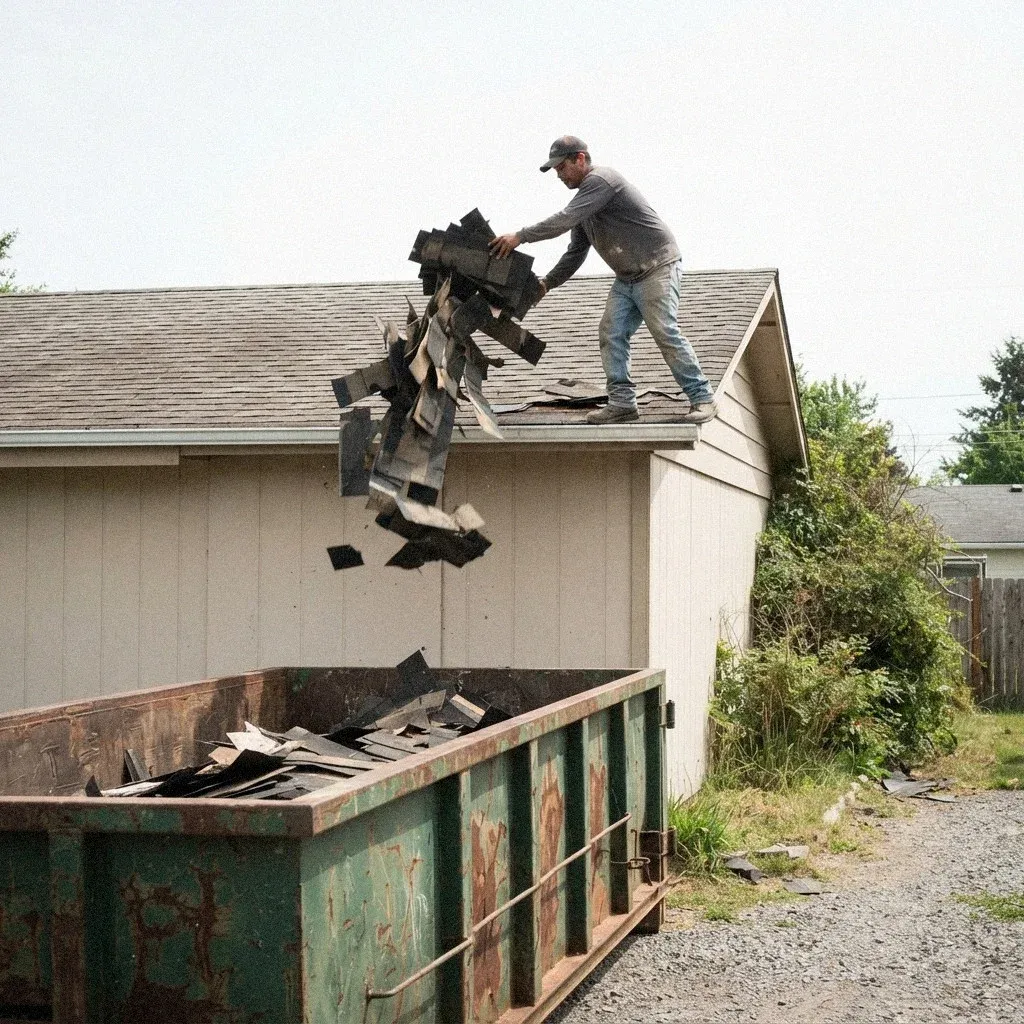
Stripping the old shingle down to bare decking is standard on a full replacement, and it's the point where the licensed pros we connect you with can spot any plywood softened by a slow leak, common on older Prospect Hill or Kountze Place homes with aging valleys.
Underlayment and valley flashing get renewed during a reroof, since a heavy short-duration downpour, the kind that flooded parts of the Old Market in 2021, tests those transitions faster than the open field of the roof ever does.
Older homes carry original roofing that's outlasted its warranty even if it looks fine, while newer builds sometimes have shortcuts from a fast construction schedule. Neither age nor newness tells the whole story. The licensed pros we connect you with base a recommendation on what the roof itself shows, not on the year the house was built.
INSURANCE CLAIM TIMELINE VS. OUT-OF-POCKET REPAIR TIMELINE
| Next Step |
Works Best When |
|---|
| Omaha roofs deal with hail more than wind-driven rain, and that changes what actually fails first. Granule loss from an April hailstorm weakens a shingle without opening it up right away, so the damage sits unnoticed until a freeze-thaw winter finds the weak spot and turns it into a leak. | Insurance adjusters here see enough hail claims each spring that they know the difference between wind-lift and hail bruising on sight. A homeowner walking into that conversation without their own read on the roof is negotiating a repair bill blind, against someone who does this every week. |
| A roof claim gets complicated fast when the homeowner, the adjuster, and the contractor all read the same shingles differently. Getting a second, licensed opinion before signing anything keeps the estimate grounded in what the roof actually needs, not what any one party wants it to need. | Freeze-thaw is the quiet damage here, not the dramatic kind. Water works into small gaps, freezes, expands, and widens them, then thaws and does it again the next week. A shingle edge or flashing seam that could handle one hard freeze rarely holds up through a whole winter of them. |
| Hail doesn't always leave a hole you can see from the driveway. It can bruise a shingle's mat without breaking the surface, and that bruise keeps losing granules long after the storm passes. An insurance adjuster or a roofer trained to spot bruising can tell the difference between cosmetic marks and real functional damage. | Gutters matter more here than in drier places, because so many older homes have a finished basement below grade. A roof that sheds water poorly doesn't just risk the attic — it can push water toward a foundation that was never built to take it. Drainage is part of the roof's job. |
Storm Crew ScreeningA full shingle reroof inside Omaha city limits generally needs a permit through the City of Omaha Planning Department, applied for through the OmahaPermits.com system, though the exact scope that requires one varies by job and is worth confirming before work starts.
How Freeze-Thaw Wears a Roof Down
Age on a laminated shingle roof in Omaha shows up as granules thinning into the gutters, tabs cupping on the sun-facing slope after repeated freeze-thaw cycles, and moss holding moisture along shaded valleys where it doesn't dry out between rains.
Tarps, Buckets, And Other Short-Term Fixes
Clearing leaves and granules from gutters between storms is reasonable homeowner upkeep. Cutting out a hail-damaged section, matching the exposure of the surrounding course, and re-tying it into the field without leaving a visible seam is work best left to the licensed pros we connect you with.
How Hail Damage Actually Shows Up
The shingle itself doesn't rot or feed anything living. What matters is water that gets past a lifted tab or an exposed fastener and reaches the deck, since a slow leak over a finished basement can turn into a bigger repair than the roof damage that started it.
Let's Get Your Roof On A Timeline
Putting right laminated architectural shingle roofs usually runs an estimated $11000 to $30000. That is a budgeting figure, not a price. Omaha's freeze-thaw cycling, not insect activity, drives most hidden roof damage found around Dundee and Benson. The eastern subterranean termite is the local species, entering through soil contact, but it rarely factors into a reroof estimate here. The licensed pros we connect you with usually flag ice-dam and flashing wear before pest damage. pricing guide, and the service that handles this is Roof Replacement.