How Age And Weather Combine
Exposed-fastener steel panel shows up on outbuildings, additions, and porch roofs across Elkhorn and Millard, where the low cost per square and quick install suit a garage or shed better than a full architectural shingle job.
Steel panel also covers some Ralston and South Omaha commercial and mixed-use roofs, where a low slope and a wide open span favor a screw-down panel over rolled roofing or a built-up single-ply membrane system.
Half of what shortens an Omaha roof happens under it. Warm air rising from a full basement and a heated house collects in the attic, and if the soffit intake is blocked it has nowhere to go, so it bakes the deck in July and condenses on it in January. Two roofs on the same street, one venting properly and one not, will not reach the same age together.
Choosing Materials That Hold Up
- Service life
- A screw-down steel panel roof commonly runs two to four decades in Omaha before washers and fasteners give out well ahead of the steel itself.
- Roof weight
- Exposed fastener panel is among the lightest common coverings, often under 1.5 pounds per square foot, so it adds little load to an Elkhorn outbuilding frame.
- Minimum slope
- Panel makers generally call for roughly 3:12, keeping screw-down steel off the shallow-pitch additions and porch roofs found around Benson and Ralston.
- Walkability
- Walkable if the foot lands on the flat pan between ribs rather than on a rib, which spreads weight without denting the panel face.
- Damage repair
- A failed fastener is backed out and replaced with an oversized screw and fresh washer; a torn panel is typically unscrewed whole and swapped for a new run.
- Active period
- Spring through fall, after the heaviest snow load has cleared, is the steadier window for a steel panel reroof in Omaha. Screw-down work can happen in cold weather too, but sealant and washer performance is more reliable above freezing.
- Usual range
- an estimated $11000–$30000
Why Hail Damage Hides Until Spring
Exposed-fastener panel gets confused with standing seam, its concealed-clip cousin. Exposed fastener shows visible screw heads down every rib at a set spacing; standing seam hides its fasteners under raised interlocking seams, so nothing punctures the weather face at all. Both read as a corrugated metal roof from the street in Elkhorn or Millard. The difference shows at repair and resale time: exposed fastener needs its washers and screws re-torqued over the years, while standing seam has no exposed screws to fail.
What to Settle Before Anyone Climbs Up
A steel panel reroof starts with removing the old panels and checking the purlins or solid decking underneath for rot, since exposed fastener systems can run over either open framing or continuous sheathing depending on the structure.
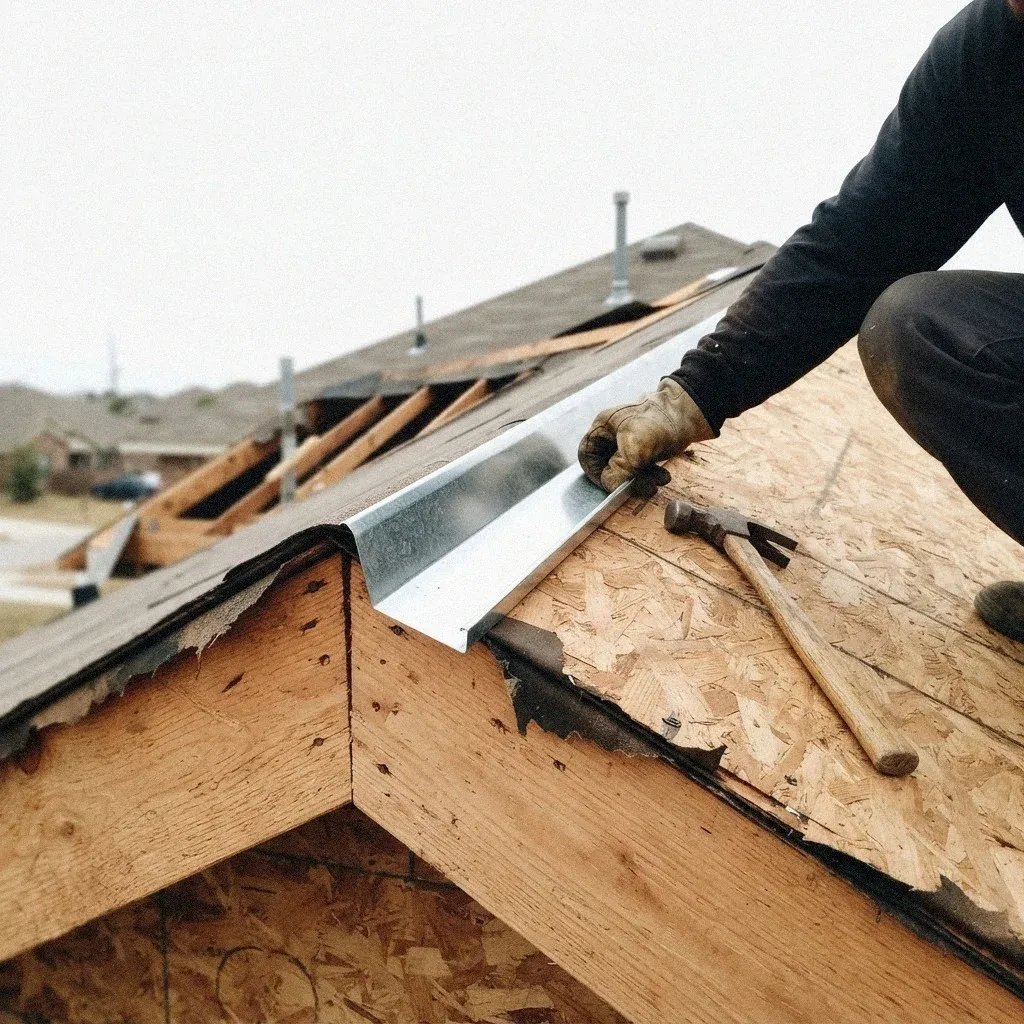
Underlayment or a slip sheet goes down next to keep the panel from drumming against bare decking, then panels run eave to ridge with screws set through the flat of the rib at a spacing matched to the roof's wind exposure.
Freeze-thaw cycling does most of the quiet damage to a roof here. Water works into small cracks, freezes, expands, and repeats through winter until flashing lifts and shingles crack. That slow wear rarely shows from the ground. The licensed pros we connect you with check for it during any inspection, not just after a storm makes the damage obvious.
REPLACEMENT VS. REPAIR: WHAT THE DAMAGE PATTERN DECIDES
| Next Step |
Works Best When |
|---|
| Small openings do more damage than big ones over time. Nail heads, vent boots, and the seams around anything mounted on the roof loosen gradually under repeated freezing and thawing, letting moisture work its way in long before anyone notices a problem indoors. | Spring hail is the claim most Omaha roofs file, but wind gets less credit than it deserves. A gust that lifts one shingle tab lets the next storm's rain track sideways under the row above it, and that damage sits invisible in the attic for months before a ceiling stain shows it. |
| Hail season here runs concentrated and fast, not spread out over months. A single spring storm can bruise or crack shingles across an entire roof in minutes, and the damage is often invisible from the ground until someone gets up close. | A roof and an insurance claim don't always agree on what happened. Wind can lift shingles without a single one going missing, and hail can bruise a mat without cracking it visibly. Getting a straight answer on which is which matters more than getting a fast one. |
| Roof wear here rarely announces itself. Temperature swings through the seasons flex shingles and flashing, loosening seals a little more each cycle. By the time a ceiling stain or a soft spot shows up, the underlying damage has usually been building for a while. A yearly look from the ground catches problems before they turn into a bigger repair bill. | A roof carries snow load, wind uplift, and hail impact in the same year, sometimes the same week. Each stresses the roof differently, and damage from one often hides the damage from another until an inspection separates them out. That's why a walk-through after any rough season matters. |
Permit ThresholdsA steel panel reroof follows the same City of Omaha Planning Department review as any other covering, and the fastening pattern used matters more here than with shingle, since a poorly spaced screw pattern is what actually fails first in wind.
Gutters, Basements, and Where Water Goes
Exposed-fastener steel degrades mainly through washer failure at each screw letting water track underneath, panel waving or oil-canning from repeated thermal movement, and gradual paint fade or chalking on sun-exposed slopes that leaves the steel unprotected underneath.
When A Licensed Pro Has To Take Over
Screwing down a steel panel looks simple, but keeping every fastener line straight, seating washers evenly, and flashing the ridge and wall transitions correctly is easy to get wrong on a first try, which is why most Omaha homeowners bring in the licensed pros we connect you with.
What Freeze-Thaw Cycling Does to Shingles
Steel panel does not give off anything on its own and is not a health item. The thing to watch is trapped condensation underneath if the ventilation path is blocked, which can rust the panel's underside before it ever shows outside.
Ready To Talk To A Local Pro?
A guide figure for exposed-fastener steel panel roofs locally is an estimated $11000 to $30000, which is a band rather than a quote. Omaha's freeze-thaw cycling, not insect activity, drives most hidden roof damage found around Dundee and Benson. The eastern subterranean termite is the local species, entering through soil contact, but it rarely factors into a reroof estimate here. The licensed pros we connect you with usually flag ice-dam and flashing wear before pest damage. pricing guide, and the service that handles this is Roof Replacement.