Omaha attics swing between bitter winter cold and humid summer heat, and that swing hides moisture problems that would be obvious anywhere else. Nothing drips, nothing stains the ceiling below, so homeowners in Dundee bungalows and newer Elkhorn builds alike go months without noticing. The signs sit quietly overhead: a smell at the hatch, a rust bloom on a nail, insulation that has lost its spring. Catching them early is mostly a matter of knowing where to look.
Start With the Smell
Open the attic hatch in a Millard or Elkhorn house and take a breath before you touch anything. A musty odor, sharper than a closed closet, means moisture has been sitting on wood and insulation long enough to feed mildew growth. Warm indoor air rising into a cold Omaha attic in winter is usually the source. The smell shows up before the damage does, which makes it the cheapest warning an attic gives.
Darkened or Stained Sheathing
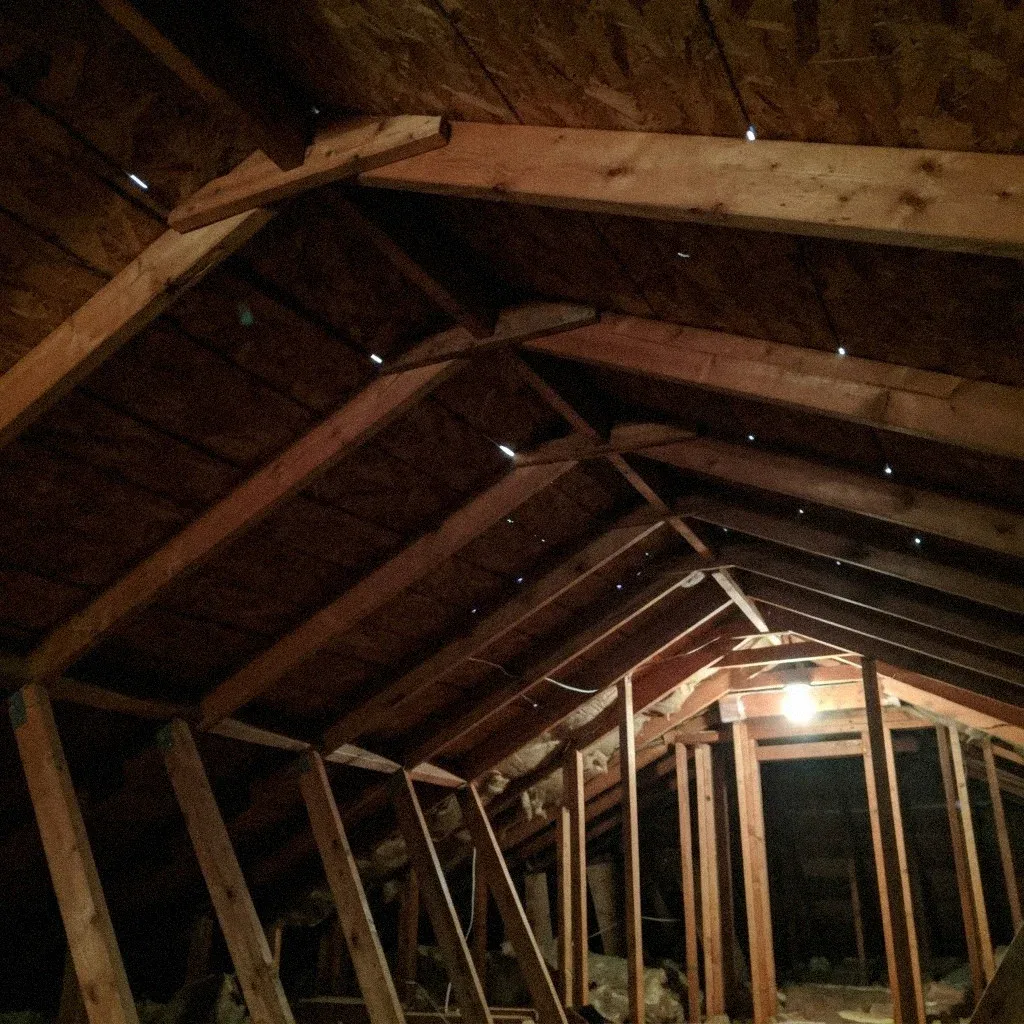
Grab a flashlight and check the roof deck from underneath. Sheathing staining reads as dark gray or black blotches, usually tracing the wood grain along the rafters near the ridge. This is condensation, not a roof leak dripping from one spot. Moist attic air hits cold sheathing on a January night in Douglas County, drops below its dew point, and leaves water on the wood. Repeated cycles darken it a little more each time.
Rust on the Nail Shanks
Nails driven up from the sheathing leave their shanks exposed inside the attic, and those shanks tell you what the air has been doing. In a dry attic the metal stays gray. Rusting nail shanks with an orange bloom, or a fine reddish dust on the insulation below them, mean condensation has been forming and drying on that metal for a while, likely more than one season, before anyone noticed.
Insulation Losing Its Loft
Insulation is supposed to feel light. Press a hand into fiberglass batt or loose-fill near Benson or Dundee's older homes and it should spring back. Matted insulation stays flat, feels heavier than it should, and sometimes looks darker or clumped. That weight is absorbed moisture, not dust. Once it mats it stops holding heat the way it did new, and mildew growth often follows in the compressed layers closest to the ceiling drywall.
Boxes and Stored Items Gone Soft
Attics double as storage in a lot of Omaha houses, and stored items make a decent moisture gauge without anyone buying a tool. Cardboard boxes near the eaves get soft corners or a faint gray bloom before anyone thinks to check humidity. Holiday decorations, old books, or furniture left up there for a few winters will show water rings or a warped edge if the air around them has been running damp for months.
Bath and Dryer Vents Ending Short
Bath fans and dryers are supposed to push moist air outside the house entirely, through a duct that ends past the roofline or siding. Sometimes that duct was never connected past the attic space, or it separated at a joint years ago and nobody climbed up to look. Every shower or load of laundry after that dumps warm, wet air straight into the attic instead of outdoors, which is a heavier moisture load than the attic sees from the house below it.
Air Leaking Around the Hatch
An attic hatch that lacks weatherstripping, or a pull-down ladder with gaps around the frame, lets warm household air leak upward on its own. That air carries more moisture than cold attic air can hold, so once it rises through the hatch and cools, some of it condenses on the nearest cold surface, usually the sheathing right above the opening. A hatch that feels drafty from below is worth sealing before winter, not after.
Soffit Vents Blocked From Inside
Homeowners in Millard and Elkhorn sometimes stuff loose insulation too close to the eaves during a DIY top-up, and that's enough to choke the soffit intake. Once that gap closes, the attic stops exchanging air with the outdoors and warm, moist household air just sits under the roof deck. Over weeks that stalled air condenses on cold sheathing overnight, leaving darkened patches near the eaves long before a homeowner ever climbs up to look.
What a Hygrometer Confirms
Guessing at attic moisture from smell or a flashlight look is unreliable, so a small hygrometer set on the joists for several days gives an actual number instead of a hunch. Readings that hover high, day after day, point to trapped humidity rather than a one-time event like a summer thunderstorm rolling through Omaha. Pair that reading with a look at nail shanks through the sheathing; rust forming there confirms moisture has been condensing on cold metal repeatedly, not once.
Why Omaha Attics Trend Humid
Omaha's summer humidity, paired with sharp overnight temperature drops in spring and fall, pushes attic moisture up more than a single storm ever would. Homes closer to the Missouri River and Papillion Creek floodplain tend to run a bit more humid overall, but the bigger factor across Douglas County is simply how much moist household air escapes upward through hatches, vents, and gaps in older construction. New builds in Elkhorn aren't immune either if venting was installed poorly.
When These Signs Add Up
No single sign here proves a problem on its own. A little dust looks like matted insulation from a bad angle, and cardboard softens from age alone sometimes. But two or three signs together, an odor plus sheathing staining, or rusty nail shanks plus a high hygrometer reading, are worth walking through with the licensed pros we connect you with before an Omaha winter turns slow moisture into a rebuild.
Dealing with this in your home?
Omaha roofs fail on their own timeline. Dundee and Benson still have prewar homes with basements below, where a clogged gutter means water finding its way down, not just across. Blocks near Elkhorn or Millard face the same April hail but newer decking. Same city, same spring, different repair.