Offices & Storefronts
Commercial Roofing
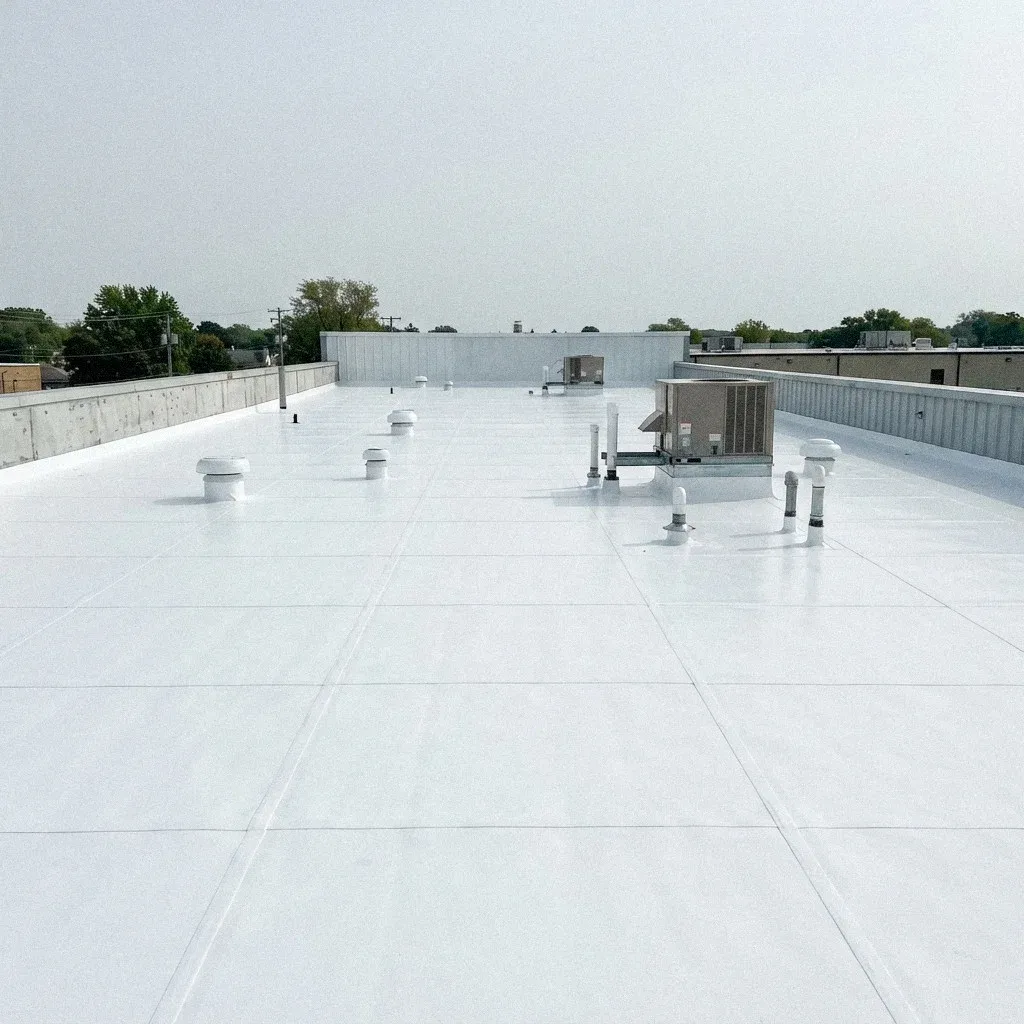
Building-by-building roof sequencing that keeps occupied units livable across the site.
A property manager schedules Omaha apartment roof work building by building, so most residents stay in their units the whole time. The licensed pros we connect you with sequence each roof area, post resident notice ahead of the work-hour window, and stage around parking without emptying the whole site at once.
An apartment complex in Omaha puts residents underneath a roof while work happens above them, something a single-family owner in Dundee or Benson never has to plan around. A property manager signs the contract and pays the invoice, but the people living in those units keep cooking, sleeping, and working through however long the job takes. That gap between who decides and who lives with the decision shapes almost every choice on a multifamily roofing job.
A multi-building property rarely fails all at once. One building near a shared walkway pad develops a leak first, usually surfacing through a maintenance request about a ceiling stain rather than a resident calling in to report roof damage directly. Staff have to trace the report back to a specific building and roof section before anyone can act, which means the first sign of trouble often looks like a plumbing complaint until someone climbs up to check.
What makes multifamily roofing different from a single house in Omaha is scale without simplicity. A property spread across several buildings, maybe near Millard or out toward Elkhorn, can carry roof area of different ages built or added at different times. One building might need a full commercial roof replacement while the one next to it still has years left, and a property manager has to track all of it separately, not as one number.
Sequencing work across an occupied site in Omaha means treating each building as its own job with its own schedule, not one long project that touches every roof at the same time. Phased building-by-building sequencing lets residents in finished buildings return to normal while crews move to the next one. The licensed pros we connect you with plan that sequence around which roofs need attention first and which can wait a season.
Resident notice has to go out before crews arrive, and it needs to say more than a date. People need to know which building is affected, where their vehicle should move for resident parking, and roughly how long the noise overhead will last. A notice posted at the office or slid under doors in Aksarben Village or a similar complex works better than one email nobody reads before Monday.
| Building | Work Done | Resident Effect |
|---|---|---|
| Who calls in the work | One landlord, one rental unit | Property manager, whole apartment site |
| Sequencing across the property | One roof, done in a visit | Building by building, phased across the site |
| How a leak reaches the roofer | Tenant calls the landlord directly | Resident files a maintenance request |
| Staging and dumpster placement | One driveway, one household affected | Marked staging area, resident parking shifted per building |
| Notice before work starts | One household told directly | Posted notice for each occupied building on deck |
| How the cost gets planned | Single repair estimate | Capital plan broken out by roof area per building |
| Breezeway and corridor work | Not applicable | Walkway pad rerouted section by section during flashing work |
| Wrapping up a building | Owner inspects, job is done | Manager signs off, crew moves to the next building |
A property built as apartments was never laid out with a roofing job in mind, so staging has to work around whatever the site already needs to keep running. A staging area for shingles, underlayment, and a dumpster has to sit somewhere that does not block a fire lane, a leasing office entrance, or the parking a resident needs to get to work in South Omaha or downtown.
Common corridors and breezeways slow material movement in ways a detached driveway never would. Getting bundles up to one building's roof without dragging them across a walkway pad used by residents all day takes more planning than a single-house tear-off ever does. Dumpster placement gets decided early, since moving it once work starts means renegotiating access all over again.
The work-hour window on an occupied Omaha property tends to run narrower than on an empty commercial building, since nobody wants a tear-off starting before residents are up or running past when kids are trying to sleep. That window shrinks further in winter, when freeze-thaw cycling limits how early crews can safely start on a frosted low-slope section without extra care underfoot.
A resident rarely calls in to report a roof problem directly. Instead, maintenance staff field a request about a ceiling stain, a drip near a light fixture, or water pooling near a window after a spring hail event moved through the metro. Someone still has to connect that interior symptom to an actual point of failure on the roof above, which is not always the unit directly overhead.
Once a leak is traced to the roof, a property manager needs an inspection that speaks to that one building's condition, not a general statement about the whole property. The licensed pros we connect you with document which building, which section, and what caused it, so the interior leak report and the roof inspection line up instead of leaving maintenance staff guessing at the cause months later.
Capital planning for a multifamily property in Omaha works building by building, because roof age rarely lines up evenly across a site built or expanded over different years. A property near Regency or Westgate might have one building from an earlier construction phase sitting next to a newer one, and a capital plan has to track each roof's remaining life on its own timeline rather than budgeting for the property as a single line item.
Deciding between a repair and a full commercial roof replacement on any one building depends on how much roof area is actually failing and what the decking underneath looks like once it is opened up. A property manager weighing that decision for a building near West Center Road needs a number tied to that specific roof, not an estimate spread evenly across every building on the site.
None of this changes because the buildings sit in Omaha rather than somewhere else, but the hail that moves through eastern Nebraska every spring adds its own pressure here. A multi-building site can take hits of different severity building to building, so a hailstorm that damages one roof along a corridor near 72nd Street might leave the building next to it untouched, which is part of why building-by-building assessment matters after a storm.
A property manager should ask which building's roof area is closest to failing, how resident notice will go out before crews arrive, where staging and dumpster placement will sit without blocking resident parking, and how the work-hour window will be handled once a building is occupied and phased work begins. Those answers, building by building, are what a workable multifamily roofing plan for an Omaha property actually looks like.
Per-building capital planning works because Omaha hail seasons rarely hit every building on a site the same way. One building along a property near West Center Road might take a direct hit while the next one over comes through with only minor granule loss. A property manager can budget one roof area this year and the next building's roof area next year, instead of treating the whole site as a single expense that has to clear all at once.
Wind and hail don't always announce themselves with a leak right away. Granules loosen, flashing shifts, and seals crack quietly, and the damage often surfaces months later as a stain on a ceiling or a soft spot underfoot that started somewhere else entirely.Downtown Omaha, Benson and Field Club. Older homes near the Missouri River bluffs and newer builds farther west age differently, but the pattern holds everywhere in Omaha: freeze-thaw cycling through winter stresses shingles and flashing more than any single storm does. What looks fine in October can show cracked seals by March.
Not every leak starts at the roof. Ice buildup at the eaves, a clogged gutter, or a step-flashing gap can all send water into an attic and get blamed on the shingles. A useful inspection traces the path water actually took, not just where it showed up inside.A number means little until someone looks at the actual decking. A ranch near Millard with a straightforward gable differs from a steep-pitched older home near Field Club or a roof shaded along Elmwood Park. The licensed pros we connect you with base a figure on pitch, layers, and what the last hailstorm left behind. pricing guide, and the commercial overview covers how a scheduled program works.
Commercial Roofing
Kitchen Roofing
Condo & HOA Roofs
Notice usually comes from the property manager, not the roofing crew, as a letter or posted notice naming the building, the dates, and where parking shifts. Omaha's spring hail season and narrow dry work-hour windows mean notice often goes out on short lead time once a building's turn comes up in the schedule.
Sequencing usually starts with the building carrying the worst hail or wind damage, confirmed against the property's capital plan and insurance timeline. Staging moves building by building rather than spreading across the whole site, so the licensed pros we connect you with can finish one roof area, clear the dumpster and materials, and shift to the next building before residents there are affected.
A tenant's leak report goes to the property manager first through the normal maintenance request process, not straight to a roofing crew. The manager logs which building, which unit, and which section of roof is involved, then decides whether it is a spot repair or a sign that building's roof area needs to move up in the capital plan.
Days, since notice has to reach residents in occupied units before staging and dumpster placement can start on that building. In practice a posted notice naming the work-hour window and parking changes goes out first, and the roofing work itself often follows within the same week once Omaha's spring weather allows a dry stretch.
Managing a multi-building site in Millard or Elkhorn? Call for a per-building sequence and resident notice plan in writing.
Call (833) 566-1459