Apartments & Multifamily
Multifamily Roofing
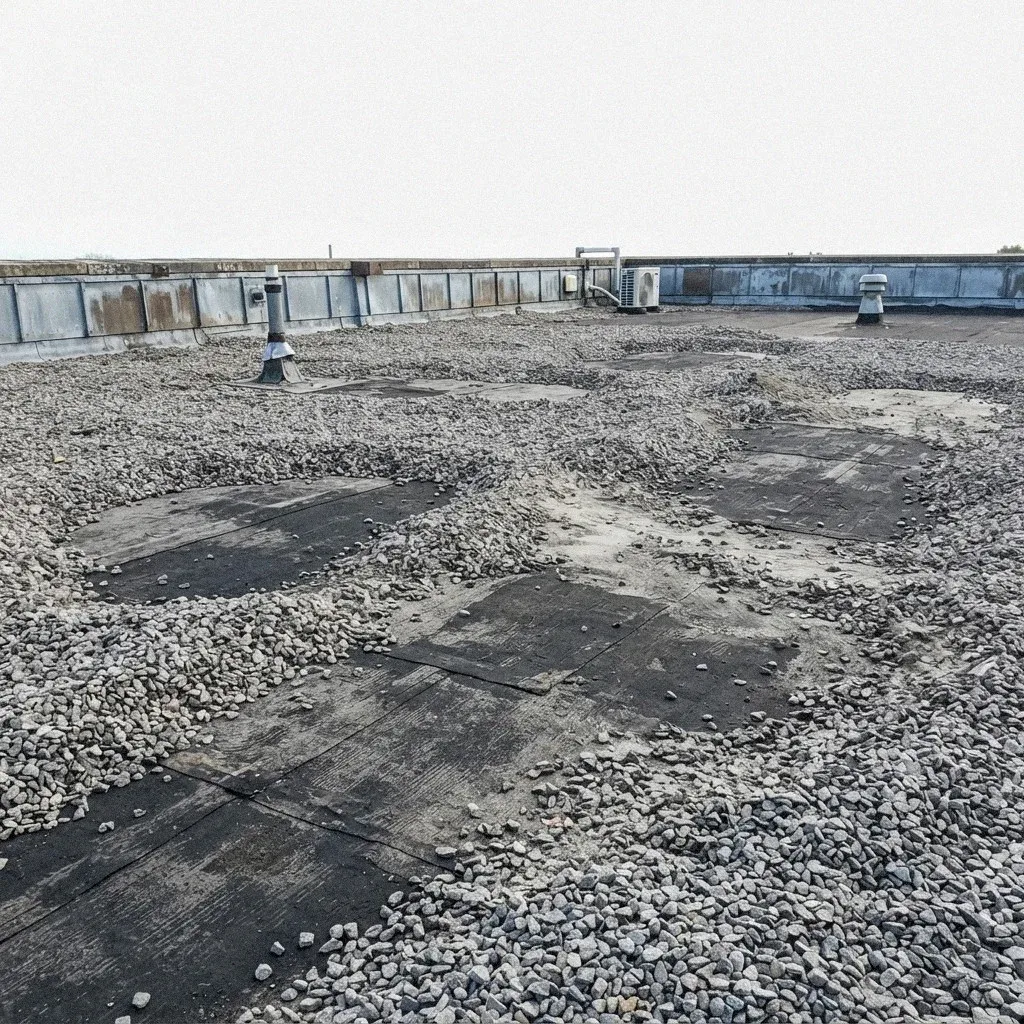
Leak sources, tenant lease responsibility, and after-hours repair timing for Omaha offices and storefronts.
A leaking office or storefront roof in Omaha usually starts at a rooftop HVAC curb, a roof hatch, or a sign penetration, not the roof field itself.
An office suite in Aksarben Village or a storefront in the Old Market can't shut down because a ceiling tile is dripping over the sales floor. Customers still expect the door unlocked, employees still expect a dry workspace, and a landlord still expects rent paid on time. Omaha's spring hail runs from April through June, and a damaged roof over a business carries pressure a house roof never does: every hour of delay is an hour of business-hours disruption stacking up.
Most offices and storefronts around Midtown Omaha and West Omaha sit under a flat or low-slope roof, and the rooftop HVAC unit bolted to that surface is usually where trouble starts. Wind can loosen the curb flashing sealing the unit to its equipment curb, and Omaha's freeze-thaw cycling works the seam wider each winter. Once that flashing fails, water tracks along the curb and drops through the deck somewhere well away from the unit itself, which is part of why the leak is rarely where the stain shows up.
Because the storefront or office can't close mid-day, most repair work on Omaha commercial roofs happens in an after-hours work window, often evenings or overnight once the last customer or employee clears out. A shop near 72nd Street or an office along Dodge Street can get a curb resealed or a section patched before the next morning's open, provided the damage is caught and scheduled rather than left to spread through another storm.
Business-hours disruption is usually the real cost, more than the roof repair itself. A retail space running normal hours in Dundee or an office suite operating on a standard schedule near Blackstone loses more to a closed storefront or a blocked entrance than to the material going on the roof. Scheduling around open hours, rather than around the crew's convenience, is often the harder problem to solve.
Weekend work is the other option, and it fits a strip retail building or small office near Benson differently than a weeknight job does. A Saturday start gives a longer stretch of daylight and lets a larger section get addressed at once, but it also means signage, a storefront canopy, or a shared parking lot serving other tenants has to stay clear the whole time. Coordinating that takes more notice than an evening repair usually does.
| Spot | Reason | Fix |
|---|---|---|
| HVAC equipment curb | Vibration and foot traffic loosen curb flashing | Strip and reflash the curb |
| Sign penetration | Old mounting bolts left unsealed | Patch and seal the bolt holes |
| Roof hatch | Hinge seal cracked from freeze-thaw cycling | Reseal hatch curb and hinge |
| Parapet cap flashing | Fasteners worked loose in high wind | Resecure and reseal the cap |
| Interior roof drain | Spring debris packs the drain bowl | Clear drain and replace strainer |
| Storefront canopy tie-in | Seam separates where canopy meets main roof | Reseal the canopy tie-in seam |
| Rooftop conduit run | Fasteners back out over repeated freeze cycles | Reset fasteners and seal the run |
| Membrane field seam | Seam tape ages and separates over time | Cut out and reseal the seam |
Inventory protection is the sharpest version of this problem for a retail tenant. Stock on shelves or boxed in a stockroom under a leaking section of roof in a Millard strip center doesn't survive standing water the way drywall does. A tarp over the affected area and a fast interior response matter as much as the roof repair itself, since merchandise damage often costs more than the patch that stops it.
A server room changes the math on an Omaha office roof leak. Many buildings tuck a small server closet in a back corner, often below a section of flat roof, and water finds electrical gear faster than it finds a stockroom floor. Downtime near a data closet costs more than the drywall repair, and freeze-thaw cycling through an Omaha winter can widen a small crack into a steady drip by spring.
Office and retail leases around Omaha generally split roof duties along a familiar line: the landlord holds the roof structure and membrane, and common-area maintenance charges typically fold in the maintenance cost passed to tenants. Nebraska's landlord-tenant statute puts a general habitability duty on the landlord, but a commercial tenant lease often spells out its own terms separately, so the actual split depends on what that lease says rather than on a default assumption either side may be working from.
Lease-split responsibility is where a lot of office and retail roof problems in Omaha stall before anyone picks up the phone. A tenant assumes the landlord already knows about a leak; the landlord assumes the tenant would have called if it mattered. Meanwhile water keeps finding its way past a rooftop HVAC unit or a sign penetration nobody has looked at since it was installed, and the gap between assumptions is where the damage grows.
A tenant running a shop near Benson or an office near Dundee is better off reporting a ceiling stain or a soft spot in the tile the same day it's noticed, in writing, rather than waiting to see if it dries out on its own. A written notice creates a record of when the landlord knew, which matters if the damage spreads or if an insurance claim comes into the picture later.
Interior roof drains are standard on flat commercial roofs around Omaha, and they're easy to overlook until one clogs. Debris backing up in a drain during one of the metro's short, heavy downpours, the kind the Old Market flash flood made clear can drop several inches of rain in about an hour, sends water pooling across the membrane instead of moving off the roof, and a pool that sits for days works into any seam it can find.
A roof hatch used for HVAC servicing near an office building in South Omaha or Elkhorn gets stepped past during a routine walk more often than anyone would guess, left slightly unlatched after the last technician's visit. A parapet wall does its own version of the same thing, holding water against the roof edge instead of letting it run off, which is why both deserve a look on any inspection instead of just the rooftop units everyone already expects to check.
An office or storefront in Downtown Omaha or out toward Elkhorn stays open because customers and employees expect it to, not because the roof happens to hold. Treating the roof as part of running the building, with a regular look at drains, curbs, and hatches, costs less over time than reacting to a leak after it's already reached the sales floor or a server room in the back.
The licensed pros we connect you with can check rooftop HVAC units, curb flashing, interior roof drains, and parapet condition in one visit instead of several separate trips, and can schedule the repair itself around an after-hours work window or a weekend so the business underneath never has to close its doors to get the roof fixed.
An office or retail lease around Omaha usually hands the roof deck and membrane to the landlord under common-area maintenance terms, while equipment a tenant bolted to the roof, like a sign or supplemental HVAC unit, often falls back on the tenant. The line blurs at the curb itself. Check the maintenance clause before a leak happens, since arguing over who calls a roofer while water drips onto a sales floor wastes the hours that matter most.
A finished basement below grade changes what a roof failure actually costs. Water that a slab home might shrug off can mean soaked drywall and ruined flooring two stories down, which is why drainage above matters as much as the shingles themselves.Florence, West Omaha 68114 and Northwest Omaha 68116. Storm-chasing crews show up across the metro after big hail events and disappear once the checks clear. A local roofing history and a permit trail through the city are two things worth asking about before signing anything, especially when an insurance claim is already in motion.
Hail damage doesn't always show up where you'd expect. Bruised shingles can look fine from the ground while the mat underneath is cracked, and that only fails months later during a heavy rain. A written estimate should note what the adjuster missed, not just match the first number offered.A number means little until someone looks at the actual decking. A ranch near Millard with a straightforward gable differs from a steep-pitched older home near Field Club or a roof shaded along Elmwood Park. The licensed pros we connect you with base a figure on pitch, layers, and what the last hailstorm left behind. pricing guide, and the commercial overview covers how a scheduled program works.
Multifamily Roofing
Condo & HOA Roofs
Kitchen Roofing
Usually the landlord, since the roof deck and membrane count as structure under most common-area maintenance terms. But plenty of Omaha office and retail leases shift responsibility for equipment a tenant installed, like a rooftop sign or supplemental HVAC unit, back onto the tenant. Read the maintenance and alterations clauses before assuming either way.
Rooftop HVAC units are the most common leak source on Omaha office and retail roofs. The equipment curb underneath and its flashing take steady wear from vibration and foot traffic during servicing, and once that flashing cracks, water follows the ductwork straight down into the ceiling below.
Yes. Most repair and replacement work on an office or retail roof can run after normal business hours or on weekends so a sales floor, lobby, or storefront entrance never has to close. The licensed pros we connect you with can typically schedule around a tenant's operating hours.
Move merchandise, files, or server room equipment out from under the leak first. Set a container to catch water and note where it's coming through a suspended ceiling tile. Then call the landlord or property manager, since lease terms usually decide who arranges the repair.
Tell us the property type and whether the tenant lease or landlord covers roof calls, and we will line up a pro for an after-hours window.
Call (833) 566-1459