A roof color decision in Omaha rarely happens in isolation. Dundee bungalows, Benson four-squares, and newer Elkhorn builds each sit against brick or siding chosen by someone else years before the shingles wear out. The shingle you pick has to work with those older decisions, plus whatever the house next door is doing, not just look good on its own next to the front door.
Finding Your Home's Undertone
Brick laid decades ago in Field Club or Miller Park often carries a warm undertone, a hint of orange or red, even when it reads as plain brown from the sidewalk. Stone accents and manufactured stone veneer lean the same way, or sometimes cooler, toward gray. That undertone only shows up outdoors in daylight, and it's the first thing to identify before a shingle blend gets picked.
Warm Tone Versus Cool Tone
Shingle blends split into warm and cool families. Warm blends mix browns, tans, and reddish granules; cool blends lean gray, charcoal, or black with a blue cast. A cool-toned roof over a warm brick foundation in Midtown Omaha can look mismatched even when both colors are attractive on their own. Matching temperature first, then adjusting for depth of color, keeps the whole street elevation from fighting itself.
What a Shadow Band Does
A color blend means the shingle isn't one flat shade. Granules in several tones are mixed across the same shingle so a shadow band, the darker line that runs through the blend, breaks up what would otherwise be a solid slab of color. From a distance, on a South Omaha or Millard roofline, that shadow band is what gives the roof texture instead of looking like a painted sheet.
Coordinating Trim and Fascia
Trim and fascia color is the connector between roof and siding, and it's worth settling before the shingle order goes in. A dark shingle against light trim and pale siding reads as high contrast from West Dodge Road; the same shingle against darker trim can look almost monochromatic. Neither is wrong, but the trim color decides which effect actually shows up on the house.
Choosing a Contrast Level
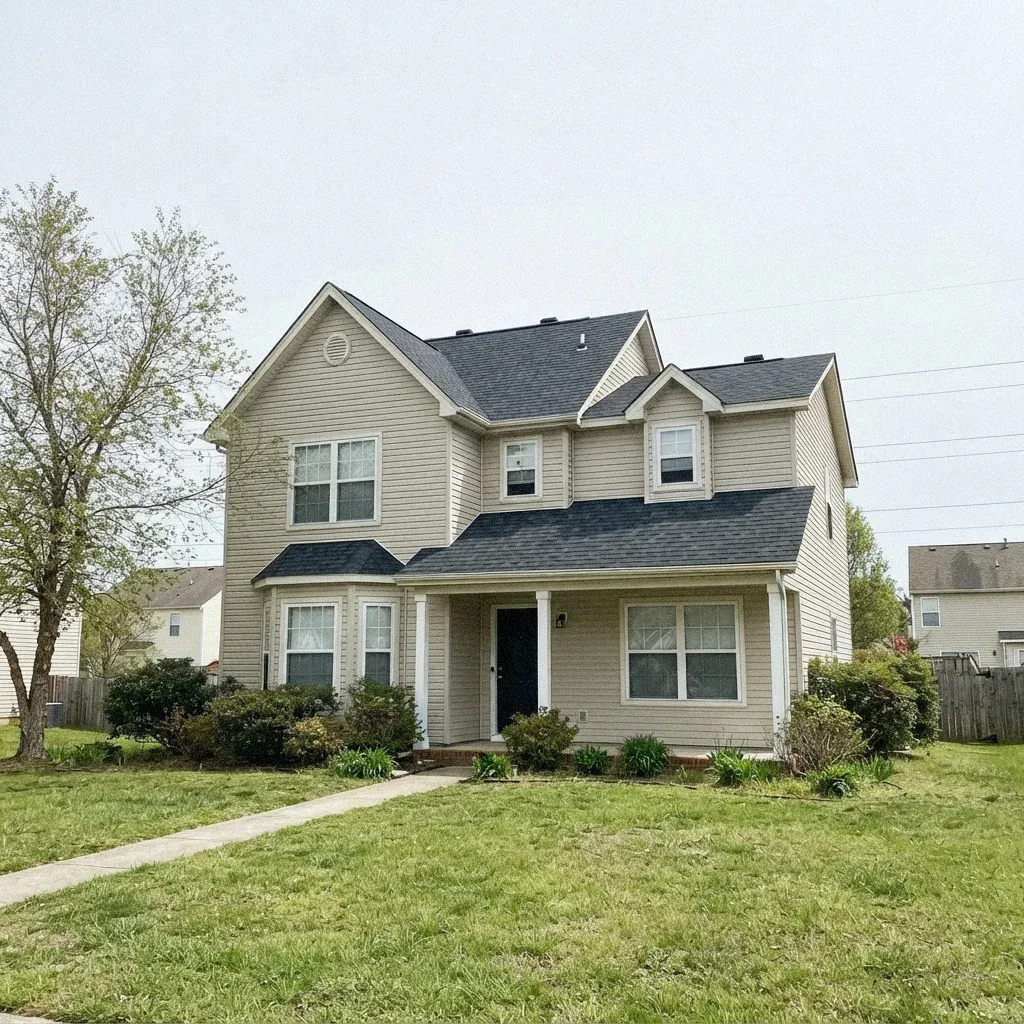
The decision is really how much the roof should stand apart from the walls. High contrast, such as a dark roof over light siding, defines the shape of the house and looks deliberate. Low contrast makes the house read as one mass and looks calmer, which suits a larger roof. Neither is wrong, but a mid-tone roof over mid-tone siding often reads as indecision rather than as a choice.
Why a Swatch Can Mislead
A brochure swatch, or the small sample chip on a shingle rack, is a few inches of a blend built to be seen across an entire roof, not up close. Colors that look balanced at that size can shift once granules are spread over hundreds of square feet in Omaha sunlight. Undertones intensify, shadow bands stretch out, and a shade that looked neutral indoors can read distinctly warm or cool outside.
Reading a Full-Size Sample Board
A full-size sample board, or a handful of full shingles laid edge to edge, shows the blend and shadow band the way they'll actually sit on the roof once installed. This matters more than it sounds like it should. A small swatch hides how the pattern repeats and how much of the lighter or darker granule shows through once the shingles are laid in courses across a real Elkhorn or Gretna roofline.
Doing a Mock-Up Viewing
A mock-up viewing means setting a full-size sample board against the actual wall or roofline, outdoors, in daylight, not judging it on a porch or under garage light. Colors shift under artificial light and shrink to nothing on a brochure swatch. Prop the board up in the morning and again in late afternoon, since Omaha's light changes enough across a day to make a shingle look warmer or grayer depending on the hour and the angle of the sun.
Watching for Dye Lot Variation
Shingles are made in batches and the color can shift slightly between them. On one roof done at one time that is invisible. It shows up when a slope is repaired years later, or when a job runs short and the last few squares come from a different run. Ask that all the material for a roof comes from one lot, and keep a spare bundle in the garage for future repairs.
Getting the Ridge Cap Right
The cap along the peak is a different product from the field shingles and it often gets chosen last, which is how a roof ends up with a cap that does not quite match. It sits on the most visible line of the whole roof. Either match it deliberately to the field or contrast it deliberately, and look at a sample outdoors rather than under shop lighting.
Checking the Curb View
Look at the sample where the roof will actually be seen from, which is the sidewalk or the street, not in your hand. Take it outside, hold it at the angle of the roof, and look at it in bright sun and again on an overcast day. A color that looks rich flat on a table often reads several shades lighter once it is up at a distance.
Dealing with this in your home?
Omaha roofs fail on their own timeline. Dundee and Benson still have prewar homes with basements below, where a clogged gutter means water finding its way down, not just across. Blocks near Elkhorn or Millard face the same April hail but newer decking. Same city, same spring, different repair.