Omaha's wettest stretch runs through spring and into early summer, the same weeks that carry the region's hail risk. Once steady rain sets in, there's little dry time to get on a roof or into gutters without pushing a repair into worse weather. The window to look things over sits earlier, while the roof is still dry enough to walk and any needed work can be scheduled ahead of the rain rather than during it.
Clear Gutters First
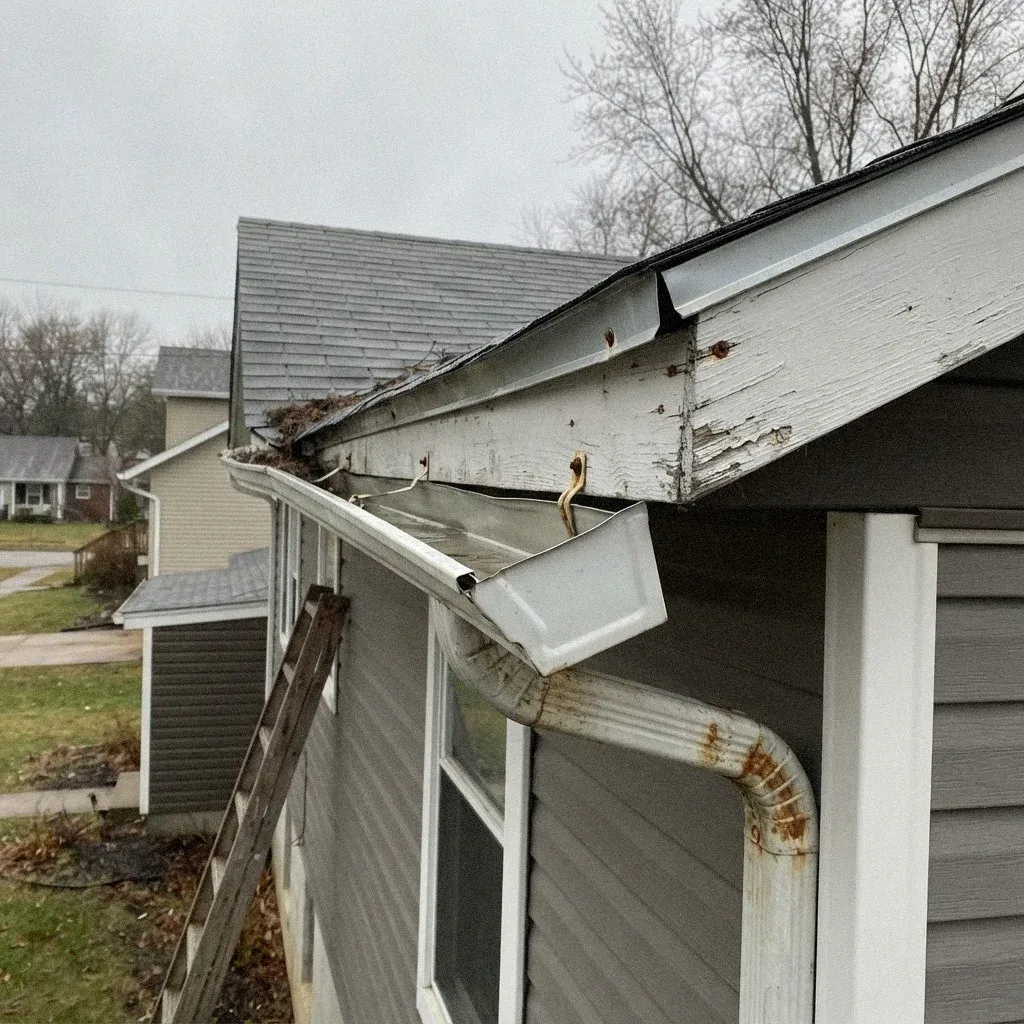
Gutter clearing comes before anything else because every other step assumes water can actually leave the roof once it lands there. Winter debris, loose shingle grit, and anything blown in over the cold months settles in the trough and packs down. A gutter that's still holding sludge from December won't move spring rain fast enough, and that backup is often what pushes water under a drip edge rather than past it.
Test Every Downspout
Once the gutters are clear, check each downspout while water is still running. It should carry water down and away from the foundation, not dribble out partway down or pool at the base. In older Dundee or Benson homes with full basements below grade, a slow downspout is worth fixing before the wet season, not after — a few gallons of misdirected runoff finds a foundation crack faster than most homeowners expect.
Clear Roof Valleys
A roof valley is where two slopes meet and funnel their combined runoff into one narrow channel, so it collects far more debris than open shingle. Leaves and grit settle there and hold moisture against the roofline long after the rest of the surface has dried. On Omaha homes shaded by mature trees in Elmwood Park or Field Club, a packed valley is often the first spot a spring rain finds its way underneath.
Walk Every Roof Plane
A roof plane walkaround means checking every slope from the ground with binoculars or from a ladder, not just the elevation facing the street. Look for shingles that have curled at the corners, granules collecting near downspout outlets, and any spot where the drip edge has pulled away from the fascia. West Omaha homes built in the last two decades still show this wear pattern, just usually less of it than a roof from Kountze Place or Prospect Hill.
Check Flashing Closely
The next stop on a pre-season checklist is a flashing check at every place metal meets a roof plane: chimneys, skylights, and the joint where a lower roof butts into a wall. Look for a corner that has lifted, a seam where the sealant bead has separated, or rust streaking down the shingle below it. A flashing check takes ten minutes and catches problems that otherwise show up as a stain on a ceiling weeks later.
Run A Sealant Check
Every roof also has a handful of small penetrations, vent stacks, a plumbing pipe boot, maybe a satellite bracket, and each one depends on a bead of sealant to keep water out. Temperature swings through an Omaha spring, warm afternoons followed by a hard overnight drop, make that sealant shrink and crack faster than steady weather would. A sealant check means running a hand along each penetration to feel for a gap instead of just eyeballing it from below.
Inspect The Attic Space
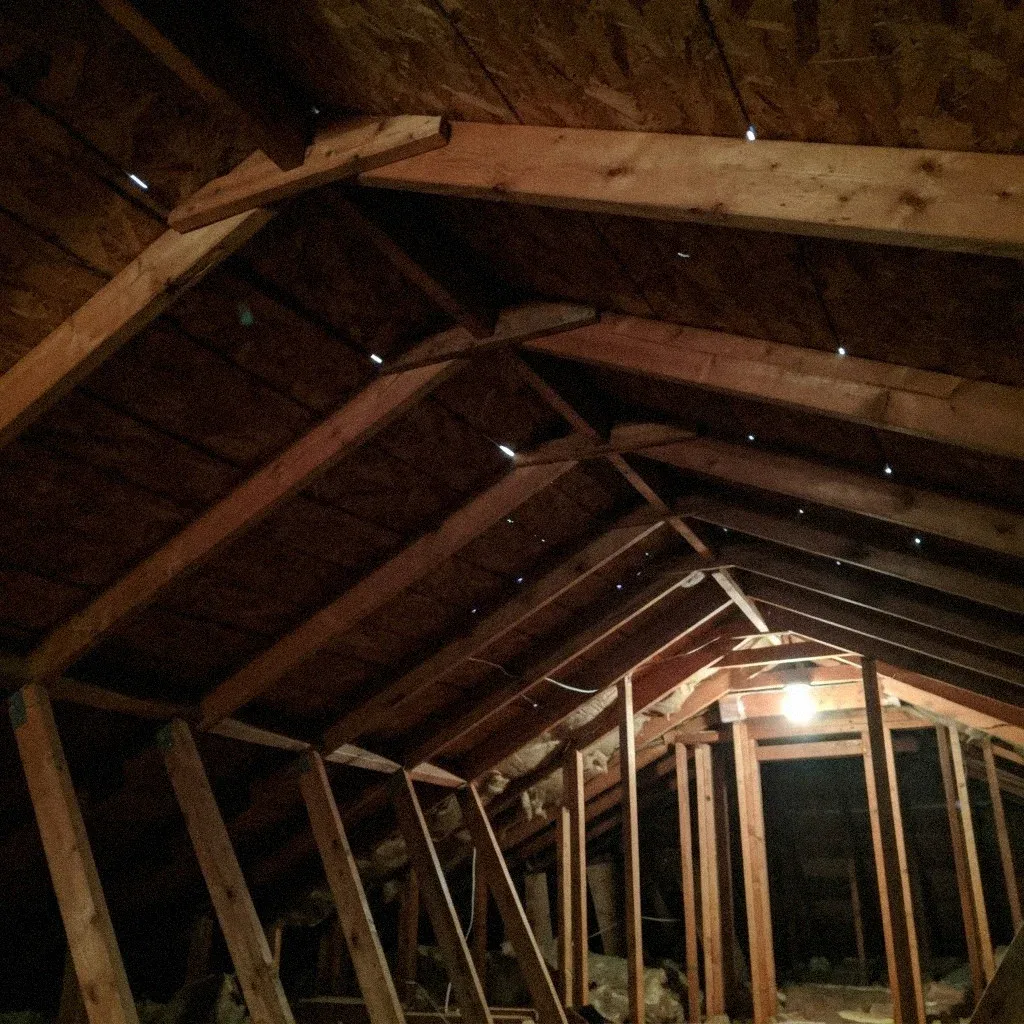
An attic inspection catches what the roof plane walkaround can't. Look for daylight showing through the decking, damp insulation, dark staining along a rafter, or a musty smell that wasn't there before. These signs point to a spot letting water through even if nothing looks wrong from outside. Checking the attic with a flashlight on a dry day is far easier than tracing a leak back to its source once ceiling stains show up during a rainstorm.
Confirm Grade Drainage
Grade drainage deserves the same attention as the roof itself, since a roof that sheds water well still causes trouble if the ground below sends it right back toward the house. Walk the perimeter after the gutters are clear and note any spot where soil slopes toward the foundation instead of away from it. With full basements standard across most of Omaha, water finding its way along the footing is a different kind of problem than it would be for a home without one below grade.
Write A Short Punch List
Once the walkaround is finished, group what was found by how urgent it is rather than the order it turned up in. Anything actively letting water through, like a cracked pipe boot or lifted flashing, goes at the top. Cosmetic granule loss or a valley that just needs a second debris pass can wait. A short, ordered punch list makes it easier to talk through with whoever ends up doing the work.
Choose A Scheduling Window
The scheduling window that matters most is the stretch before the heavier spring rains settle in, since Omaha's wettest months tend to load up fast once they start. Booking a roof plane walkaround, a flashing check, or an attic inspection in February or March means any repair happens on a dry deck instead of a rushed one squeezed between storm systems moving through Douglas County.
Know When To Call Someone
Gutters, downspouts, and anything reachable from a sturdy ladder are fair game for a homeowner willing to spend a Saturday morning on it. Getting onto the roof plane itself, checking flashing around a chimney, or inspecting pipe boots and drip edge up close is a different matter — a misstep on a wet Omaha roof isn't worth the savings. If the walkaround turns up soft spots, lifted shingles, or a valley you can't clear from below, that's the point to call the licensed pros we connect you with rather than push further.
Dealing with this in your home?
Omaha roofs fail on their own timeline. Dundee and Benson still have prewar homes with basements below, where a clogged gutter means water finding its way down, not just across. Blocks near Elkhorn or Millard face the same April hail but newer decking. Same city, same spring, different repair.