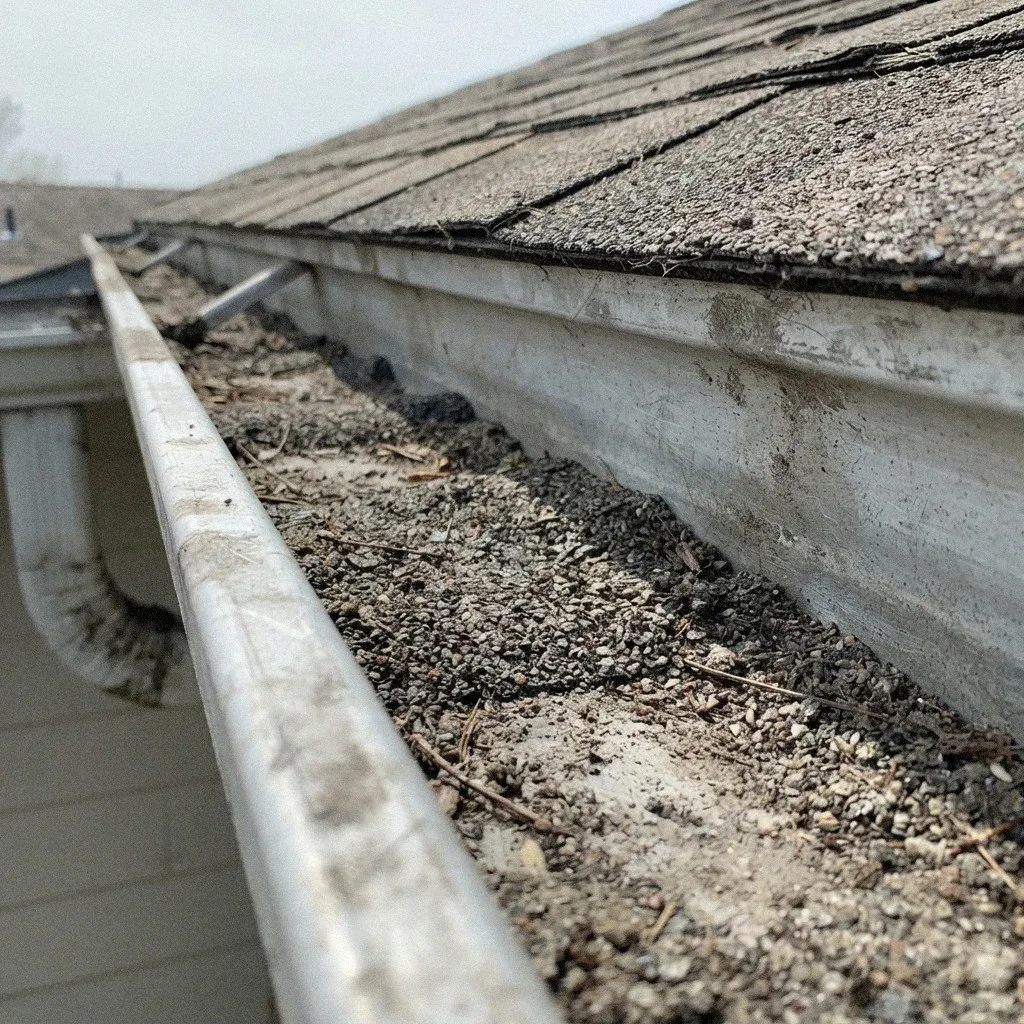
A composition shingle roof anywhere in Omaha, from a Benson bungalow to a newer build off West Center Road, loses ceramic granule material throughout its service life. Manufacturers set these granules into the asphalt mat to shield it from UV degradation and sun exposure. Some release is built into the product from day one, which is why a homeowner scooping out a gutter trough near Dundee or Millard shouldn't assume the worst from the first handful they find.
The Break-In Period Explained
A roof reroofed within the last year or two around Omaha, from Dundee to Millard, often sheds loose ceramic granule that never fully bonded to the asphalt mat during manufacturing. This break-in shedding shows up as fine grit in the gutter trough rather than coarse fragments, and it tapers off as remaining surfacing settles under sun and rain. It does not keep climbing cleaning after cleaning. If a roof has been on the house for years and granule volume is only now rising, that points elsewhere, not to break-in.
When Loss Becomes Progressive
Progressive granule loss looks nothing like a new roof settling in. This pattern shows up on an Omaha roof already a decade or more old, where the asphalt mat itself has spent years absorbing summer heat and cycling through freeze-thaw swings each winter. Instead of tapering off, the amount collecting at the gutter holds steady or climbs with each cleaning. That steady or rising trend, not any single scoopful, is what separates progressive wear from ordinary aging.
Bald Spots And Shiny Patches
A shiny, dark patch on a slope facing Dodge Street usually means the asphalt underneath is showing through, not just dusty. Granules embed into that layer during manufacturing, and once enough wear away in one spot, the mat loses its protective cover there. That's different from an even dusting across every downspout, which points more to age or weather than a localized problem worth a closer look near Elmwood Park or Dundee rooflines.
Why One Slope Loses More
Orientation changes how fast a slope wears. A roof facing south or west in a neighborhood like Benson or Aksarben Village absorbs more direct sun over an Omaha summer than a north-facing slope shaded by trees or a neighboring roofline. That sun-facing slope also swings through wider temperature changes each day, which stresses the asphalt mat underneath. A homeowner comparing gutter sections beneath different slopes may find heavier grit under the sunniest side and almost none under a shaded one, and that unevenness is expected, not alarming on its own.
What Volume Actually Signals
Owners around Benson or Florence sometimes judge a roof by whatever sits at the bottom of the downspout on a given day, but that single snapshot doesn't say much. What separates ordinary shedding from a real problem is repetition: does the gutter trough fill with a similar amount every few months, or is each check noticeably heavier than the last near the same Omaha slope facing west-facing sun?
Blisters And Sudden Releases
Blistering is a separate mechanism from steady granule shedding, and it releases material all at once instead of spreading it out. Trapped moisture or air beneath the shingle surface pushes up small bumps, and when those bumps rupture they can drop a noticeable patch of granules into the gutter trough in a single event. A sudden spike after a quiet stretch, rather than a slow climb, often traces back to blistering rather than ordinary aging.
What The Splash Block Catches
Where a downspout drains onto its splash block near a home in Millard or Aksarben Village, whatever the roof lost during the last rain tends to collect right there before it washes further into the yard. A thin gritty film after a downpour along Papillion Creek's drainage areas is unremarkable. A block buried under a visible layer, refilling after every storm, suggests the shingles above that particular downspout are losing surfacing faster than the rest of the roof.
Reading Loss By Season
Omaha's mix of hot, humid summers and hard winter freezes plays into what ends up at the splash block. Repeated wetting and drying, plus the freeze-thaw cycling that runs through a typical Douglas County winter, gradually works granules loose from the asphalt mat faster than a milder climate would. A roof that's been through several of these cycles usually shows more shingle exposure at the surface than a newer one, even without a hailstorm forcing the issue.
Roofs Where This Doesn't Apply
This kind of granule check makes sense only on composition asphalt shingles, since surfacing loss is specific to how that material is built. Some Omaha homes, particularly older ones near Gifford Park or Kountze Place, may carry metal or other roofing types where this test simply doesn't translate. Before reading anything into gutter debris, it's worth confirming the roof in question is actually asphalt shingle, since the whole idea of granule shedding assumes that starting material.
Deciding If It Needs A Look
Knowing how much collects at the splash block, and how that amount changes over separate visits, gives a homeowner near Walnut Hill or West Omaha a rough sense of direction, not a verdict. It doesn't show whether a bald spot has actually reached bare mat, whether one slope has more sun exposure than another, or how old the shingles already are. Those pieces only come together once someone looks at the shingles themselves, not just what washed down.
Watching It Over The Seasons
What helps most is checking the same spots season after season instead of judging by any single cleanout. Note roughly what collects at a downspout near Millard or Elmwood Park each time gutters get cleared, and watch whether that amount holds steady or climbs. A steady trickle over several years usually isn't worth worrying over; a climbing trend, especially paired with a bald spot spotted from the ground, is the kind of thing worth a closer look.
Dealing with this in your home?
Omaha roofs fail on their own timeline. Dundee and Benson still have prewar homes with basements below, where a clogged gutter means water finding its way down, not just across. Blocks near Elkhorn or Millard face the same April hail but newer decking. Same city, same spring, different repair.