The morning after hail or wind-driven rain moves through Omaha, the clock is already running against you. Ice melts, debris gets raked, and the marks that prove a storm did damage start disappearing within hours. Before you tidy anything, walk the property with a phone camera. Photograph the yard, the fence line, the downspouts, and anything on the ground exactly as the storm left it. This record matters more than any single thing you notice today.
Photograph Before You Clean Up
Start wide, then get close. Photograph the whole yard, then the fence, the driveway, and the base of each downspout. Get a shot looking up at the roofline from across the street too. Do this before raking leaves, bagging shingle pieces, or hosing off the siding. Once the yard is cleaned, the loose granules wash away and the shingle fragments are gone, and there's nothing left to point to except your memory of what you saw.
Downspouts and Gutter Aprons
From the ground, check the downspouts and the gutter apron, the metal strip where the gutter meets the roof edge. Hail leaves small round dents in soft metal, and these are usually the easiest damage to spot because they sit at eye level. Walk the perimeter of the house in Dundee, Benson, or wherever you're standing, and look at every downspout, not just the one by the front door. Dented aluminum here is a strong sign the roof itself took a similar beating.
Vent Caps Seen From the Street
Back up to the sidewalk or the far side of the yard and look at the roof itself, no ladder needed. Furnace and plumbing vent caps are usually the highest, most exposed metal pieces on the roof, and hail dents them the same way it dents downspouts. From a distance you're looking for a caved-in or knocked-crooked cap rather than fine detail. If one looks off compared to its neighbor, that's worth noting and photographing with the zoom on your phone.
Granules at the Downspout Outlet
Look at the ground where each downspout empties out. A pile of dark, sand-like granules sitting there after a storm is a sign that hail knocked the protective coating off shingles somewhere upstream. A few granules are normal wear over a shingle's life, but a noticeable pile right after a storm, especially paired with dented downspouts, points to fresh impact damage rather than gradual aging.
Shingle Pieces in the Yard
Walk the yard and the fence line looking for shingle pieces or torn tabs that didn't come from your own roof edge. Wind can carry a tab a surprising distance, so check neighboring fence lines and flower beds too, not just directly below the roof. A whole tab lying in the grass is unmistakable evidence. Photograph it where it landed before picking it up, since exactly where debris fell can matter as much as the debris itself.
Creased Tabs on the Roof Plane
From the ground, look across each roof plane at a low angle rather than straight up. Wind can crease a shingle tab without tearing it loose, and a creased tab shows up as a thin dark line running across the plane where light no longer reflects evenly. It's subtle and easy to miss looking straight up close, but it's often clearer from across the street with the sun at a low angle, morning or evening.
Siding Stains Below a Valley
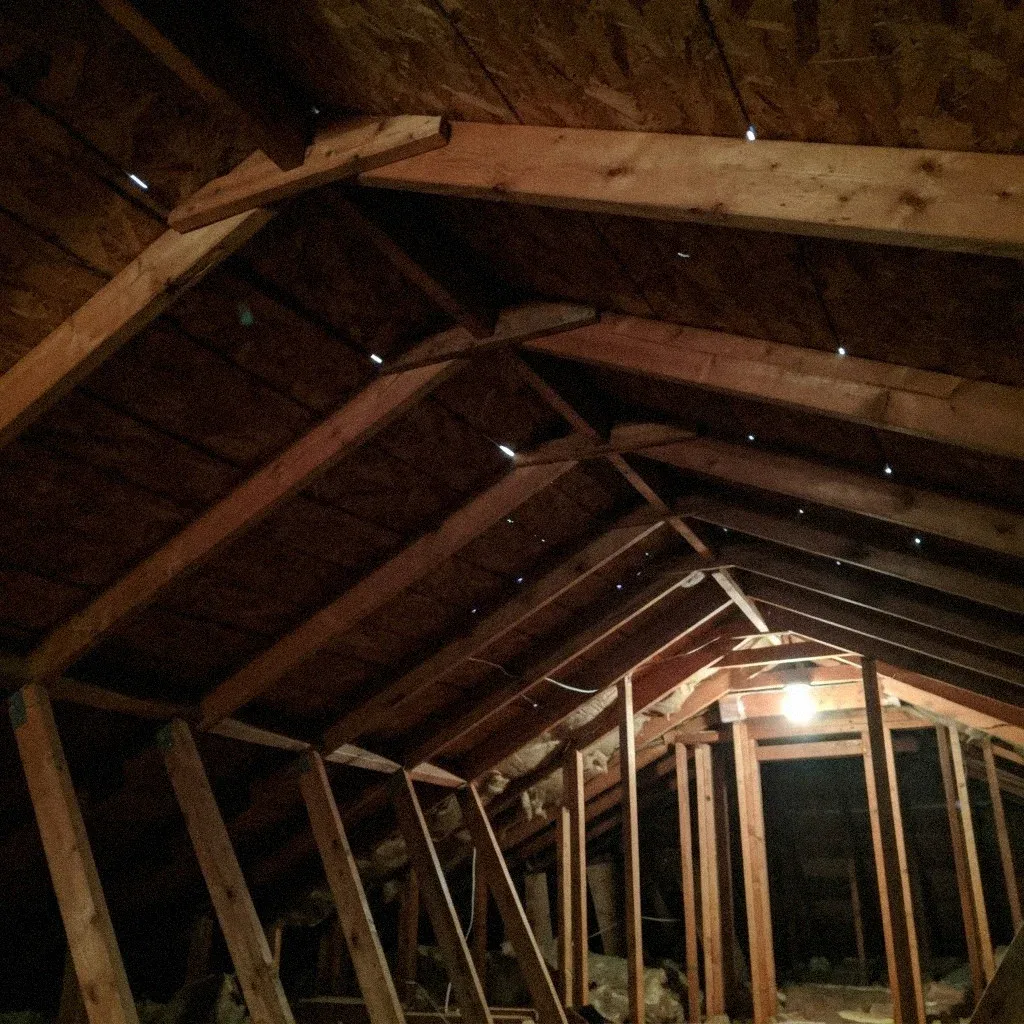
Check window heads on the side the wind came from. Wind-driven rain pushes past trim that ordinary rain never touches, so a window that has never leaked before can show a stain now. Look at ceilings under valleys and around the chimney too. In the attic, take a flashlight and follow each rafter for a dark, damp line running down from the roof deck. None of this proves hail caused it, but a wet rafter or a fresh ceiling stain in an Omaha home means water is getting in today, not eventually.
Ceilings Under Valleys and Chimneys
Move inside and check ceilings directly below any roof valley and around the chimney. A new brown ring, a soft spot, or paint that's started to bubble in these spots means water is already getting through, even if you saw nothing obvious from outside. These two locations fail before most others because valleys concentrate runoff and chimneys create a seam in the roof surface that has to be sealed.
Attic Check With a Flashlight
Grab a flashlight and go up into the attic if you have safe access. Look along the rafters, the sloped framing members that hold the roof up, for a wet line or dark streak running down one. Water tends to travel along a rafter before it ever shows up on the ceiling below, so this is often the earliest place to catch a leak. Check insulation too, since wet insulation holds water against the wood longer.
Window Heads Facing the Wind
Check window heads, the top edge of the frame, on whichever side of the house the wind was blowing from during the storm. Wind-driven rain gets pushed sideways and upward under trim and flashing in a way that ordinary straight-down rain never does, so a window that's never leaked before can show water at the head after a wind-driven storm. A damp spot on the wall just above the frame is the tell.
What Needs a Call Today
If you find water actively getting in anywhere, a wet rafter, a stained ceiling, a damp window head, that needs attention today, not a scheduled slot next week. Dented metal, granule piles, and creased tabs without any interior water are worth documenting now but can wait for a booked appointment. Either way, once you've got your photographs and ground-level notes, the licensed pros we connect you with can take it from there.
Dealing with this in your home?
Omaha roofs fail on their own timeline. Dundee and Benson still have prewar homes with basements below, where a clogged gutter means water finding its way down, not just across. Blocks near Elkhorn or Millard face the same April hail but newer decking. Same city, same spring, different repair.