If you're standing under a wet patch on an upstairs ceiling in the middle of a thaw, the first thing to know is that your roof probably doesn't have a hole in it. What you're looking at is almost always an ice dam: meltwater from snow higher up the roof runs down, hits a ridge of ice sitting at the eave, and backs up behind it until it finds a way in over the top of a shingle lap. That's why it only happens during a thaw in Omaha and stops cold the moment temperatures drop again.
Put Something Under It Now
Before anything else, protect what's below. Move furniture and anything valuable out from under the stain, and set a bucket or a folded towel underneath to catch drips. If the ceiling is bulging or you can see a bubble forming in the paint or drywall, a small controlled puncture in the center with a screwdriver will let the water drain into your container instead of spreading across the ceiling and into the walls. This is about protecting your house for the next few hours, not fixing the roof.
Relieve the Water, Not the Stain
The ice sits at the eave because that's the coldest edge of the roof, past the wall line where attic heat stops reaching the shingles. Higher up, near the ridge over Omaha attics, escaping warmth keeps the deck just mild enough to melt snow. That melt runs down until it hits the cold overhang and refreezes into a dam. More meltwater backs up behind it with nowhere to go but under the shingle laps. So this isn't bad weather. It's heat leaking into the attic where it shouldn't be.
Stay Off an Icy Roof
Whatever you do, don't go up on the roof yourself. A roof with ice at the eave is a roof with ice everywhere the sun hasn't hit yet, and a fall from that height during a thaw is a far bigger emergency than a stained ceiling. This is one of the few roofing situations where waiting for daylight and calling someone with the right footing and equipment is genuinely the safer and faster path, not the slower one.
Never Chip at the Ice
It's tempting to grab a hammer, a chisel, or an ice scraper and go after the dam directly, especially if you can see it from a ladder or an upstairs window. Don't. Chipping at ice on a roof takes the granules off the shingles underneath, and those granules are what protect the shingle from sun and weather. A winter leak you can manage with a bucket turns into bare, damaged shingles that need replacing well before their time. Steam, not force, is the right tool here.
Why the Ice Sits at the Eave
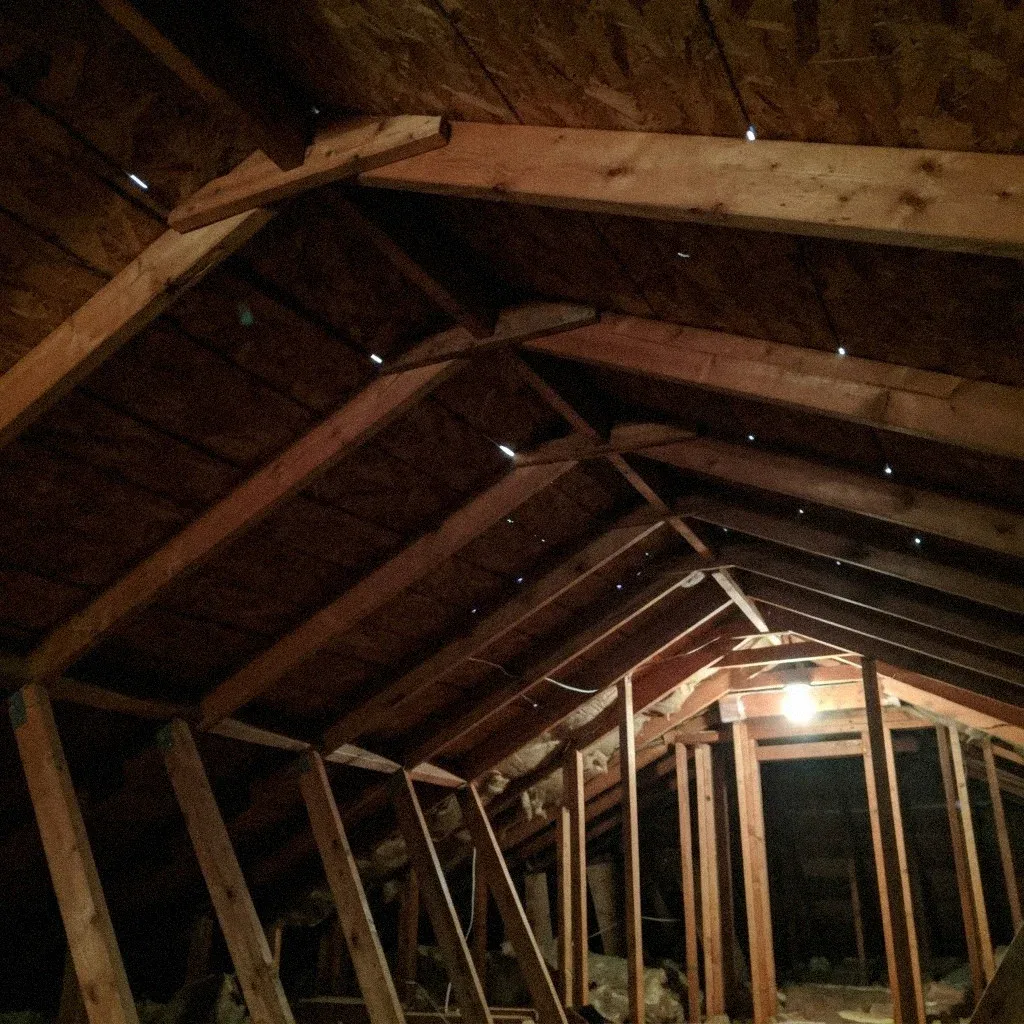
The ice dam forms specifically at the eave, not partway up the roof, and that detail tells you something useful. The eave overhangs the heated part of the house, so it stays roughly at outdoor temperature while the roof surface above the living space runs warmer because heat is escaping upward from the attic. Snow melts on that warmer section, runs down, and refreezes the moment it crosses onto the cold eave. It's a heat problem in the attic showing up as an ice problem on the roof, not bad luck with the weather.
Why It Only Happens in a Thaw
This also explains the timing. During a hard freeze, there's no meltwater running down the roof at all, so there's nothing to back up behind the ice. During a thaw, the snowpack above the warm section of roof starts melting, and that runoff has to cross the cold eave to reach the gutter. As long as the eave stays below freezing while the roof above it doesn't, the dam holds and grows, and the ceiling leak keeps showing up on the same cycle.
What Happens After the Water Stops
Once the immediate leak is under control, there are three separate things to deal with, on three different timelines. The water inside your house needs to dry out and get checked for damage now. The ice dam itself may need to be steamed off the roof if it's large enough to keep causing problems through the rest of the winter. And the actual cause, the heat escaping into your attic, is a repair for better weather, not something to tackle in the middle of a thaw.
One Winter Versus Every Winter
A single ice dam after an unusual thaw can happen to almost any Omaha house and doesn't necessarily mean much. A house that forms one every winter, in the same spot, is telling you something specific: there's a bypass somewhere letting heated air from inside the house reach the attic and warm the roof deck above it. That recurring pattern is the thing worth spending real money on, because it's the difference between an occasional nuisance and a leak you can set your calendar by.
What Not to Do in the Meantime
Beyond staying off the roof and leaving the ice alone, avoid running a hose or hot water over the dam yourself, and don't use rock salt or de-icing chemicals near the gutters, since runoff from those can affect plants and finishes below. Also resist patching the ceiling or repainting until the area has had time to dry fully. Covering a wet spot with new paint just hides whether the leak is actually finished for the season.
A Note on Older Omaha Roofs
Ice dams show up across the metro, but older homes in neighborhoods like Dundee, Benson, and Field Club, with additions, dormers, and roof lines built up over decades, tend to have more of the gaps and transitions where attic heat can bypass into the roof deck. Newer builds farther west aren't immune either; a poorly sealed can light or a bathroom fan vented into the attic instead of outside will do the same thing regardless of when the house was built.
When to Get Someone Out There
If the leak is active, if you're not confident the water is under control, or if this is happening again after last winter, it's worth having someone look at it who does this regularly. The licensed pros we connect you with can assess whether the ice needs to come off now and what's letting the heat through in the first place, once the weather cooperates enough to get on the roof safely.
Dealing with this in your home?
Omaha roofs fail on their own timeline. Dundee and Benson still have prewar homes with basements below, where a clogged gutter means water finding its way down, not just across. Blocks near Elkhorn or Millard face the same April hail but newer decking. Same city, same spring, different repair.