Omaha winters swing hard between thaw and hard freeze, and that cycling is what wears on a roof more than any single event. Shingles flex, flashing shifts, and small gaps open up around every penetration over the season. None of it looks dramatic from the driveway. By the time the snow is gone and the yard dries out, a homeowner in Dundee or Millard has a roof that has quietly aged a few months' worth in a few weeks of freeze-thaw stress.
Why Spring Is Practical
Spring works as the checkup window mainly because the roof is finally dry enough to walk on and see clearly, not because winter suddenly makes things worse. Wet shingles hide cracks, and snow cover hides everything else. Once Omaha's ground and roof surfaces dry out, a homeowner can actually see what changed, and any repair crew can get on the roof without fighting ice or standing water.
Look for Missing Shingles
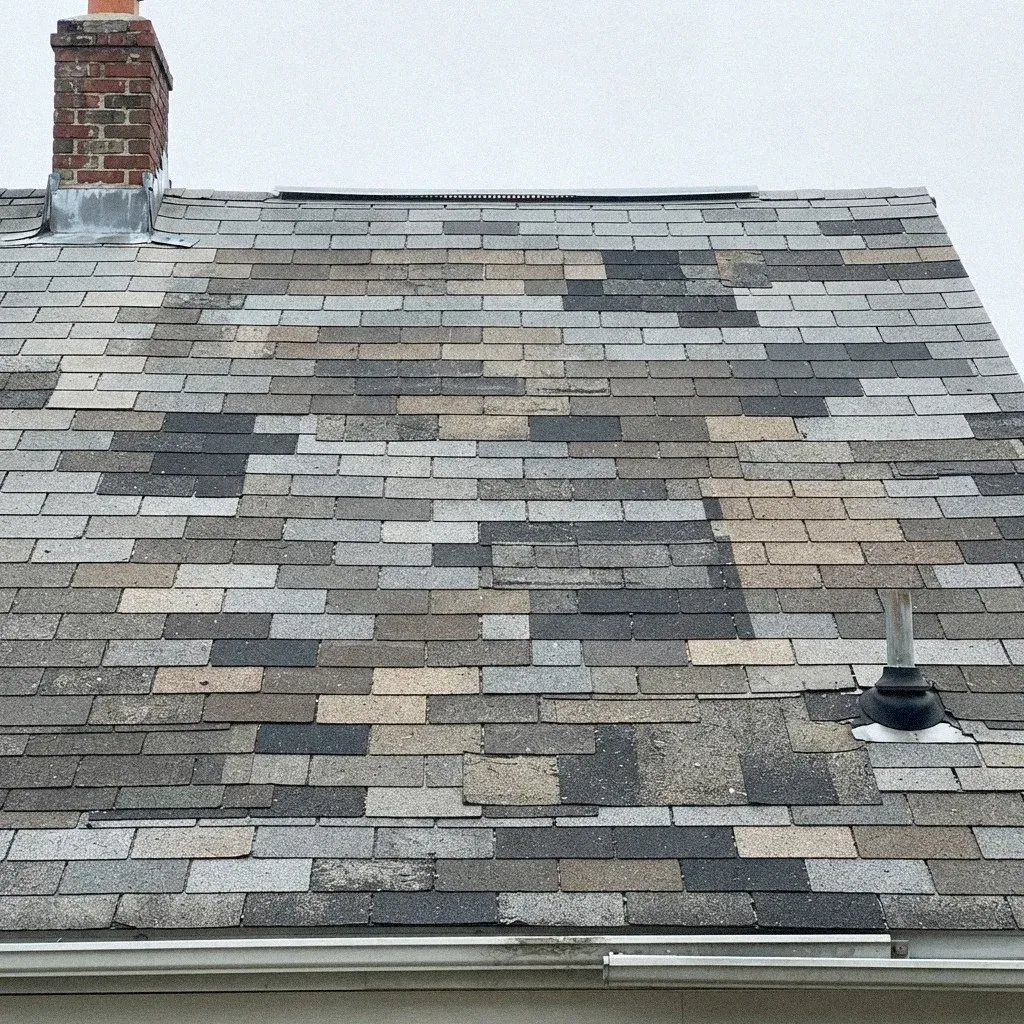
Start at the ground, walking the perimeter of the house and looking up at the slopes. A missing shingle leaves a bare rectangle that stands out even from thirty feet away, and a curled or lifted edge catches light differently than the shingles around it. Check the sides facing West Center Road or Dodge Street traffic corridors too, since wind-driven weather doesn't only hit one side of a roof in this part of Omaha.
Check Valleys and Flashing
Metal flashing around chimneys, valleys, and skylights takes the brunt of freeze-thaw movement because it's fastened to two different materials that expand at different rates. A seam that pulled apart over the winter won't always show a visible gap from below, but a strip of exposed nails or a rusty streak running down the siding is a fair sign something shifted. This is one area worth a closer look before spring rain finds the gap.
Clear Debris and Gutters
Start with what winter piled up. Leaves and grit that washed down during the thaw sit in the valleys and at the gutter outlets, and wet debris holds moisture against the shingles for weeks after the weather turns. Clear the valleys by hand from a ladder rather than by climbing onto the roof, flush each downspout, and check that the water leaving the bottom runs away from the house instead of pooling beside the foundation.
Watch the Roof Edges
The eaves take the worst of an Omaha winter, because that is where ice sits and where meltwater backs up behind it. Look along the bottom courses for shingles that have lifted or curled, at the drip edge for anything bent, and at the gutter line for a sag that was not there in the fall. Damage here rarely shows inside until the next heavy rain, so spring is when it is cheap to find.
Note Granule Loss Patterns
Check the bottom of downspouts and any spot where roof runoff pools for a buildup of granules, the small colored grit embedded in asphalt shingles. Some granule loss is normal aging, but a heavy concentration after one winter suggests the shingles took more abrasion than usual, often from ice or wind-driven grit. It's a useful data point for the rest of the walkaround, not a standalone alarm.
Move to the Attic
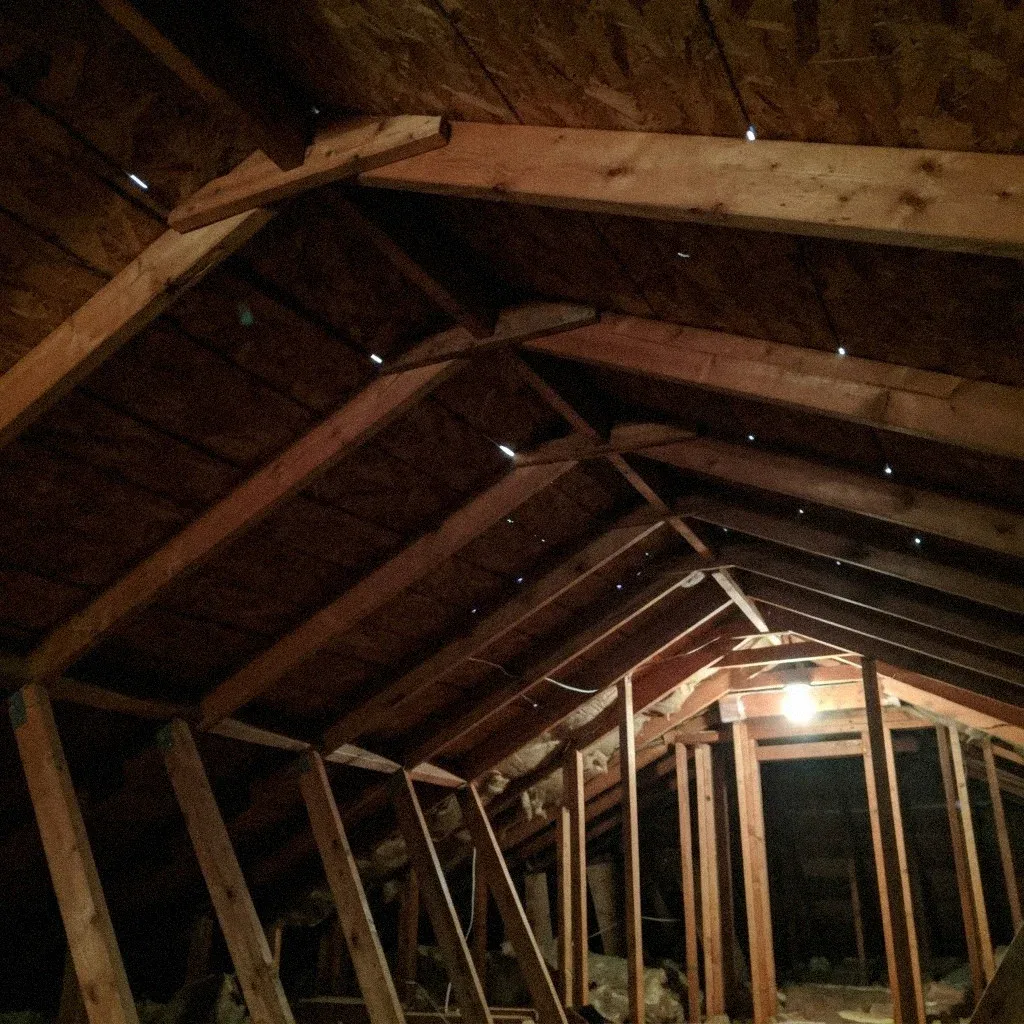
The ground-level look only tells half the story, so the next step is an attic inspection with nothing more than a flashlight. Head up on a calm, dry afternoon and scan the underside of the roof deck near valleys, vent stacks, and the chimney chase. Daylight coming through anywhere it shouldn't, or a musty smell, points to a gap that ground-level checking alone would never catch.
Read the Stains Correctly
A useful stain check looks past the obvious: dark rings on sheathing, streaked rafters, or insulation that's matted down and discolored in one spot. Water doesn't always travel straight down from where it entered, so a stain a few feet from the nearest exterior wall can still trace back to a roof penetration. Catching this in the attic, before it reaches a ceiling downstairs, keeps the fix smaller and simpler.
Check Vents for Blockage
Every vent on the roof is a hole with a cover over it, and covers get knocked loose by hail and clogged by nesting. From the ground, check that the furnace and plumbing vent caps are still square and undented. In the attic, look at the soffit openings for insulation pushed against them over the winter, because blocked intake stops the whole roof breathing however good the ridge vent is.
Test Every Sealed Joint
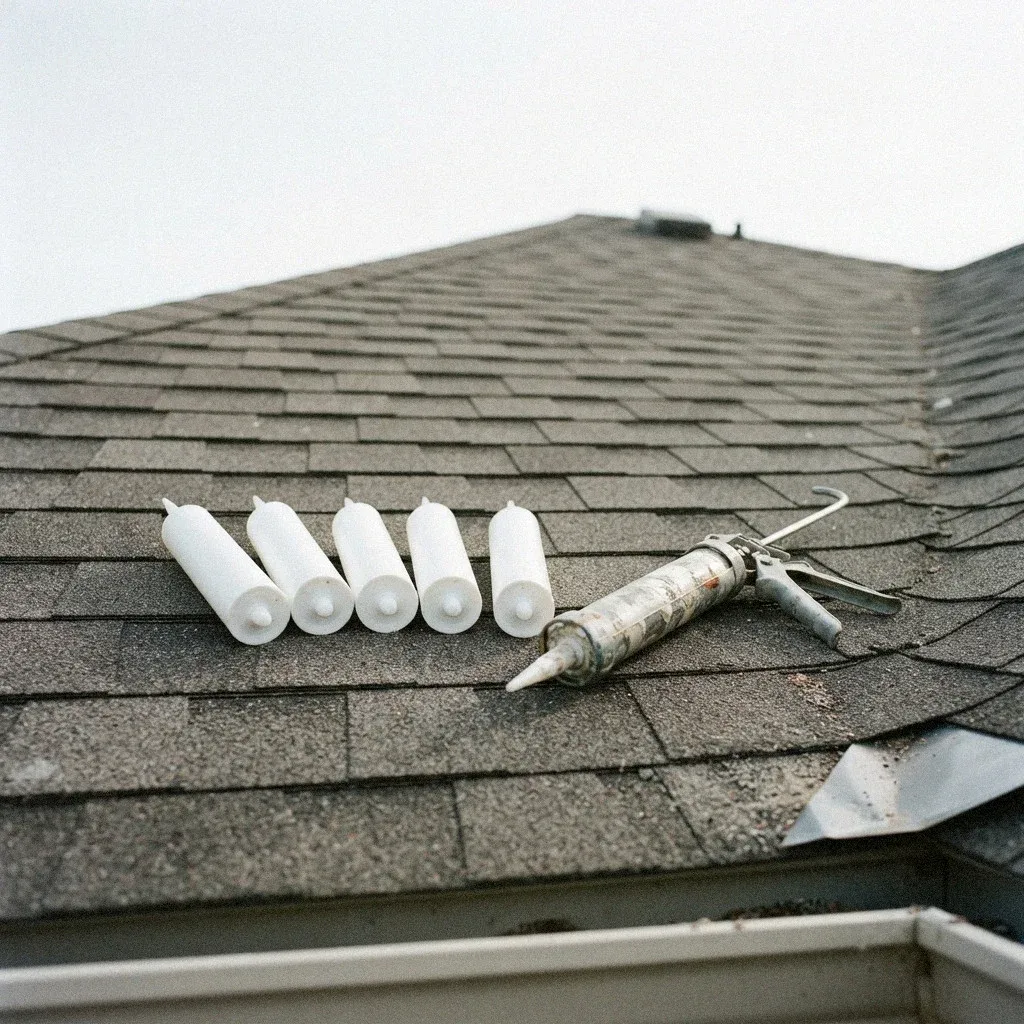
A sealant inspection covers anything with a fastener or a seam: a pipe boot where a vent stack passes through the roof, satellite mount brackets, and skylight edges. The rubber collar on a pipe boot cracks with age and temperature swings faster than the shingles around it, so it's worth checking on its own. Sealant that looks chalky, shrunken, or gapped at the edge is the kind of thing that fails quietly.
Turn Findings Into a Plan
Everything found during this walkaround belongs on a punch list, sorted by what needs attention now and what can wait a season. A pipe boot showing early wear isn't the same urgency as an active attic leak, and treating them the same wastes money. Once the list exists, the scheduling window opens up: spring gives Omaha homeowners room to line up repairs before summer hail season adds new items to the list.
Dealing with this in your home?
Omaha roofs fail on their own timeline. Dundee and Benson still have prewar homes with basements below, where a clogged gutter means water finding its way down, not just across. Blocks near Elkhorn or Millard face the same April hail but newer decking. Same city, same spring, different repair.