Omaha's cold snaps rarely announce themselves gently. A mild stretch through Dundee and Benson can flip within a day to single digits once a front drops down from the north, and that shift is what does the damage. The roof doesn't fail from cold alone. It fails from the swing, the repeated shrink and expand that follows every temperature drop across a Douglas County winter.
Defining a Hard Freeze Here
A hard freeze means a run of hours cold enough to lock any moisture in a roofing material solid, then hold it there. Omaha's January lows regularly sit near the teens, cold enough to reach materials that stayed damp from an earlier melt. The freeze itself is quick. What matters is how many times it repeats before spring, because each cycle adds a little more stress to the same weak points.
How Freeze-Thaw Works
This is the freeze-thaw cycle: water gets into a crack or seam during a warm afternoon, then that water freezes and expands overnight, widening the opening slightly. By morning it thaws again, lets in a bit more moisture, and freezes again the next cold night. A roof over a South Omaha bungalow or a newer Elkhorn build both go through this the same way, just on different materials and different ages of wear.
Small Cracks Grow Colder
A hairline crack rarely starts with winter. It starts as sun exposure, foot traffic from an old repair, or a shingle edge that curled slightly over a few summers. Cold air doesn't create that crack, but it exploits it. Once temperatures drop, whatever moisture sits in that opening freezes, expands, and pushes the crack a little wider than it was in October, setting up the next freeze to do more.
Cold Turns Shingles Brittle
Composition shingles stay pliable in warm weather, which is why a roofer can walk one in July without much concern. Below freezing, that same shingle turns stiff and loses much of its give. The granule surface can shed small pieces under light pressure, and a corner that would flex in August can crack instead. This is thermal shock working on the shingle itself, not on anything around it.
When Sealant Stops Holding
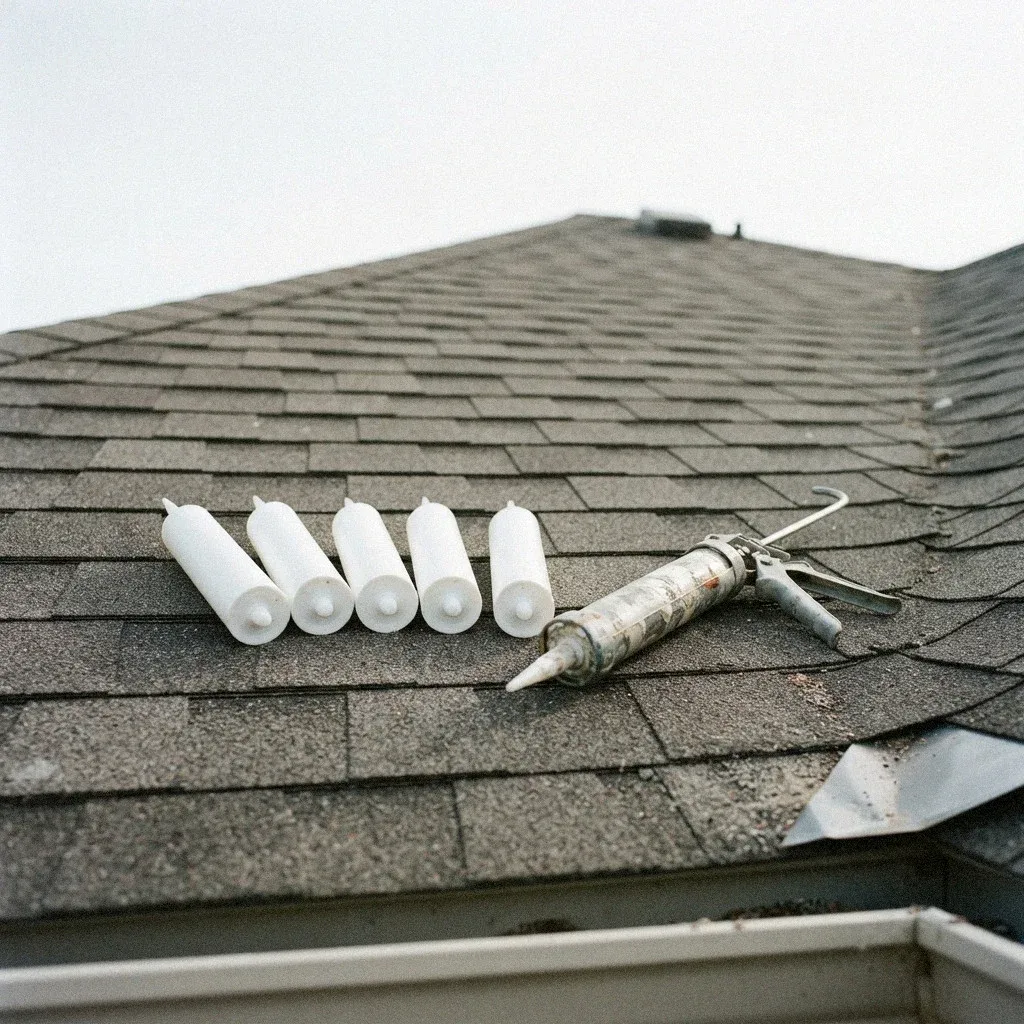
Sealant holds a roof's joints together where shingles alone can't bridge a gap: pipe collars, flashing seams, skylight edges. Most products used on Omaha roofs list a minimum application and service temperature, and a hard freeze pushes conditions below that range. The bead doesn't just get harder to work with, it loses adhesion where it already touched the roof, and a joint that looked sealed in October can separate by February without any visible trigger.
Pipe Boots Split First
Pipe boots are the rubber collars sealing vent pipes where they pass through an Omaha roof. Rubber that flexes fine in July turns stiff and brittle once a hard freeze sets in, and repeated freeze-thaw cycling opens hairline cracks around the collar faster than almost anywhere else on the roof. Meltwater works into that gap on the next warm afternoon, then refreezes overnight, widening it. By the time a homeowner in Millard or Dundee notices a drip near a vent stack, the boot has usually been failing for more than one cold spell.
Downspouts Freeze Solid
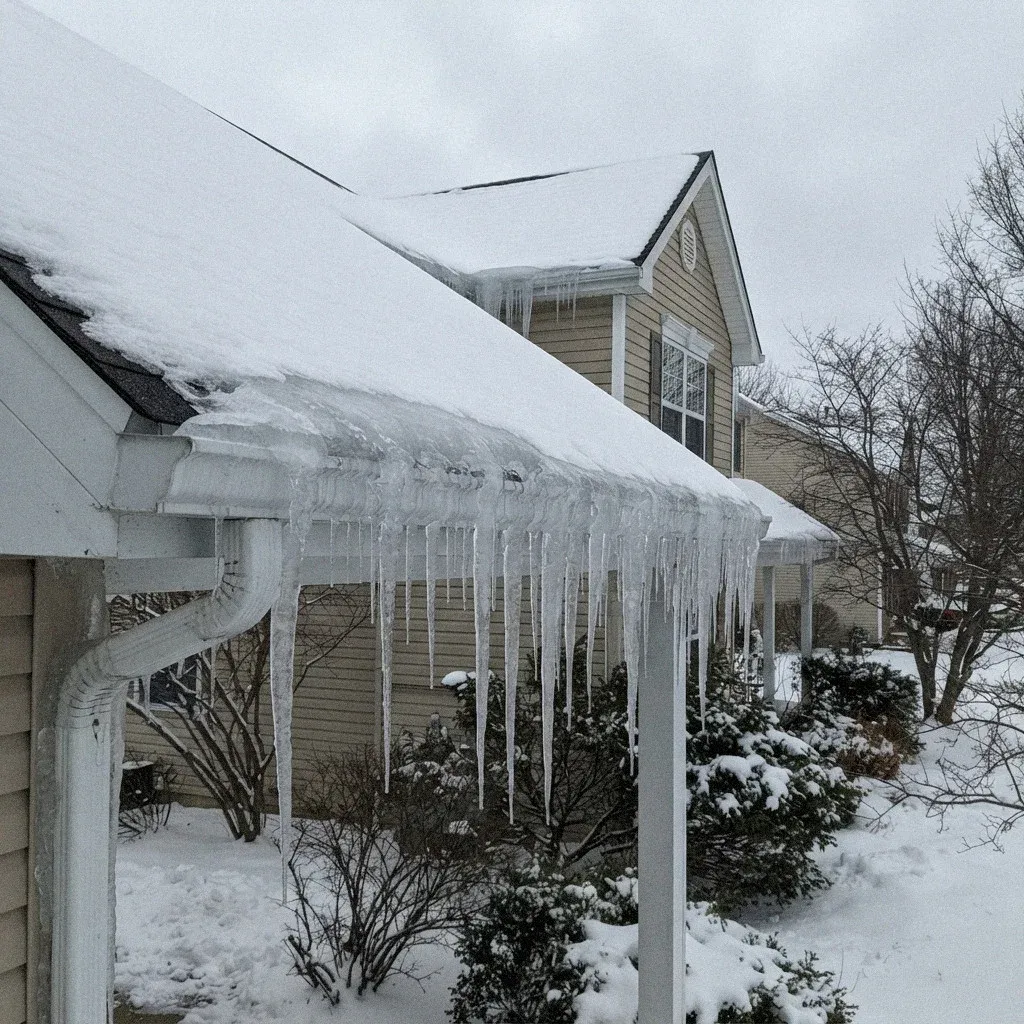
Gutters and downspouts carry meltwater off an Omaha roof through every freeze-thaw stretch of the winter, and a hard freeze can stop that flow cold. A frozen downspout backs water up into the gutter, where it refreezes and adds weight the hangers weren't sized for. Gutter ice sitting against a fascia board for weeks does more damage than a single freeze ever would, especially on homes near Papillion Creek where runoff volume is already higher.
Where Ice Starts at Eaves
Gutters and downspouts take their own kind of damage in a hard freeze. Meltwater running off the roof during the day refreezes overnight, and a downspout that's already holding water can split as that ice expands. Once a downspout is blocked with ice, the next round of meltwater has nowhere to go but back up toward the edge of the roof, adding weight and moisture right where the shingles meet the fascia, in Omaha neighborhoods old and new alike.
The Risk of Roof Traffic
Walking a roof in freezing weather carries risk that doesn't show up in mild months. Frost or a thin ice layer can sit on a shingle surface without being obvious from a ladder, and a shingle that's gone brittle from cold offers less grip and less give underfoot than the same shingle in June. Roof traffic damage in cold weather often means a cracked shingle from a single footstep, not from the weather itself.
Damage Surfaces After Thaw
Much of what a hard freeze causes doesn't show up until the thaw. Water that worked its way into a crack, a boot, or a seam during the coldest week finds its way to a ceiling or attic space once temperatures climb back into the 40s. A homeowner in Florence or Gifford Park might not notice anything unusual until a week after the cold breaks, when a discoloration appears on a bedroom ceiling with no obvious source.
A Ground-Level Check First
After a stretch of hard freezes lets up, a look at the roof from ground level tells a homeowner most of what they need. Check the shingle courses for anything curled or missing, look at the base of each vent pipe for a boot that's pulled away, and watch the downspouts for slow drainage once the ice clears. Anything found beyond that is worth having a set of eyes on before the next cold front moves through.
Dealing with this in your home?
Omaha roofs fail on their own timeline. Dundee and Benson still have prewar homes with basements below, where a clogged gutter means water finding its way down, not just across. Blocks near Elkhorn or Millard face the same April hail but newer decking. Same city, same spring, different repair.