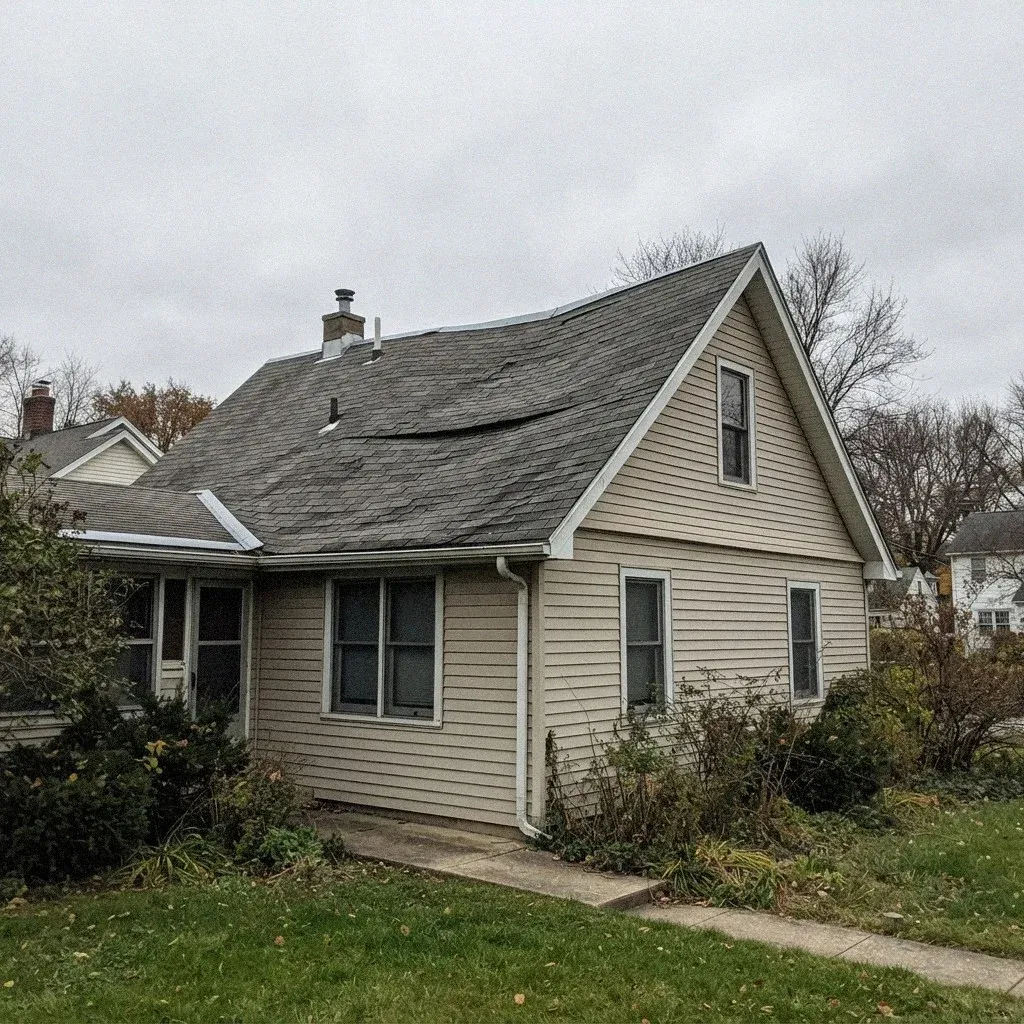
Drive down a street in Dundee or Benson and look at the roofline instead of the shingles. Color loss and granule wear catch the eye first, but shape tells the real story. A roof can look sagged in three distinct ways, and each one points somewhere different underneath. Knowing which shape you're seeing on an Omaha house is the first step, long before anyone climbs a ladder.
Ridge Sag Runs the Whole Line
A dip along the ridge, the top line running the full length of the roof, usually points to the ridge board itself or a weak connection where opposing rafters meet. On older Omaha homes near Field Club or Gifford Park, this can also involve a missing or undersized collar tie that once kept the rafter pair from spreading apart under load.
It Builds as a Curve
Ridge sag rarely appears overnight. It develops slowly, so from the street it usually reads as a smooth, even curve rather than a sharp break or a sudden kink. That gradual shape is a sign of long-term deflection building in the ridge framing over years, not a single storm event. Sight along the peak against a level reference, like a gutter line two houses down, to see the curve clearly.
A Dip in One Section Only
A depression sitting over one part of a roof plane, rather than running the entire ridge, points to something local instead of house-wide. It often sits above a single rafter or truss member that has weakened, cracked, or lost its bearing at one end. This kind of dip stays confined to that section and does not follow the ridge line at all.
Two Shapes, Two Directions
A ridge that bows tells you to look at the framing carrying that line: rafters, collar ties, the truss system holding the peak. A soft patch sitting off to one side over a bedroom or porch is usually local, tied to a wet spot in the sheathing below it rather than the whole roof. Tell Omaha homeowners apart by where the eye lands first, ridge or a single section, before deciding what a structural assessment needs to check.
A Wavy Field Is Different Again
The third shape shows up across the whole roof at once: no single low spot, just a gentle rolling unevenness in the plane, almost like the deck underneath lost its rigidity everywhere rather than in one place. Homeowners in Omaha neighborhoods like Dundee and Field Club, with older frame houses, describe this as the roof looking slightly rumpled from the sidewalk, especially in low afternoon light.
What Delamination Looks Like
This spread-out waviness usually points to sheathing that has absorbed moisture over years, not one storm. Plywood layers separate, or old board decking cups and warps, and the roof surface above it stops sitting flat even though the rafters below are doing their job. It rarely comes with one dramatic low point. Instead it shows up gradually, and a homeowner often notices it only after a neighbor mentions the roof looks different.
What Purlins Can Suggest
Ridge sag and localized dips point somewhere else: the load path running from ridge to rafter to wall. If a rafter has cracked, sagged under years of deflection, or was undersized to begin with, the section it carries will drop while sections on either side stay level. Older homes in Benson and Morton Meadows sometimes carry additions or reworked attic space where the original framing was never adjusted for the new load, and that mismatch tends to surface as this kind of localized dip.
Water Is the Common Thread
Water is the common thread behind most of these patterns, more than any single overloaded moment. Omaha sees heavy spring rain concentrated from roughly May through summer, and freeze-thaw cycling through the winter works flashing and shingle edges loose over years. Once water finds a way past a worn valley or a cracked shingle, it settles into the sheathing below and weakens it slowly, long before any sag becomes visible from the street.
Confirming a Soft Spot
A soft spot felt while walking the roof is the clearest sign that decking has weakened rather than framing shifting outright, and it typically shows up right where the sag was visible from below. This is not something a homeowner should test alone. Weight on a compromised section can push a foot straight through, and the safer route is having someone experienced check it with proper footing and the right expectations about what they might find.
Why This Can't Sit and Wait
A sagging roofline is not something to leave for a slower season. Ridge sag suggests framing under strain, a localized dip points to weakened sheathing in one area, and a wavy field across the whole plane usually means widespread moisture damage that has been building for a while. Each pattern gets worse under snow load or another wet spring, and each one is easier and cheaper to address before the affected area grows.
Getting a Roof Actually Checked
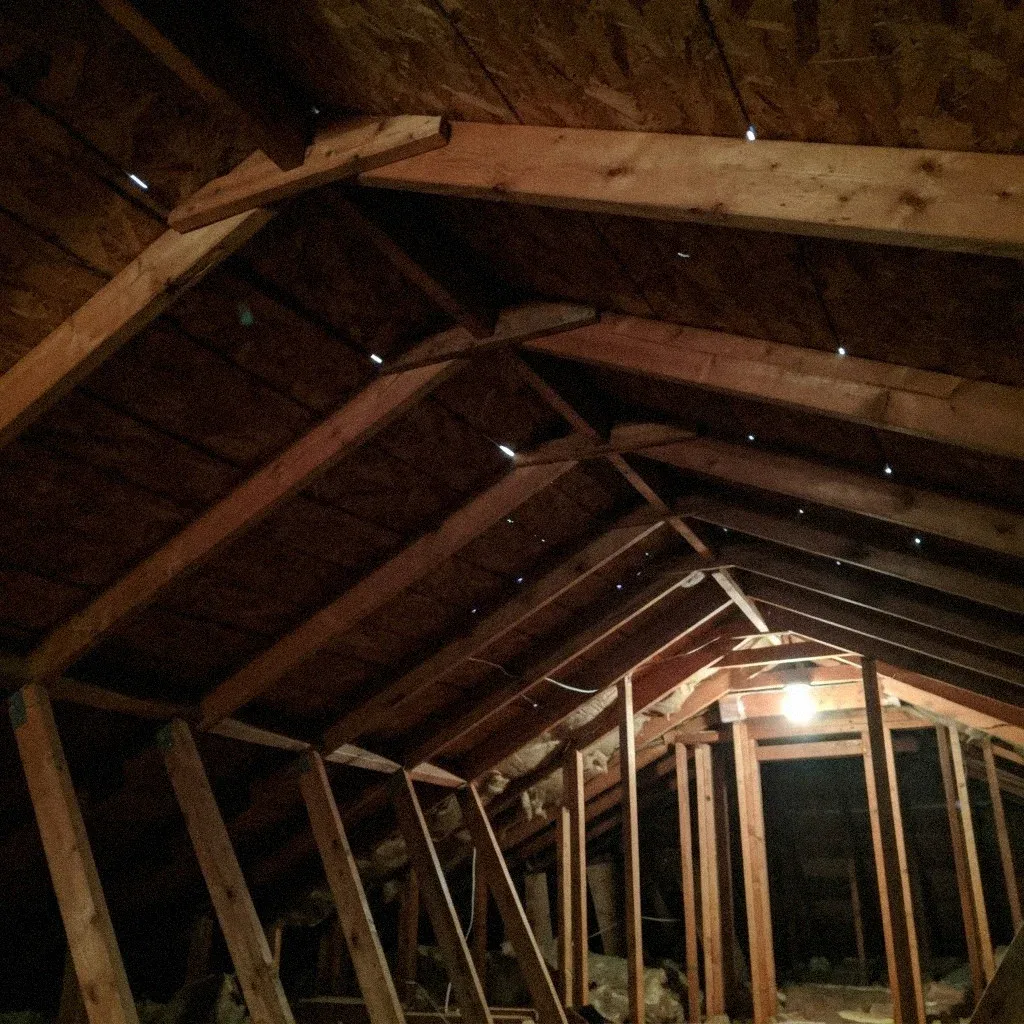
Spotting a shape from the curb only narrows down what to look for next. Confirming it means someone checking the attic for daylight, staining, or sagging rafters, and someone walking the roof plane itself to feel for give underfoot. A homeowner in Millard, Elkhorn, or anywhere else in Omaha noticing one of these patterns can get a straight answer from a structural assessment before deciding what, if anything, needs to happen next.
Dealing with this in your home?
Omaha roofs fail on their own timeline. Dundee and Benson still have prewar homes with basements below, where a clogged gutter means water finding its way down, not just across. Blocks near Elkhorn or Millard face the same April hail but newer decking. Same city, same spring, different repair.