A stain on a ceiling in an Omaha home is easy to notice and hard to interpret without a plan. Between freeze-thaw cycles working on the roof deck all winter and spring hail passing through Douglas County, water finds a way in more often than most homeowners expect. The mark left behind is not random. It holds shape, color, and position clues that, read in order, tell you far more than a glance upward ever will.
What the color tells you
A new stain usually shows up pale yellow, almost tan against white ceiling drywall. Left alone, especially through a stretch of spring rain, the center darkens toward brown while the outer edge stays lighter. That contrast is the drywall's paper facing absorbing mineral content from the water each time it passes through. A stain that stays uniformly pale probably happened once and stopped. One that keeps deepening toward the middle is still being fed.
What a ring around it means
A stain rarely just spreads evenly. Look for the darker outline circling it, the tide line, where water sat long enough to leave minerals behind before drying. One ring means one wetting that stopped. A second ring nested inside the first, on Omaha ceilings this often shows after a spring thaw event, means water returned after the first spot dried, which points to an active leak rather than a single dormant stain left over from something already fixed.
The push test worth trying
A moisture meter gives a real reading, but you can learn a lot with two fingers. Press the ceiling drywall an inch or two outside the stain's border, not dead center. Firm and dry suggests old damage. Soft, cool, or slightly give-y under light pressure means moisture is present now or was very recently, and the source above it may still be active rather than resolved.
Still active or long done
A dormant stain in an older Dundee or Benson home holds its shape from one look to the next and stays dry no matter the weather outside. An active leak keeps changing: it widens after a storm, darkens toward the edges, or turns slightly damp during a thaw. Watching the same spot for a few weeks, especially after rain, is often what tells the difference apart from any single inspection.
Where on the ceiling it sits
A stain centered under an interior wall usually means water is following a rafter run before dropping straight down, so the entry point sits uphill from what you see. Stains near an exterior wall in Dundee or Benson bungalows often trace back to flashing where the roof meets siding. A stain over a bathroom or kitchen, though, deserves a second look for condensation before anyone assumes a roof leak, since capillary travel along framing can carry water well away from where it actually got in.
Why the source sits higher up
Water rarely drops straight down from where it enters the roof. Once it's inside the deck, it rides along the sheathing and follows the rafter run, moving sideways with gravity and the roof's pitch until something stops it, wood, insulation, framing, and pools there. This capillary travel along wood grain and seams is exactly why the stain on a Bemis Park or Gifford Park ceiling can sit several feet from the actual opening above it.
What penetrations add to it
Chimneys, plumbing vents, and skylights each cut through the roof deck, and every cut depends on flashing sealed correctly around it. A stain that lines up close to one of these openings is a strong hint the flashing has failed rather than the shingle field around it. In a Millard or Elkhorn home with a skylight, that's usually the first place worth checking from inside the attic.
Flat stain versus bubbling paint
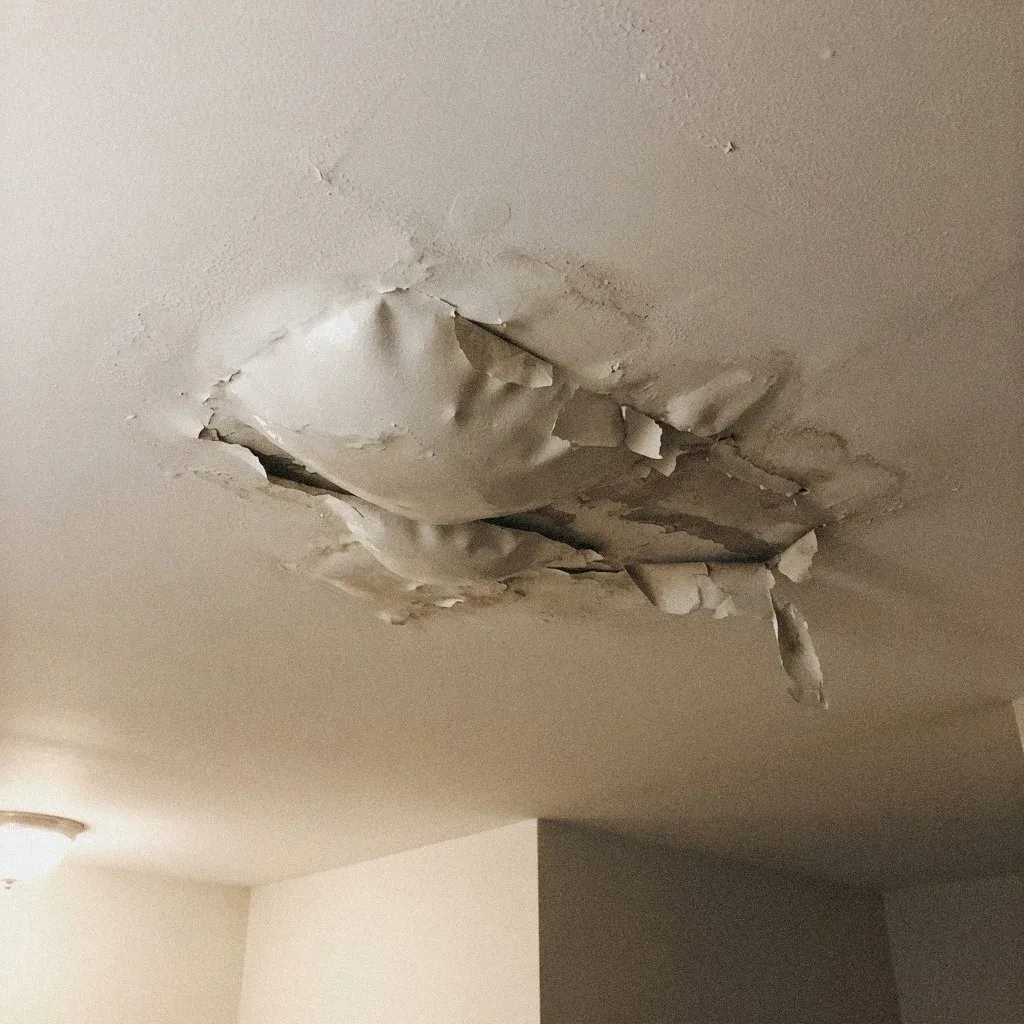
A dry, flat patch of discoloration usually means water reached the paper backing on the drywall, left its mark, and stopped there. Bubbling paint or a raised, blistered texture means something different: water built up faster behind the surface than the ceiling could soak in and dry, which points to a heavier or more recent intrusion rather than a slow trickle from months back.
When a sag changes the read
A flat stain and a sagging one are different problems. Sight along the ceiling from the doorway instead of looking straight up, since a dip that's invisible from below shows up in raking light from an angle. A sag means the drywall or insulation matting above has been holding water long enough to lose its shape, not just its color, and that usually means the leak has been running longer than one storm.
Checking the attic to confirm
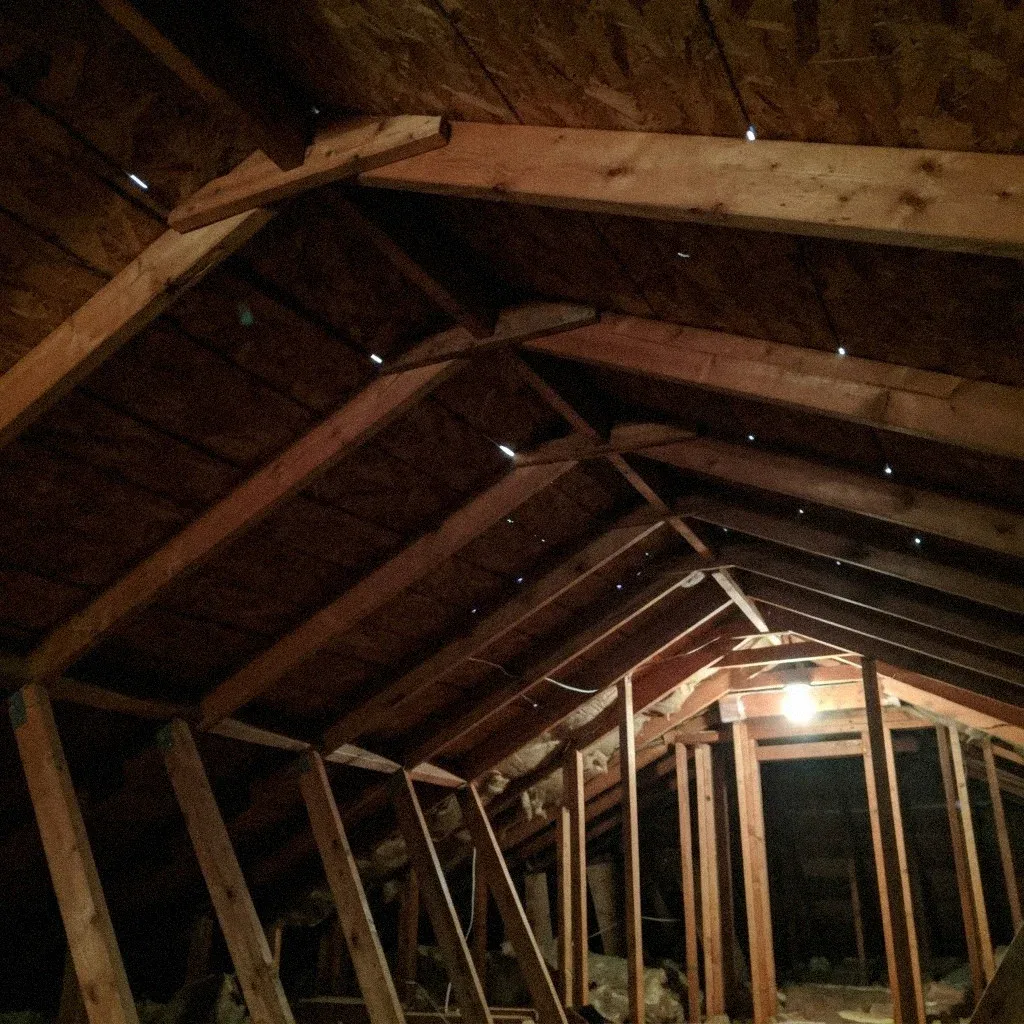
Homes with pull-down stairs or a hatch make this easy to check without opening drywall. Bring a light and step carefully on the framing, not the insulation, since ceiling drywall won't hold weight. Look at the sheathing directly above the stain for dark patches or soft spots, and press the insulation underneath to see if it's matted down from repeated wetting rather than just dusty.
What a stain leaves unanswered
What a stain proves is that water reached the drywall from above, and roughly how long ago and how much. It doesn't identify which shingle, seam, or vent is letting it through, and guessing at that part from inside the house usually wastes time. For an Omaha homeowner deciding whether this is worth a closer look, that's the line between what the ceiling can tell you and what someone still needs to check on the roof itself.
Dealing with this in your home?
Omaha roofs fail on their own timeline. Dundee and Benson still have prewar homes with basements below, where a clogged gutter means water finding its way down, not just across. Blocks near Elkhorn or Millard face the same April hail but newer decking. Same city, same spring, different repair.